


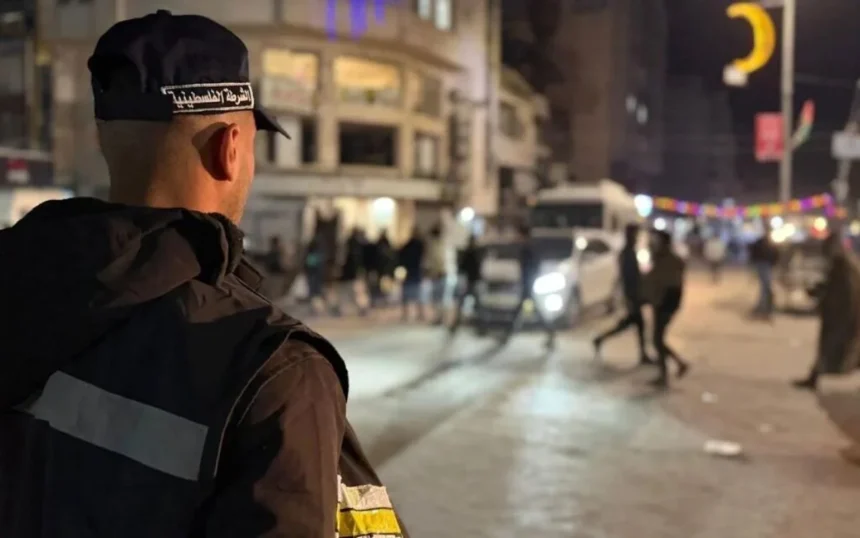
The United Arab Emirates has transferred 100 million U.S. dollars to the U.S.-led Board of Peace to fund the training and establishment of a new Palestinian police force for the Gaza Strip. As reported by the Times of Israel and corroborated by outlets including The Yeshiva World, the sum is earmarked for a contract to train a planned force of roughly 27,000 officers who will operate under the National Committee for the Administration of Gaza (NCAG), a technocratic body tasked with helping manage Gaza after the 2023–2025 war. The move marks the largest single transfer to the Board of Peace to date and underscores the UAE’s continued financial and political involvement in Gaza’s postwar order.
- Why the UAE is funding a Gaza police force
- How the police force is expected to operate
- Reactions from regional actors and analysts
- Supporting details on the Board of Peace and Gaza’s security landscape
- Implications for Gaza’s internal security and governance
- What this means for the UAE and the Board of Peace going forward
According to the Times of Israel, the 100‑million‑dollar transfer is intended to underwrite a multi‑year training and build‑up program, including the deployment of Emirati security‑training teams and the use of regional facilities in Egypt and Jordan for instruction. The same report indicates that the planned force will be expected to assist in collecting weapons in Gaza as part of broader postwar security efforts, an arrangement that has been discussed in parallel with stalled negotiations over Hamas’s full disarmament. The article notes that the UAE’s decision to advance the funds signals Abu Dhabi’s ongoing commitment to Gaza’s postwar architecture, despite evolving regional priorities following the Iran war and shifting U.S. strategy in the Eastern Mediterranean.
Why the UAE is funding a Gaza police force
The UAE’s contribution fits within a broader pattern of Abu Dhabi’s engagement with Gaza through the Board of Peace framework. As reported by the UAE Ministry of Foreign Affairs, the Emirates have pledged at least 1.2 billion dollars overall to support Gaza via the Board of Peace, with additional sums directed at reconstruction, infrastructure and governance. According to the ministry’s statement, Foreign Affairs Minister Sheikh Abdullah bin Zayed Al Nahyan emphasized the UAE’s role as a “key financial and political partner” in rebuilding Gaza, and framed the Board‑of‑Peace‑linked police‑force funding as part of a strategy to create stable, professional security institutions that can complement civilian administration.
Regional analysts quoted in outlets such as Al Jazeera and The Yeshiva World have described the new Gaza police force as a central piece of the postwar “security‑state” model envisioned by the Board of Peace. The analysts argue that by funding a large, non‑militia‑based force, the UAE and the Board of Peace aim to prevent Hamas or other armed groups from reasserting de facto control over internal security in Gaza, while also reducing the need for large‑scale, long‑term Israeli military presence inside the Strip. The 100‑million‑dollar transfer is therefore portrayed not only as a training investment but as a political signal that the UAE and the United States see a professionalised Palestinian police structure as essential to the long‑term viability of the current Gaza‑management plan.
How the police force is expected to operate
According to the Times of Israel and related reporting, the new Gaza police force will be formally placed under the National Committee for the Administration of Gaza, an NCAG‑run security authority, while receiving operational oversight and coordination support from the Board of Peace. The force is expected to be deployed in cities and refugee camps across the Strip, with a focus on basic law‑and‑order tasks, community policing, and facilitating the collection and monitoring of weapons. The reports indicate that recruits would undergo training in Egypt and Jordan, with an Emirati security firm tasked with helping build the 27,000‑officer force over several years.
The reporting also notes that Palestinians who previously served as Hamas civil servants have reportedly been allowed to apply for positions in the new police force, though they would require vetting by Israel’s Shin Bet security agency before being approved. This requirement has been described as a condition imposed by Israel and accepted by the Board of Peace and the UAE to ensure that the force does not become a cover for re‑establishing Hamas‑linked security structures. The reports stress that the exact scope of the vetting process and the degree of Israeli influence over hiring remain sensitive issues, but that the UAE’s funding is explicitly tied to the creation of a force that is politically acceptable to both Israel and the Board of Peace‑backed NCAG.
Reactions from regional actors and analysts
The UAE’s 100‑million‑dollar contribution has drawn attention from both regional governments and security analysts. As reported by Al Jazeera, unnamed Arab‑government officials have expressed concern that the Gaza‑police project, funded by an Emirati security firm, could deepen the UAE’s security footprint in the Palestinian territories and tilt postwar Gaza toward a Gulf‑influenced security model. Some analysts quoted by the outlet have argued that the Board of Peace‑‑UAE‑led structure risks excluding traditional Palestinian political actors, including Hamas and factions within the Palestinian Authority, from shaping Gaza’s security institutions.
At the same time, other regional commentators cited in outlets such as The Yeshiva World and Al Jazeera have described the move as a pragmatic step toward stabilising Gaza, given the near‑total absence of functioning internal security structures after years of war and blockade. These analysts argue that without a large, professional force, Gaza could easily fragment into competing armed groups or militias, which would complicate any ceasefire‑related disarmament plan and likely trigger renewed Israeli military operations. The 100‑million‑dollar transfer, they say, represents a recognition that security‑institution building is as critical as physical reconstruction for Gaza’s long‑term recovery, even if it raises questions about the balance of influence among regional powers.
Supporting details on the Board of Peace and Gaza’s security landscape
The Board of Peace, chaired by U.S. President Donald Trump, was established to oversee implementation of the multi‑billion‑dollar Gaza reconstruction and security framework, including the disarmament of armed groups, the establishment of a technocratic administration and the rebuilding of infrastructure. As reported by the Times of Israel and other outlets, the Board of Peace has repeatedly stressed that it faces “no funding constraints” at the macro level, even as Reuters and other news agencies have documented that only a fraction of the pledged 17 billion dollars has actually arrived. The UAE’s 100‑million‑dollar police‑training transfer is presented as one of the more concrete, sector‑specific disbursements within that broader, still‑partially‑unrealised funding envelope.
Analysts cited by Al Jazeera and financial‑security outlets have noted that the Gaza‑police project underscores how the Board of Peace is increasingly relying on external security contractors and regional partners to deliver on its security agenda. The same commentators point out that an Emirati‑run training program dovetails with Abu Dhabi’s broader pattern of exporting security services and consulting models across the Middle East, from Yemen to Sudan. For Gaza, this means that the Strip’s postwar security apparatus could become unusually dependent on foreign trainers and advisers, even as the force itself is staffed by Palestinians. The Times of Israel reporting does not assess the long‑term sustainability of that model but notes that the UAE’s financial backing effectively lowers the immediate cost burden on both the Board of Peace and the local NCAG structures.
Implications for Gaza’s internal security and governance
The question of how the new Gaza police force will shape internal security dynamics is central to the project’s significance. As reported by the Times of Israel and The Yeshiva World, the Board of Peace and its partners see the force as a tool to prevent armed groups from re‑establishing monopolies on violence in any postwar phase, particularly if Hamas’s full disarmament remains incomplete or contested. The planned role in weapon‑collection gives the force direct operational leverage over Hamas‑linked structures, although the reporting stresses that the actual implementation of such tasks will depend on political accommodations and the continued willingness of armed groups to cooperate with or at least tolerate the police.
For Palestinian residents of Gaza, the expansion of a large police presence carries both promise and risk. On one hand, media accounts and statements from NCAG‑aligned officials suggest that a professional force could reduce crime, improve traffic control and support humanitarian logistics in a territory still scarred by bombardment and displacement. On the other hand, regional human‑rights groups and critics quoted in outlets such as Al Jazeera have warned that a police force funded and trained by Gulf‑linked entities, but effectively vetted and constrained by Israel, may be perceived as an external‑imposed security apparatus rather than a locally accountable one. These critics argue that its legitimacy will depend on transparency, inclusivity in recruitment and the degree to which it reflects Palestinian civil‑society input rather than purely external security priorities.
What this means for the UAE and the Board of Peace going forward
The 100‑million‑dollar transfer signals that the UAE intends to remain a leading financial and security backer of the Board of Peace‑overseen Gaza plan, even as regional attention shifts toward Iran‑related conflicts and broader Middle East realignments. As reported by the UAE Foreign Ministry and outlets such as Al Jazeera, Abu Dhabi has framed its Gaza involvement as both a humanitarian and strategic bet, aimed at preventing Gaza from becoming a long‑term security vacuum or a base for regional proxies. The police‑force funding strengthens the UAE’s role not only as a donor but as a direct participant in shaping Gaza’s security institutions, which may influence how other Gulf states and Western partners approach postwar state‑building in the territory.
Looking ahead, outlets such as the Times of Israel and The Yeshiva World suggest that the success of the Gaza‑police project will hinge on several factors: the pace and quality of training, the degree of Palestinian buy‑in, and the ability of the NCAG and the Board of Peace to manage tensions between Israel’s security demands and local expectations of autonomy. The reporting indicates that the Board of Peace and the UAE still need to clarify how the force will interact with potential future Hamas‑disarmament arrangements and with any residual Hamas‑linked or other local armed groups. For now, the 100‑million‑dollar transfer stands as one of the clearest concrete steps toward institutionalising a new security order in Gaza—one that is being financed by the UAE and overseen by the U.S.-led Board of Peace.
The VIP perks here are actually worth it. I felt the difference in service immediately after signing up. Big shoutout to ph42vipph for keeping the quality high.
Honestly one of the most reliable sites for Jili fans. The graphics are stunning and the win rate feels fair. Glad I found ph5jili.
Fast deposits and even faster withdrawals. It is hard to find a site that doesn’t make you jump through hoops. Glad I found pheevip.
Solid platform with a great community. I’ve had a few big wins here and the withdrawal process was surprisingly quick. Keep it up bdxbajee31!
The APK installation was a breeze and the app runs perfectly on my phone. Much better than the mobile web version. Check out plus777asiaapk.