


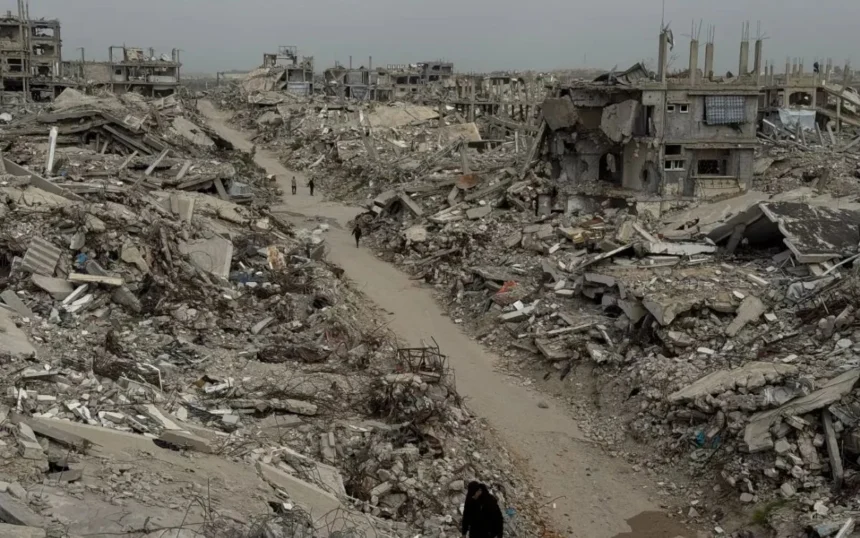
As reported by NPR, recovery crews in Gaza are working to retrieve bodies buried under the rubble of destroyed homes, including at the site of one of the war’s deadliest Israeli strikes. NPR says the operation it followed centered on the Abu Naser family tragedy, where a late-October 2024 strike destroyed a five-story apartment building and killed more than 132 members of the extended family.
According to NPR, the recovery effort was one of the first major missions for Gaza Civil Defense in the north, an area heavily damaged by bombardment. NPR reported that the team used an orange excavator to dig through debris, and by the end of the first day had recovered four bodies.
NPR also reported that the work unfolded over three days, with rescuers finding more victims in positions that underscored the scale of the destruction. The article described bodies being removed from beneath layers of rubble, including a mother found lying on a mattress beneath a red blanket while holding her infant.
What is happening in Gaza?
The reporting shows how recovery operations have become a painful part of life in Gaza as families search for relatives who were killed and never formally recovered. NPR said Civil Defense crew leader Iyad Abu Jarad receives between 10 and 15 calls a day from families asking for help locating the remains of loved ones.
NPR further noted that Gaza has extremely limited machinery for body recovery. The International Committee of the Red Cross said there is only one operational excavator in Gaza dedicated to recovering bodies, which has slowed the work considerably.
The article also places this effort within a broader humanitarian picture of widespread destruction and unresolved losses. NPR’s coverage indicates that the rubble is not only a physical obstacle but also a barrier to burial, identification, and closure for families.
How are families reacting?
The human toll is central to the reporting. NPR described how family members reacted as bodies were uncovered, including Ola Abu Naser, who cried when a young man’s body was pulled from the wreckage and identified as her 17-year-old, Imad.
The article presents the recovery process as both necessary and deeply painful, because families have often waited many months to recover the dead. NPR’s account shows that identifying remains in the debris is an emotional task made harder by the condition of the bodies and the scale of the destruction.
NPR’s earlier reporting on the same subject said many bodies in Gaza remain buried under rubble after more than two years of conflict. It also noted that the destruction has left numerous families still searching for loved ones and that recovery crews have only recently begun work in earnest at some of the worst-hit sites.
Why is recovery so difficult?
The main obstacle is the lack of heavy equipment, according to NPR’s reporting and the Red Cross assessment it cited. With only one excavator available for body recovery, teams must work slowly and carefully to avoid damaging remains or missing additional bodies.
The scale of the damage also makes recovery dangerous and time-consuming. NPR’s coverage shows that crews are dealing with deeply collapsed structures, compacted debris, and the challenge of locating remains in buildings destroyed months earlier.
In the broader coverage around Gaza body recovery, civil defense officials have said they face repeated calls from families and insufficient resources to answer them all. That context helps explain why the operation at the Abu Naser site drew special attention: it reflects a wider crisis, not an isolated case.
What do officials say?
NPR reported that Civil Defense chose the Abu Naser site as a priority recovery mission in northern Gaza because of the number of victims believed to remain beneath the ruins. The report says the operation was among the first of its kind in that area after months of devastation.
Other verified reporting on similar Gaza recovery efforts has said civil defense teams have struggled with a shortage of bulldozers and other machinery, and that humanitarian groups have been asked to help supply equipment. Those reports also describe ongoing searches across multiple sites where bodies remain trapped under collapsed homes.
NPR’s own coverage emphasizes the combination of grief and logistics: families need remains recovered for burial, while crews are forced to work with minimal tools across an environment still marked by destruction.
What comes next?
The immediate next step, based on NPR’s reporting, is continued recovery at the Abu Naser site and similar locations where victims are believed to remain under rubble. NPR says the work is slow and will depend on the availability of machinery, crew access, and the condition of the debris.
More broadly, the reporting suggests that Gaza’s recovery of the dead will continue long after active fighting has damaged homes and displaced families. As NPR has reported in related pieces, many bodies remain unrecovered, and the effort to identify and bury them is expected to remain a major humanitarian task.
Additional reporting details
NPR’s story is focused on one site but reflects a wider pattern of wartime loss in Gaza, where entire families were killed in single strikes and later recovery depends on rescue teams working through layers of collapsed concrete. The article underscores that this is not only about retrieving bodies, but also about documenting loss and helping families complete burial rites.
The reporting also shows how limited infrastructure affects every stage of the process. In Gaza, the shortage of machinery means a recovery that would normally be handled quickly in a disaster zone can stretch into days, or longer, while families wait nearby for answers.
Closing report
NPR’s reporting on the Abu Naser family site shows Gaza’s body-recovery crisis in stark detail: one excavator, a damaged neighborhood, and families waiting for the dead to be found. The piece documents the recovery of several bodies, the anguish of relatives, and the broader challenge of locating those still buried under rubble.
The article also confirms that the search for remains is now a major part of Gaza’s humanitarian reality, with civil defense crews under strain and many families still hoping for the return of loved ones for burial.
Honestly one of the most honest platforms I’ve encountered. Withdrawals are processed without any drama. Big thanks to rwin888!