


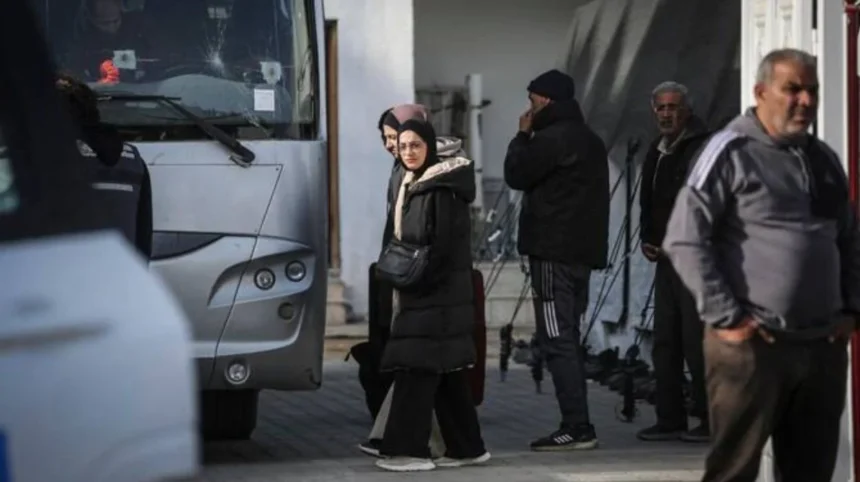
Israel has reopened the Rafah border crossing with Egypt after nearly three weeks of closure, allowing a small number of wounded Palestinians to leave the Gaza Strip for medical treatment in Egypt, as regional and international actors intensify efforts to reinforce a fragile truce. According to Arab News’ Middle East coverage, Gaza medics reported that four people were killed in recent Israeli strikes shortly before the crossing was reopened, underscoring the continued volatility on the ground. The Rafah terminal is a key gateway for Gaza’s 2 million residents, functioning as the main route for those seeking to exit the enclave for medical care or to return after displacement.
As reported by Arab News, the Palestinian Red Crescent Society said that only eight Palestinians injured in Israeli attacks during the two-year war, along with 17 family members, were cleared to cross into Egypt on Thursday for treatment. It remained unclear how many Palestinians, if any, would be permitted to travel back from Egypt into Gaza, highlighting the limited and tightly managed nature of the reopening. According to Arab News and Reuters reporting cited in regional coverage, the Rafah crossing had only partially reopened in early February after being largely closed since May 2024, providing intermittent relief for patients and families trapped by earlier shutdowns.
Sources cited by Arab News said the latest move came against the backdrop of renewed diplomatic contacts aimed at shoring up a ceasefire that has repeatedly come under strain. Reuters reporting referenced by the outlet indicated that the border opening followed talks in Cairo involving envoys from the United States and interlocutors with influence over Hamas, as mediators seek to prevent a collapse of the truce amid broader regional tensions.
What reactions and context are emerging?
According to Arab News, health officials and aid organizations in Gaza have stressed that the limited reopening falls far short of the broader humanitarian access they say is needed after two years of conflict. The Palestinian Red Crescent’s statement that only eight wounded Palestinians and their relatives were allowed out on the first day has been cited by humanitarian workers as evidence that evacuation and treatment remain severely restricted.
Regional media and international policy outlets note that Rafah’s status has become a barometer of both humanitarian conditions and the state of indirect talks between Israel and Palestinian factions. The Council on Foreign Relations has previously described the Rafah crossing as the only viable route in or out of Gaza for most residents, adding that earlier partial reopenings were linked to conditions set within United States-led peace efforts. In separate reporting, COGAT, the Israeli defense ministry body that oversees civilian affairs for Palestinians, has framed border decisions at Rafah and Kerem Shalom as contingent on ongoing security assessments and the need to safeguard personnel on both sides of the frontier.
International organizations, including the United Nations, have repeatedly urged Israel and other actors to keep crossings open for both humanitarian cargo and civilian movement. UN officials have warned that restrictions on aid routes, cargo approvals, and internal transport corridors inside Gaza have significantly impeded relief operations, even when one or more crossings are technically open. This broader context has shaped reactions to the Rafah reopening, with humanitarian agencies welcoming any additional movement while warning that the scale remains inadequate relative to the needs on the ground.
Supporting details and diplomatic efforts
Arab News’ reporting situates the Rafah reopening within a timeline of intermittent access since May 2024, when Israel’s campaign against Hamas in Gaza led to extended closures and heavy restrictions at all major crossings. The crossing was largely shut for long stretches during the early months of the war, with brief openings used to facilitate medical evacuations, limited returns, or tightly controlled humanitarian movements.
Policy-focused outlets such as the Council on Foreign Relations have noted that reopening Rafah was an early, unmet requirement in the first phase of a US-backed peace plan, and that Israel had previously delayed significant easing of restrictions until it met specific security benchmarks, including the recovery of hostage remains. In parallel, Israeli authorities have at times reopened the Kerem Shalom crossing for the “gradual” entry of humanitarian aid, decisions that COGAT says are taken in coordination with US and other partners and calibrated to ongoing military operations and perceived threats.
Reuters-based accounts cited in regional media indicate that Cairo has continued to host indirect contacts involving Hamas and international mediators, focusing on stabilizing the ceasefire, expanding humanitarian access, and preventing spillover from wider confrontations involving Iran. These efforts appear closely tied to the timing and scope of border measures at Rafah and other crossings, as incremental openings are used both to relieve pressure in Gaza and to signal diplomatic progress or setbacks.
What are the implications and next steps?
Humanitarian agencies and analysts say the limited reopening of the Rafah crossing could modestly ease pressure on Gaza’s overstretched health system by enabling a small number of critical patients to seek treatment abroad, but they caution that the current scale is insufficient to address the wider medical and humanitarian crisis. UN officials have argued that sustained, predictable access through Rafah, Kerem Shalom, and other entry points is essential if aid convoys are to reach Gaza in the volumes required, and if reconstruction and economic activity are to resume.
According to Arab News and other outlets, future steps will likely depend on whether the fragile ceasefire holds and whether negotiations in Cairo and other capitals yield concrete agreements on security guarantees and humanitarian measures. Any escalation in hostilities, including renewed exchanges between Israel and armed groups or broader regional confrontations, could lead to the reclosure of Rafah or stricter limits on crossings, complicating both medical evacuations and aid deliveries. Diplomats and aid officials will be watching closely to see whether the current reopening is expanded in the coming days and weeks, both in terms of the number of people allowed to cross and the volume of humanitarian supplies permitted to enter Gaza.
The reopening of the Rafah crossing marks a cautious and tightly controlled step toward easing movement for some of Gaza’s most vulnerable patients while highlighting the extent to which border access remains tied to fragile ceasefire arrangements and complex regional diplomacy. For residents, aid groups, and negotiators, developments at Rafah will continue to serve as a critical indicator of both humanitarian conditions on the ground and the trajectory of truce efforts in the weeks ahead.