


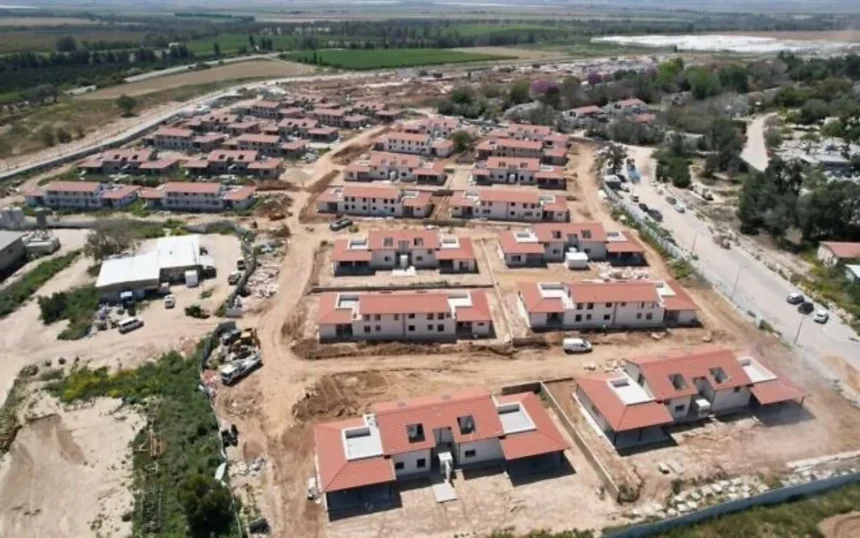
Fewer than one‑quarter of residents living near the Gaza Strip say they feel safe in their homes, and roughly 40% report they do not trust the state to protect them, according to a new survey of communities along Israel’s southern border. As reported by The Times of Israel, the findings reflect the enduring security and psychological toll of Hamas’s October 7, 2023, assault and the ongoing conflict in Gaza. The data underscore a deep sense of vulnerability among civilians who not only survived the initial attack but have remained within range of continued rocket fire and cross‑border threats.
The survey was conducted by the Tekuma Directorate, the government‑affiliated body tasked with coordinating the rebuilding and rehabilitation of communities ravaged by the October 7 attacks. According to the outlet, the questionnaire was distributed to tens of thousands of residents in local councils and moshavim on the Gaza periphery, including areas such as Sderot, Nir Oz, Kfar Aza, Be’eri, and Re’im. The measured turnout and broad geographic spread are intended to capture a representative snapshot of sentiment across the border region, rather than a small sample of isolated communities.
Among the 120,000 residents who responded, fewer than 25% said they felt safe in their homes or daily lives. The outlet notes that this figure includes people who have lived in temporary accommodations, such as hotels, net‑housing units, and other government‑arranged housing, as well as those who have returned to rebuild or to live in newly fortified communities. The low sense of security is reported across age groups and community types, from kibbutzim devastated by the October 7 massacre to towns that suffered repeated rocket barrages and infiltration attempts.
How safe do people feel?
A central theme in the survey’s findings is the persistent fear of a repeat of the October 7 violence. As reported by The Times of Israel, many respondents said they worry that the next attack could occur without warning and that current security measures may not be sufficient to prevent it. This concern is amplified by the proximity of their homes to the Gaza fence, the memory of the breach and massacre that unfolded on October 7, and the ongoing threat of rocket and mortar fire. The outlet notes that even when the border area is quiet, the sense of exposure remains intense.
Residents also cited structural insecurity linked to the conflict’s economic and social impact. The article highlights that many have been forced to relocate multiple times, change jobs, or leave their original communities altogether. For some, the experience of evacuation, temporary housing, and the loss of neighbors and livelihoods has eroded any residual sense of stability. The Tekuma Directorate’s report does not downplay these findings; instead, officials are quoted as describing the results as a “wake‑up call” for the government’s rehabilitation strategy.
Another factor shaping perceptions of safety is the visible presence of military infrastructure. The report, as summarized by the outlet, indicates that while residents strongly support the Israel Defense Forces (IDF) and value the deployment of security forces near their communities, the very need for such forces reinforces their sense of danger. The contrast between pre‑war normalcy and the current militarized environment is frequently mentioned in open‑ended responses, with many respondents expressing longing for a return to a life where security checks and patrols were not a daily reality.
Trust in the state and institutions
The survey also measured residents’ trust in state institutions, including the government, the IDF, police, and local authorities. According to The Times of Israel, about 40% of respondents said they did not trust the state to protect them or to ensure their long‑term safety on the Gaza border. That figure encompasses both skepticism about decision‑making centers in Jerusalem and concern over the adequacy of concrete security measures, such as perimeter defenses, early‑warning systems, and emergency response protocols.
The outlet notes that trust in the IDF itself remains relatively high, consistent with broader national opinion polls that show strong public confidence in the military. However, many respondents draw a distinction between the soldiers and commanders on the ground and the political leadership that sets strategy and policy. Several quotes in the report, as relayed by the outlet, express frustration that pre‑war intelligence and security arrangements failed to prevent the October 7 attack, and that lessons have not yet been fully institutionalized into a viable long‑term protection plan.
Residents also voiced skepticism about the effectiveness and speed of reconstruction efforts. The article cites survey participants who complain that bureaucratic delays, fragmented planning, and shifting governmental priorities have slowed the rehabilitation of homes, schools, and infrastructure. Some respondents said they feel that the state prioritizes broader strategic considerations over the specific needs of traumatized border communities, which adds to their sense of alienation and mistrust.
Mental health and community resilience
Beyond physical security, the survey highlights the psychological burden on border residents. The Times of Israel reports that a significant share of respondents describe ongoing anxiety, sleep disturbances, and hypervigilance, particularly among children and former residents of communities directly attacked on October 7. Many adults report second‑guessing whether they should return to rebuild, whether it is safe to send children to local schools, and whether they can sustain a normal family life under the shadow of another potential incursion.
The Tekuma Directorate’s progress report, summarized by the outlet, ties these mental‑health concerns to the low sense of safety. It notes that repeated relocations, prolonged exposure to threat, and the loss of community cohesion have accumulated into what officials describe as a “chronic crisis of confidence.” The report also points to the uneven distribution of support services, with some larger towns having better access to trauma counseling and social‑work assistance than smaller kibbutzim and moshavim.
Local community leaders quoted in the report argue that rebuilding physical infrastructure without addressing trust and psychological well‑being will not be enough to encourage long‑term repopulation. The outlet cites several council heads who warn that unless the state demonstrates a clear, transparent plan for security and community support, many evacuated residents may choose not to return. The survey’s findings thus feed into a broader debate about how to balance national security policy with the lived experiences and wishes of civilians on the front line.
Policy implications and future steps
The survey’s results are being used by the Tekuma Directorate to shape the next phase of rehabilitation and security planning along the Gaza border. According to The Times of Israel, officials say the data will inform the allocation of new security installations, the deployment of emergency response units, and the design of community‑reconstruction programs. The report indicates that the government is also considering long‑term measures such as enhanced fortification of homes, upgraded early‑warning systems, and incentives for residents to return and rebuild.
At the same time, the 40% figure for lack of trust in the state is expected to prompt internal reviews of communication and coordination between national authorities and border communities. The outlet notes that Prime Minister Benjamin Netanyahu’s office and the Ministry of Defense have acknowledged the survey’s findings and pledged to address residents’ concerns. Proposed steps include more frequent town‑hall briefings, the creation of community‑advisory bodies, and clearer criteria for when and how security measures will be adjusted as the security situation evolves.
Longer‑term implications include questions about the viability of restoring pre‑war population levels along the Gaza border. The article notes that some analysts interpret the survey as a signal that large portions of evacuated residents may remain in central or northern Israel, even if security conditions improve. This could reshape the demographic and economic map of southern Israel, forcing the state to decide whether to invest in new forms of settlement, such as fortified urban clusters or satellite communities, rather than simply restoring old kibbutzim and towns.
In the immediate future, the survey’s data are likely to feed into parliamentary debates and public‑inquiry discussions about the failures that led to October 7 and the adequacy of current protections. The Times of Israel reports that several opposition lawmakers have cited the findings to argue for a more aggressive overhaul of intelligence and border‑security doctrine, while some government figures have emphasized that trust can be rebuilt over time if tangible improvements in security and quality of life are delivered. The low sense of safety and the widespread mistrust laid out in the survey will therefore remain central reference points for policymakers, security planners, and community leaders as Israel navigates the post‑war landscape along the Gaza border.
This place has a great vibe and the bonuses are actually fair. I am really enjoying my time on inyooe777 lately.
Finally found a site that doesn’t lag during big wins. The login process is quick and everything just works. Try rakyatslotlogin
I really appreciate how easy it is to navigate this site. Even for beginners it is very straightforward. Give pkluky97 a try!
The casino selection here is top-notch. It feels like a real Vegas experience right from my couch thanks to br366betcassino.