


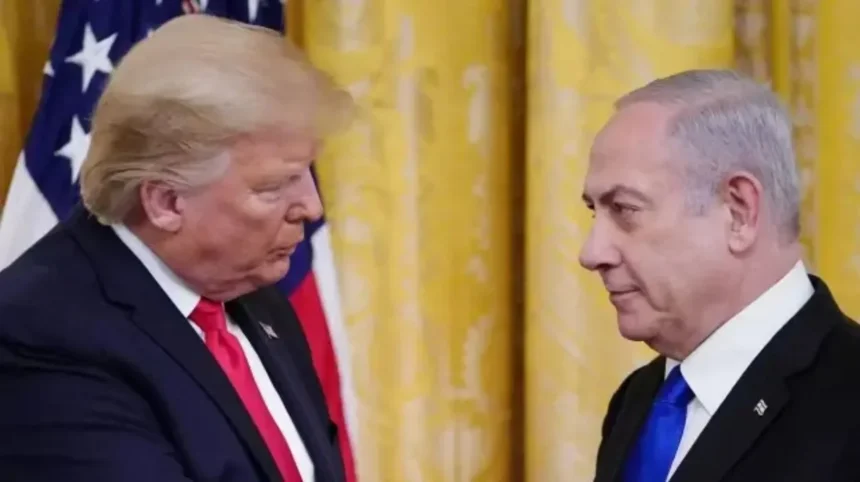
As reported in the analysis published by Yeni Şafak, the Trump Plan for Gaza was unveiled on September 29, 2025, and has been widely presented as a new effort to end the war and stabilize the region. According to the article, when placed in historical perspective, the plan is framed as part of a 100-year pattern of Western-sponsored agreements that fragment Palestinian land and limit Palestinian political agency. The piece notes that the plan emphasizes reconstruction and economic development while separating these measures from core issues of rights, sovereignty, and accountability.
- Governance and Reconstruction Vision
- Historical Pattern and Territorial Fragmentation
- Economic Promises and Resource Control
- Context and Reactions: How Are Palestinian Agency and Narratives Addressed?
- Supporting Details and Ideological Elements
- Implications and Future Developments: What Does the Plan Leave Unaddressed?
According to the article, the plan emerged against a backdrop of ongoing violence following an October 10 ceasefire in Gaza. The analysis states that Israel allegedly violated the ceasefire 80 times in the first 10 days, resulting in more than 80 Palestinian deaths, with the death toll exceeding 500 by the end of January 2026. It further reports that Israeli military operations and settler violence in the West Bank intensified during this period, contributing to what UNRWA described as the gravest humanitarian crisis in the West Bank since 1967, including the displacement of 33,000 Palestinians and the demolition of entire refugee camps.
Governance and Reconstruction Vision
According to the Yeni Şafak report, the United Nations Security Council adopted Resolution 2803 on November 17, 2025, creating a body called the Board of Peace. The article states that two months later, at the World Economic Forum in Davos, Donald Trump signed the Board’s charter, appointing himself “Chairman for Life” with broad authority to interpret and apply its provisions. As reported in the analysis, the Board oversees a reconstruction vision for Gaza that includes projects branded as “New Gaza” and “New Rafah,” unveiled by Jared Kushner and promoted through architectural renderings.
According to the article, these proposed projects are aimed at “vetted Gazans,” and the analysis argues that they do not take existing land ownership into account. The Board is described as including international political figures, such as former UK Prime Minister Tony Blair, and is presented as supervising Gaza’s transition on the basis that Palestinians are not yet ready to fully govern themselves. The Yeni Şafak piece contrasts this with past United Nations language stating that a lack of political, economic, social, or educational preparedness should not be used to delay independence.
Historical Pattern and Territorial Fragmentation
The Yeni Şafak analysis situates the Trump Plan for Gaza in a wider historical pattern, citing agreements such as the 1916 Sykes–Picot Agreement, the Balfour Declaration, the 1939 White Paper, and the Oslo Accords as precedents. According to the article, these past arrangements are described as externally imposed frameworks that deferred Palestinian rights, fragmented Palestinian territory, and favored Zionist and later Israeli strategic interests. The report asserts that the new plan continues this approach by treating Gaza as a distinct political entity and excluding the Palestinian Authority from the core framework.
The article describes a 20-point structure underpinning the Trump Plan, which is said to rely on deliberate ambiguity. One element mentioned is a “yellow line” that reportedly becomes an effective new border enforced with lethal force. According to the analysis, Israel has expanded its military operations across the region in this context, and the U.S. ambassador to Israel is cited as having suggested it would be acceptable for Israel to control a large area of the Middle East on biblical grounds.
Economic Promises and Resource Control
According to Yeni Şafak, the Trump Plan echoes earlier approaches such as the 2020 Peace-to-Prosperity framework by placing heavy emphasis on economic incentives and development projects. The article recalls a statement attributed to Jared Kushner that “Israel’s prosperity would spill over very quickly” to Palestinians, comparing it to the 1937 Peel Commission’s claim that Jewish capital would bring prosperity to all in the region. The analysis argues that this language presents economic opportunities as a substitute for political rights and self-determination.
The report further notes that, in parallel with the plan, Israel has already issued licenses for gas exploration off Gaza’s coast. According to the article, this move is presented as reinforcing what the analysis calls a colonial logic, in which control over natural resources is exercised without a corresponding framework that secures Palestinian sovereignty or decision-making power.
Context and Reactions: How Are Palestinian Agency and Narratives Addressed?
The Yeni Şafak piece reports that the Trump Plan establishes a Palestinian Technocratic Committee to administer Gaza, chaired by engineer Ali Sha’ath. According to the article, when this committee used the Palestinian Authority’s emblem, Israel intervened and insisted that no PA symbols would be allowed, which the analysis interprets as limiting Palestinian political expression even at an administrative level. The article describes this as an example of Palestinians being permitted to manage technical aspects of governance while strategic decisions and political boundaries remain externally controlled.
The plan also reportedly includes provisions related to education and public discourse. According to the analysis, leaked documents attributed to QNN are cited as indicating that the Palestinian Ministry of Education, under European Union pressure, made extensive revisions to school textbooks. These revisions are described as removing or softening material related to Palestinian history, identity, geography, and political realities. The piece presents these changes within a broader claim that the plan seeks to shape narratives and memory alongside territorial and governance arrangements.
Supporting Details and Ideological Elements
The Yeni Şafak article states that two articles in the Trump Plan are especially significant for their ideological content. Article 13 reportedly requires that “New Gaza will be fully committed to… peaceful coexistence,” while Article 18 calls for interfaith dialogue aimed at changing “mindsets and narratives.” According to the analysis, these clauses are presented not simply as reconciliation measures, but as conditions Palestinians must meet in order to participate fully in the proposed political and economic framework.
The report notes that coexistence with Israel is framed as a precondition rather than as an outcome of a negotiated and just settlement. The article argues that, in the absence of explicit recognition of Palestinian rights and accountability for past harm, these provisions function to reshape Palestinian identity and discourse under external terms. The piece links these ideological aspects to the wider history of agreements that, according to the analysis, sought to manage Palestinian demands while preserving existing power structures.
Implications and Future Developments: What Does the Plan Leave Unaddressed?
According to the Yeni Şafak analysis, the Trump Plan does not mention the destruction, displacement, or large-scale loss of life experienced by Palestinians in Gaza. The article also states that the plan does not acknowledge Israel’s responsibility for damage in Gaza or address ongoing annexation efforts in the West Bank. Instead, it notes that Trump has reportedly referred to Gaza as “incredible real estate,” a phrase presented in the piece as an indication of how the territory is being framed in economic and strategic terms.
The analysis argues that Palestinians are frequently discussed in the plan, but not directly consulted in shaping its core provisions. According to the article, this raises concerns about the long-term implications of the plan for Palestinian political representation, control over land and resources, and the prospects for a negotiated settlement grounded in international law. The piece suggests that these unresolved issues may influence future regional dynamics and international debates over the status of Gaza and the broader Palestinian question.
The Yeni Şafak article concludes that the Trump Plan for Gaza is characterized as a continuation of a century-long pattern in which political exclusion, economic leverage, and territorial control shape governance arrangements. The analysis contends that, while the plan presents itself as a peace initiative centered on reconstruction and development, it leaves key questions of rights, accountability, and sovereignty unresolved.