


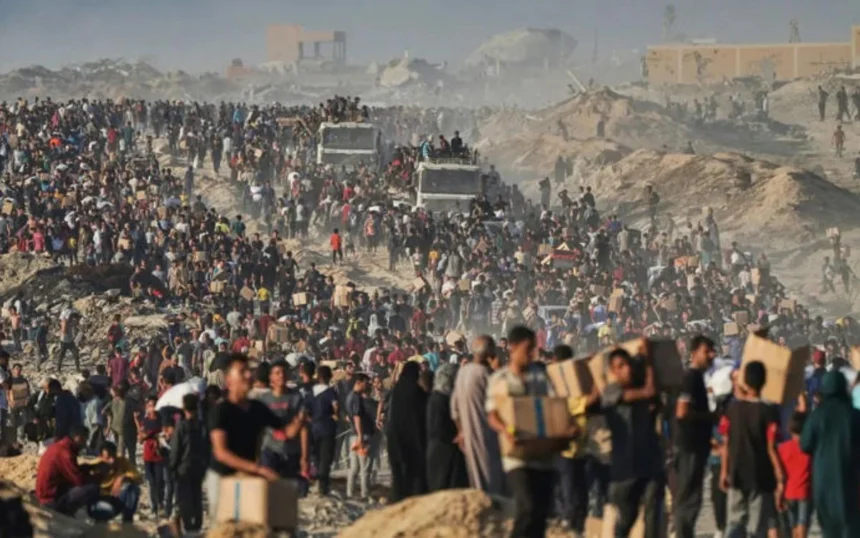
More than 70 media and civil‑society organizations have jointly urged Israel to grant independent foreign journalists direct access to the Gaza Strip, arguing that the current restrictions obstruct clear, on‑the‑ground reporting on the humanitarian and security situation there. According to the Committee to Protect Journalists, the coalition includes outlets such as the Associated Press, Agence France‑Presse, BBC, CNN, The Guardian, The New York Times and The Washington Post, which have signed an open letter addressed to Israeli authorities. The organizations point out that Israel has not allowed independent media access to Gaza since the start of the war in October 2023, creating a near‑total information vacuum for foreign news outlets.
As reported by staff at the Associated Press, the ban has forced global news organizations to rely heavily on Palestinian journalists inside Gaza, who are documenting the conflict while facing displacement, food shortages and the risk of deadly attacks. The press‑freedom group ARTICLE 19 has documented cases in which reporters in Gaza have collapsed after live broadcasts, fallen ill from drinking contaminated water and struggled to afford basic food and sanitary supplies. International editors say this reliance on local journalists, while ethically necessary, places an extraordinary burden on individuals who are themselves enduring the war’s heaviest consequences.
According to the Committee to Protect Journalists, at least 200 journalists have been killed in Gaza since the conflict began, a toll that press‑freedom groups have described as unprecedented. The group notes that Israel’s restrictions on media access have coincided with repeated statements from Israeli officials that domestic and international journalists can observe the situation through tightly controlled military‑organized tours rather than through independent reporting. CPJ’s chief executive, Jodie Ginsberg, told reporters that if Israel presents itself as a democracy, it must permit independent international journalists to judge the reality of Gaza for themselves, rather than relying on curated military briefings.
Why are media groups demanding independent access?
Media leaders argue that independent access is essential both for factual coverage and to counter the spread of misinformation. As detailed in a joint appeal released by the Foreign Press Association and other international‑media groups, Israel has maintained its ban on foreign journalists even after a ceasefire agreement took effect in 2025, which limits fresh, on‑the‑ground verification of the conflict’s aftermath. Broadcast and print outlets say that without independent witnesses, they must base their coverage on statements from Israeli and Hamas officials, satellite imagery and interviews conducted remotely, all of which increase the risk of incomplete or misleading narratives.
According to the Associated Press, Israeli authorities initially justified the ban by citing security concerns, including the risk that foreign journalists could inadvertently reveal the locations of Israeli military forces. The argument was that the territory remained an active combat zone where the presence of unembedded reporters could endanger both troops and civilians. Over time, however, media organizations have pointed out that Israel has continued to restrict independent access even as fighting has subsided and humanitarian operations have expanded, suggesting that the controls extend beyond immediate battlefield‑safety concerns.
International press‑freedom advocates dispute claims that only military‑controlled tours ensure safety. As reported by NPR’s coverage from Tel Aviv, Israeli forces have occasionally allowed small groups of foreign journalists to enter Gaza under strict supervision, but these trips are tightly scripted and limited in duration. Reporters on these tours say they are often unable to move freely, interview residents off‑camera or inspect sites that Israel does not pre‑approve. Many editors argue that such conditions resemble propaganda tours more than open journalism, and that real transparency requires allowing correspondents to operate independently within agreed safety protocols.
What do journalists and rights groups say?
The open letter circulated by the Committee to Protect Journalists and its signatories emphasizes that independent access is not only a professional necessity but also a matter of public‑interest accountability. The text notes that journalists in Gaza are “the first and last line of defense” for conveying the scale of civilian suffering and destruction to the outside world. The groups argue that when only one side’s official channels are able to shape the narrative, the space grows for mis‑ and disinformation, both within the region and in international debates about the conflict.
In a statement released by ARTICLE 19, the group framed media access as inseparable from humanitarian access, since journalists are often the only witnesses documenting the conditions under which Gaza’s population survives. The organization warned that blocking independent reporters amplifies the humanitarian crisis indirectly, because global awareness and pressure tend to lag when information is filtered or sparse. The group also stressed that journalists in Gaza, like other civilians, are running out of clean water, food and medical care, yet they are still expected to provide continuous reporting under life‑threatening conditions.
The Foreign Press Association, which represents accredited foreign correspondents based in Israel, has joined the call for immediate border openings into Gaza. As reported by The Guardian, the association’s statement called on Israel to “immediately open the borders and permit international media to have free and independent access to the Gaza Strip” now that active fighting has halted. The group noted that the Israeli Supreme Court has repeatedly pressed the government to explain why, more than two years into the conflict, it continues to bar independent journalists from entering Gaza, but that the government response has been delayed or minimally changed.
What are the practical challenges for journalists?
Even when Israel permits limited access, practical and logistical hurdles remain high. As reported by the Associated Press, the journeys into Gaza typically involve long authorizations, military checkpoints, restrictions on equipment and tight schedules negotiated with the Israeli Defense Forces. Reporters say that unpredictable changes in security conditions, the condition of roads, and the risk of renewed hostilities can force last‑minute cancellations. These constraints mean that many outlets cannot maintain a continuous presence in Gaza, instead relying on short‑term visits or on remote contributions from Palestinian staff.
Palestinian journalists inside Gaza have repeatedly described the emotional and physical toll of reporting under siege. As documented by the Committee to Protect Journalists, some reporters have lost family members in Israeli strikes, destroyed equipment in bombardments, or fled repeatedly as they tried to stay ahead of advancing front lines. The same reports note that many journalists have been forced to work without electricity, internet or fuel, often broadcasting from makeshift locations or using power‑banks to keep their phones running. Online harassment and legal pressure from both Israeli and Palestinian actors have also been cited as additional threats.
International correspondents based in Jerusalem say that the lack of independent access creates a persistent gap in their ability to verify claims circulating online. In the absence of direct observation, they must rely on social‑media posts, satellite analysis and statements from conflicting parties, all of which can be manipulated or taken out of context. Several editors told NPR that while they value the work of Palestinian reporters, they worry that the imbalance between inside and outside voices may distort the global understanding of the conflict’s trajectory, including the extent of civilian casualties, infrastructure damage and displacement.
What are the legal and diplomatic implications?
The Israeli government has said that all access decisions are governed by security law and military regulations. As reported by multiple news outlets, including the Associated Press, Israeli officials have defended the media ban as a temporary measure aimed at protecting soldiers and preventing Hamas from exploiting journalists’ movements. The government has also pointed to the fact that nearly all on‑the‑ground coverage is still being produced by Palestinian journalists, implying that the territory is not completely closed to the press.
However, human‑rights and press‑freedom groups argue that the restrictions may violate international standards on freedom of expression and the right to information. As articulated in statements by ARTICLE 19 and other civil‑society organizations, states have a duty to ensure that journalists can operate safely and independently during armed conflicts, especially when civilian populations are at risk. These groups contend that indefinitely blocking foreign media access without transparent, time‑bound criteria risks normalizing censorship and could set a precedent for other governments facing public‑scrutiny crises.
Diplomatically, the demand for independent access has become one of several points of pressure on Israel from Western governments and international institutions. As reported by European media outlets, some European foreign‑ministry officials have privately conveyed concern that Israel’s media policy undermines its self‑image as a democratic state with a free press. Other diplomats have linked the issue to broader debates about humanitarian‑aid access and accountability for alleged violations of international law, suggesting that transparent journalism could help clarify responsibilities and support future investigations.
What might happen next?
The immediate next step, according to several signatories of the open letter, is for Israeli authorities to respond substantively to the Supreme Court’s recent request for a detailed explanation of the continued media ban. As described by NPR, the court has given the government additional time to justify why independent journalists cannot enter Gaza after more than two years of conflict, but the Israel Ministry of Defense has not yet announced any large‑scale policy shift. Press‑freedom advocates say they expect the court to eventually issue a formal ruling that could compel the government to either relax access rules or defend them in a more transparent legal framework.
Media organizations have signaled that they will continue to push for a standardized access protocol that allows independent journalists to work in Gaza under agreed safety conditions. As outlined in the Foreign Press Association’s statement, such a protocol could include verified security assurances, defined reporting zones, insurance arrangements and emergency evacuation plans, all coordinated with both Israeli and Palestinian authorities. Editors say they are prepared to accept reasonable security measures, such as temporary movement restrictions in active combat zones, as long as those conditions are clearly defined, time‑limited and consistently applied.
In parallel, some international outlets have begun to develop contingency plans for sustained Gaza coverage if access remains limited. As reported by the Associated Press, several news organizations are investing further in remote‑reporting tools, fact‑checking partnerships and digital verification units to compensate for the absence of boots‑on‑the‑ground correspondents. However, senior editors stress that these tools cannot fully replace the value of firsthand observation, especially in a conflict where the credibility of images and videos is under constant scrutiny.
What has changed, and what has not?
What has changed since the war began is the global consensus among major media institutions that independent access to Gaza is no longer a discretionary privilege but a necessary condition for credible war reporting. As noted by the Committee to Protect Journalists, the breadth of the current coalition—spanning Western news agencies, European public broadcasters, and regional civil‑society groups—reflects a rare level of unity on an issue that in normal times might attract more fragmented responses. The persistence of the call, even after a ceasefire and the passage of more than two years, suggests that access has become a long‑term structural issue rather than a short‑term operational concern.
What has not changed is Israel’s refusal to grant broad, independent media access to Gaza. As reported by the Associated Press and other outlets, the government continues to allow only limited, military‑controlled missions while blocking visas or permits for independent foreign journalists. Editors say this policy strains their ability to serve audiences who want to see the war’s realities through unfiltered eyes, especially as debates over Israel’s conduct in Gaza intensify at the United Nations, in national parliaments and in public‑opinion polls. Until independent journalists can move freely in Gaza under clear safety protocols, media‑freedom groups warn that the world will remain reliant on a partial, often contested picture of the conflict’s human cost.
Just stumbled upon btano. The site looks clean, but anyone got any actual experience with them? Reliability is key!
Alright, let’s talk esportivasbet. They have a good range of esport options to bet on. Site is pretty user-friendly too. Def worth checking out if you are into betting on those games. Had a good experience here.
Poxbet is an interesting! Has cool games with new kinds of slots. Also its support is really good. Check for yourself: poxbet
I love the bonuses they give to new players. It really helped me get started and build my balance. Big thanks to pkad7777 for the generosity.
Great selection of games and the account setup took less than two minutes. Really impressed with the overall quality of jilibet777loginregister.
Had a great experience with the daily rewards. It keeps the game exciting even when I am on a losing streak. Love pkluky888
The app version is a game changer. I can play on the go without any lag and the login is seamless. 18winpkrloginapp makes everything so much easier.