


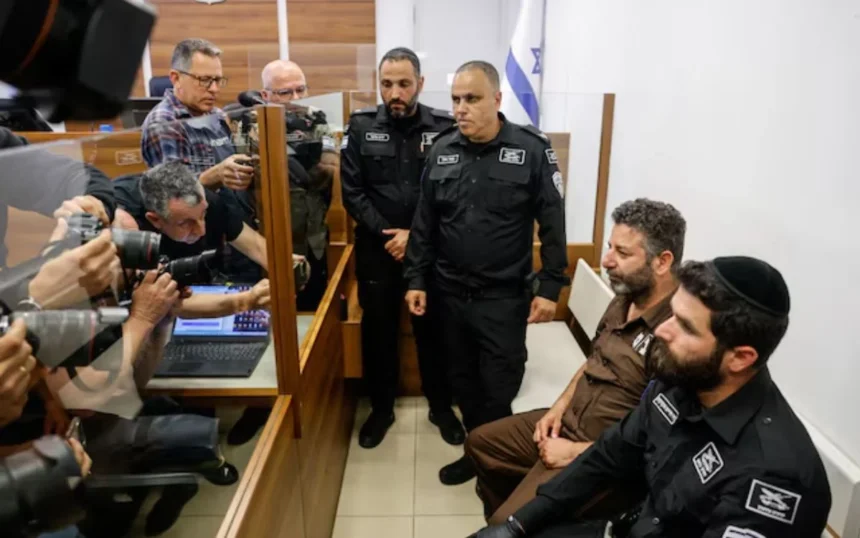
An Israeli court has extended the detention of two foreign activists from a Gaza‑bound flotilla until May 10, 2026, as authorities continue their investigation into alleged links with the Palestinian militant group Hamas. According to Reuters, the Ashkelon Magistrate’s Court approved the extension after the Israeli security services requested additional time for questioning. The two detainees, Brazilian national Thiago Ávila and Spanish national Saif Abu Keshek, were seized by Israeli forces along with more than 170 other activists when navy vessels intercepted their flotilla in international waters near Greece earlier in the week.
The Global Sumud Flotilla, organized by pro‑Palestinian groups, set sail from Barcelona on April 12 with the stated aim of delivering humanitarian aid to Gaza and challenging Israel’s naval blockade on the Strip. As reported by Israeli news outlets and rights groups, the fleet of dozens of boats was intercepted late on May 26, 2026, prompting Israeli authorities to board the vessels and transfer Abu Keshek and Ávila to Israel while the rest of the activists were released in Greece. The Israeli Foreign Ministry has framed the operation as an enforcement of a lawful blockade, while pro‑Palestinian groups describe it as a preventive move against an unarmed humanitarian mission.
What are the activists accused of?
Israeli authorities have not formally charged the two men but are investigating them under a range of security‑related allegations. According to the Israeli rights group Adalah, which is assisting the pair’s legal team, the suspects face suspicion of offenses including assisting the enemy during wartime, contact with a foreign agent, membership in and providing services to a terrorist organization, and the transfer of property for a terrorist organization. Adalah has noted that the Israeli security agency Shin Bet has asserted that the men may have ties to individuals or networks that the United States classifies as working on behalf of Hamas, though the group stresses that no definitive evidence has been made public.
The Ashkelon Magistrate’s Court has been holding periodic remand hearings to determine whether the two should remain in custody. During a Sunday hearing, Israeli prosecutors requested a four‑day extension but the court granted only two days, initially detaining Ávila and Abu Keshek until May 5. The latest decision, as Reuters reported, extends that period further, holding the two until May 10 as the investigation continues. The court has not yet set a date for a formal indictment but has indicated that the extension is based on the Israeli security services’ assessment that additional questioning is required.
What do the activists and their lawyers say?
The activists and their legal representatives have denied all allegations. According to Adalah lawyer Hadeel Abu Salih, who spoke with Reuters at the Ashkelon court, the clients maintain that their mission was purely humanitarian and aimed at supplying civilians in Gaza, not any militant group. She told reporters that the pair’s arrest was unlawful because it took place in international waters and that Israeli authorities lack jurisdiction over individuals aboard boats registered outside Israel. “Their arrest was unlawful due to a lack of jurisdiction,” Abu Salih said, reiterating that the flotilla’s purpose was to provide aid to Gaza’s civilian population.
Abu Keshek and Ávila have also alleged mistreatment during their detention, accusations that have been echoed by rights monitors and family members. According to reports from Al Jazeera and other outlets, the Global Sumud Flotilla’s network cited accounts from fellow activists who were released in Greece, describing physical abuse aboard the Israeli naval vessel. The Israeli rights group Adalah visited the two men in Shikma Prison in Ashkelon and relayed that they described being handcuffed, blindfolded, and forced to lie face down for extended periods, resulting in bruises. Abu Keshek’s wife, Sally Issa, has told media outlets that her husband is in shock and has been on a hunger strike, although he continues to drink water.
What role does the flotilla campaign play?
The Global Sumud Flotilla is part of a broader international movement that has sought to challenge Israel’s naval blockade on Gaza through symbolic aid missions. As reported by multiple outlets, the flotilla’s organizers describe the vessels as carrying only a symbolic amount of humanitarian supplies—such as food, medicine, and hygiene items—intended to highlight the humanitarian crisis in Gaza rather than to breach the blockade in a militarily significant way. The earlier June 2025 Gaza Freedom Flotilla, which included Brazilian activist Thiago Ávila, ended in interception and detention, drawing widespread criticism from humanitarian and rights groups.
The current incident has revived diplomatic tensions. Spain’s foreign minister has publicly called for the immediate release of Saif Abu Keshek, a dual Spanish‑Swedish citizen of Palestinian origin, citing concern over his prolonged detention and the allegations of ill‑treatment. Embassies from Brazil and other countries have also raised questions about the legality of intercepting boats in international waters and detaining citizens without formal charges. Israeli officials, in turn, have maintained that the blockade is a legitimate security measure and that any attempt to breach it is subject to enforcement under Israeli law.
How are conditions in detention being described?
Rights groups and the activists’ legal team have highlighted the harsh conditions under which the two are being held. As reported by Al Jazeera and other news organizations, the Israeli security services have not allowed the detainees consistent access to medical checks or legal counsel during the initial days of their custody. The two men have reportedly been held in isolation, with limited contact with the outside world, amplifying concern among international observers. Adalah has stated that, under Israeli detention law, authorities can extend remand for security suspects for up to 21 days with judicial approval, after which any further extension must be reviewed by a higher court.
The fact that both Abu Keshek and Ávila are on a hunger strike has further intensified the scrutiny. According to statements relayed by their lawyer and family members, the strike is a protest against what they describe as unjust detention and alleged physical abuse. The situation has prompted rights organizations to urge the Israeli authorities to provide medical monitoring and to ensure that any continued detention is fully justified and transparent under international human‑rights standards. Some legal experts have warned that the expanding use of security‑detention powers could set a precedent for the treatment of other activists attempting similar maritime missions.
What are the broader legal and diplomatic implications?
The case is unfolding at a time of heightened focus on Israel’s maritime enforcement and the humanitarian situation in Gaza. As reported by several outlets, the seizure of the flotilla and the selective detention of two activists has drawn criticism from human‑rights groups, which argue that intercepting civilian vessels in international waters sets a troubling precedent for freedom of navigation. At the same time, Israeli officials have reiterated that their actions are in line with international‑law provisions allowing states to protect their national security and enforce naval blockades during armed conflict.
The extra‑judicial dimension of the case—the use of extended remand without formal charges—has also raised questions among legal analysts. As noted by commentators cited in international media, prolonged interrogation without indictment can create conditions in which evidence‑‑gathering becomes the primary justification for continued detention, rather than the immediate need to prevent further security threats. With the detention of Ávila and Abu Keshek now extended until May 10, the next hearings will likely determine whether Israeli prosecutors move toward formal charges or seek further judicial extensions.
What comes next for the two activists?
For Thiago Ávila and Saif Abu Keshek, the immediate future depends on the direction of the Israeli investigation and the outcome of subsequent court appearances. Their legal team has signaled that it will continue to challenge the legitimacy of the detention, especially given the lack of transparent evidence tying them to terrorism and the fact that the interception occurred in international waters. If prosecutors proceed with security‑related charges, the case could move into a more protracted trial phase, where the question of their alleged ties to Hamas and other organizations will be scrutinized in detail.
In the meantime, the activists’ families and allied organizations are preparing for continued advocacy, including diplomatic démarches and public‑awareness campaigns. As reported by multiple outlets, the Global Sumud Flotilla’s network has pledged to keep pressing for the release of Ávila and Abu Keshek while maintaining its broader goal of challenging the Gaza blockade through nonviolent means. The Israeli court’s decision to extend detention until May 10 marks another incremental step in a case that sits at the intersection of maritime law, security‑detention practice, and the politics of humanitarian aid to Gaza.
Joined this club last week and the experience has been great. The winning rate seems better than other sites. Love krktwin8club!