


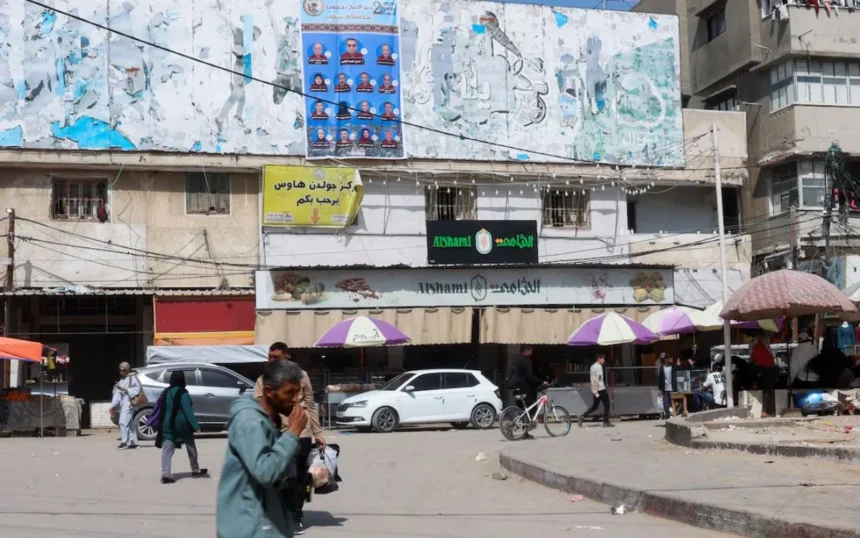
The Palestinian Authority plans municipal elections in Deir al-Balah, central Gaza Strip, on April 25.
This marks the first local vote in Gaza since 2005.
According to Bastille Post, the elections aim to elect local representatives amid hopes for community rebuilding.
The Palestinian Central Election Commission announced in February that 2026 local elections would cover 421 local councils, including 12 locations in the West Bank and Deir al-Balah.
Campaign materials have appeared on Deir al-Balah streets, an area less damaged by conflict.
Residents see the vote as a step to restore civic life after years without elections.
What Are the Reactions?
“The fact that elections have been absent from the Gaza Strip for 20 years, and now… we welcome their return. This gives us hope for change,” said Saeed Abu Issa, a Palestinian candidate for municipal elections.
“As a displaced person, what I hope… is to provide services for displaced people and camps, such as sanitation,” said Ahmed Abu Ouda, a displaced Palestinian.
Many view the elections as a chance to address infrastructure damaged by war.
Supporting Details
The last West Bank local elections occurred in 2021, while Gaza’s were postponed due to internal divisions.
The European Council on Foreign Relations notes the elections are set for April 25 across Gaza and the West Bank under a 2025 decree by President Mahmoud Abbas.
Candidates must commit to the Palestine Liberation Organisation’s program and international commitments.
What Implications for Hamas Popularity?
These elections provide a rare gauge of public sentiment in Gaza, where Hamas has held power since 2007.
Polls show Hamas maintaining strong support despite conflict, potentially reflected in voter turnout and results.
The Central Elections Commission, led by Rami Hamdallah, can reject non-compliant candidates, influencing participation.
The vote in Deir al-Balah revives local democracy after two decades, focusing on services and recovery.
It highlights ongoing Palestinian political dynamics amid division and reconstruction needs.
Outcomes may signal shifts in support for ruling factions.
The slots here are incredibly exciting and the hit rate seems better than other sites. I’m hooked on modal777slot already!
Super addictive games and the daily rewards keep me coming back. I have told all my friends to join phjilii already!
If you like Jili games, this is the absolute best place to play them. The win rates feel much fairer here. Check out jilijdb for the best action.