


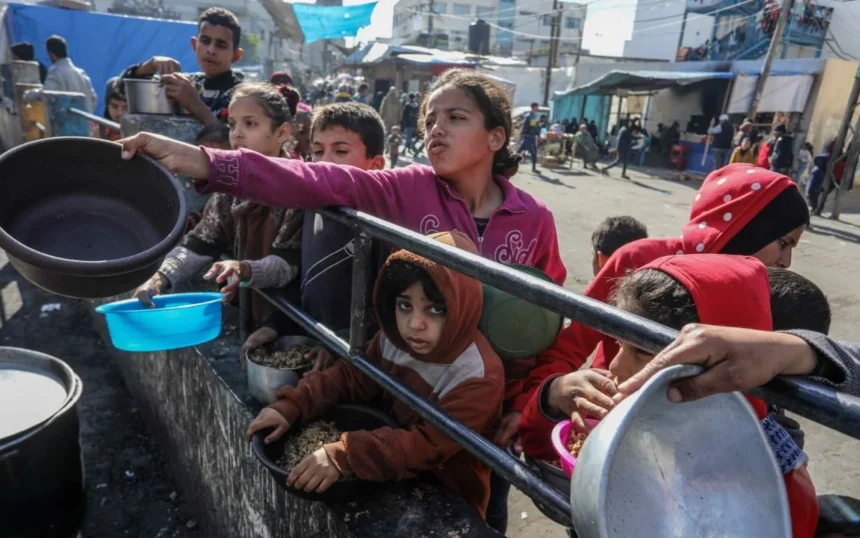
Aid entering Gaza has plummeted to its lowest levels in months, exacerbating the hunger crisis across the territory. According to the World Food Programme, this sharp decline has forced the suspension of food parcel distributions, leaving one million vulnerable people at risk of losing vital support. Restrictions at crossing points and security disruptions continue to limit deliveries despite stockpiles waiting nearby.
The United Nations Office for the Coordination of Humanitarian Affairs reports that aid volumes have fallen by 56 percent since April, with even steeper drops at key crossings like Kerem Shalom. Humanitarian agencies emphasize that Gaza requires 500 to 600 trucks daily to meet basic needs, but actual entries often hover far below this threshold.
What Are the Reactions?
Amjad Al Shawa, director of the Palestinian NGOs Network, stated, “There is a shortage of all humanitarian items… People [are] starving due to the shortage of aid… 100% of the population depend on humanitarian aid.” Aid groups including Oxfam and NRC warn that people now average one meal every other day, down from two previously.
The Humanitarian Country Team denounced Israeli plans to reroute aid through military-controlled hubs, noting it would leave large parts of Gaza, especially vulnerable groups, without supplies. Organizations report 83% of required food aid blocked, alongside shortages in insulin, blood supplies, and hygiene items.
Supporting Details
Northern Gaza faces acute shortages, with bakeries depleting flour stocks and hospitals rationing critical resources. Over 428,000 people have been displaced since mid-March due to military activity and blockades starting early March, per OCHA updates.
Pre-war aid needs were already strained, but current closures have stranded hundreds of trucks at hubs like Al-Arish in Egypt. Only around 1,500 hospital beds remain operational, far below requirements for Gaza’s 2 million residents.
What Happens Next?
Without resumed flows, one million could lose food support entirely, while malnutrition treatment needs rise for 50,000 children. The UN assesses ongoing risks of famine conditions without sustained access and protection.
Aid positioned in Jordan, Ashdod, and Egypt—enough for over a million people for five months—remains undelivered due to closures. Humanitarian operations face attacks on facilities and movement curbs amid military escalations.
Gaza’s population endures deepening hunger from critically low aid entries, with blockades halting food, fuel, and medicine amid widespread displacement and facility strains. International agencies urge immediate access restoration to avert disaster.