


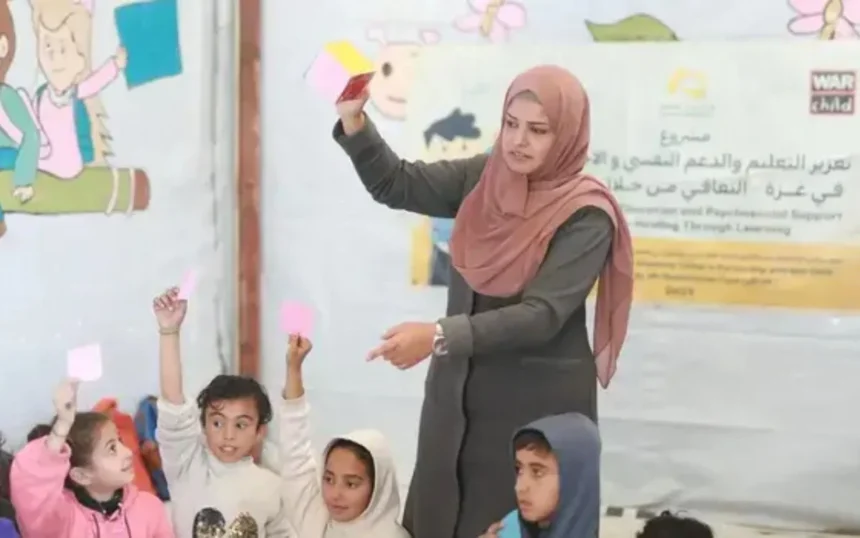
The education system in the Gaza Strip continues to face severe disruption as the ongoing conflict has resulted in widespread destruction of school infrastructure. According to Al Jazeera, hundreds of schools have been damaged or flattened since the conflict began in October 2023, while many others are currently being utilized as emergency shelters for displaced families. The loss of facilities and the displacement of teaching staff have created significant barriers for an estimated 700,000 young learners across the region.
As reported by the UN Office for the Coordination of Humanitarian Affairs (OCHA), efforts to restore access to schooling are gaining momentum through the renovation and establishment of temporary learning sites. By mid-January 2026, over 440 spaces were operational across the region, providing educational support to roughly 270,000 students. These initiatives rely on the dedication of more than 6,300 teachers who continue to provide instruction despite challenging conditions.
How Are Aid Organizations Responding?
International agencies and NGOs are implementing multifaceted strategies to reintegrate students into learning environments. UNICEF has collaborated with local partners to establish temporary facilities, including the delivery of specialized educational kits known as “School-in-a-Box” to support classroom instruction. According to Forbes, these UNICEF-led spaces serve a dual purpose, functioning as schools for core subjects during the day and as hubs for psychosocial support, health services, and vaccinations after hours.
The agency aims to reintegrate 336,000 children into classrooms by the end of 2026. Simultaneously, UNRWA continues to manage programs that offer in-person education within designated shelter schools. Enas Hamdan, who leads the communications office for UNRWA, stated that the organization is actively working to broaden its reach across 67 school-shelters throughout the Gaza Strip to provide safer learning environments.
Psychological Support in Classrooms
The impact of prolonged conflict on student mental health is a primary concern for educators and humanitarian staff. Many children have endured significant trauma, which psychologists note has severely hindered their ability to focus and engage with traditional curricula. To address this, organizations like War Child, in collaboration with local initiatives such as the Teacherivity Centre Gaza, have introduced training programs focused on social-emotional learning.
This methodology encourages students to reflect on their experiences and express their feelings within a structured classroom setting. According to OCHA, these programs offer a haven where children can feel acknowledged and understood, helping them regain a sense of routine. For teachers, the focus is on building a resilient foundation that allows students to navigate the current environment while maintaining their connection to education.
Future Implications for Gaza Education
The long-term recovery of the education sector remains contingent on stabilizing school infrastructure and addressing the severe shortage of qualified staff. As reported by HEAL Palestine, the rebuilding process is viewed as a vital effort to ensure the next generation can lead future societal recovery. While current emergency programs utilize tents and makeshift shelters, international organizations are emphasizing the need for more permanent, safe learning facilities.
Strategic planning, such as the initiative supported by the “Education Cannot Wait” fund, is focused on mitigating the long-term impact of missed schooling. The goal remains for all school-age children in Gaza to return to in-person education by 2027. Despite the volatility of the situation, the continuous expansion of these temporary hubs provides a critical bridge for students waiting to resume formal learning.
Ongoing humanitarian efforts are successfully facilitating a gradual return to the classroom for hundreds of thousands of students in Gaza. By combining core academic instruction with essential psychosocial support, aid agencies and local educators are stabilizing the learning environment. These initiatives represent a concerted commitment to preserving the future of Gaza’s youth through continued educational access.
The atmosphere here is just great and the game selection is massive. I always feel lucky whenever I play at magojilicasino.
Just stumbled upon this site and I am already hooked. The speed is amazing and the vibes are just right for a gamer. vn47tg88