


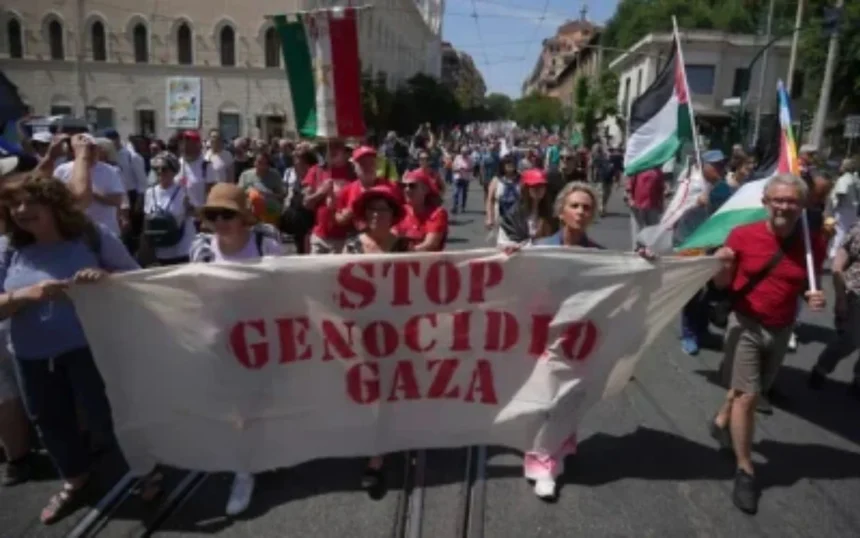
A growing body of legal and political commentary argues that the claim Israel has committed genocide in the Gaza Strip is unsupported by the available evidence. As reported by the Times of Israel in a 2026 blog‑style legal analysis, the author contends that Israel’s military operations after the Hamas‑led attacks of October 7, 2023, are better understood as a response to terrorism than as a campaign aimed at the physical destruction of Palestinians in Gaza. The article maintains that the label of genocide, as defined by the 1948 Genocide Convention, has been misapplied and that the accusations are “unfounded” when measured against the legal threshold for intent and conduct.
According to the Times of Israel commentary, supporters of this view emphasize that Israel has repeatedly stated that its stated goal is to dismantle Hamas’s military infrastructure and secure the release of hostages, not to eliminate the Palestinian population of Gaza. The analysis highlights that the conduct of the Israel Defense Forces (IDF) includes urban‑combat operations, air strikes, and ground incursions that have caused mass casualties and displacement, but asserts that high harm alone does not meet the definition of genocide if the underlying intent is not to destroy a group in whole or in part. The article notes that critics of the genocide label distinguish between severe violations of international humanitarian law and the much higher bar of genocidal intent.
Why do some lawyers and officials reject the genocide label?
The blog argues that Israel’s defenders see the term “genocide” as both legally inaccurate and politically weaponized. As reported by the Times of Israel article, the author points to statements by Israeli officials who insist that the state is acting in self‑defense under international law, and that it has taken steps to allow humanitarian aid into Gaza, establish evacuation corridors, and minimize harm to civilians, despite the reality of high casualty figures. The commentary notes that these officials argue such actions are inconsistent with the systematic, group‑targeted destruction required to prove genocide and instead reflect a counter‑terrorism campaign adapted to an asymmetric urban‑warfare setting.
Other legal‑policy outlets aligned with this perspective similarly stress that genocide requires a specific intent to destroy, in whole or in part, a national, ethnic, racial, or religious group. As reported by commentators quoted in policy‑analysis pieces, critics of the genocide allegations say the evidence points to mistakes, collateral damage, and the tragic consequences of heavy urban warfare, but not to a state policy aimed at erasing Palestinians in Gaza as a group. Those critics argue that framing the situation as genocide, absent proof of that intent, risks diluting the term’s gravity and undermining its use in other historically recognized cases.
What do UN‑backed and human‑rights reports say?
In contrast, several UN‑backed investigations and major human‑rights analyses have concluded that Israel’s conduct in Gaza may meet the legal definition of genocide. As reported by UN News, the UN Human Rights Council–appointed Independent International Commission of Inquiry on the occupied Palestinian territory concluded in late 2025 that Israel is responsible for the commission of genocide in Gaza. The commission stated that Israeli authorities and security forces committed multiple genocidal acts, including killing members of the group, causing serious bodily or mental harm, and deliberately imposing conditions of life designed to bring about the group’s physical destruction in whole or in part.
Reuter’s coverage of the commission’s findings notes that the panel also identified genocidal intent, citing both explicit statements by Israeli officials and the pattern of state conduct as evidence. The report asserts that Israel has failed to prevent genocide, has perpetrated genocide, and has failed to punish those responsible. A separate legal analysis by the University Network for Human Rights, summarized in outlets such as Portside, similarly argues that Israel’s actions in Gaza since October 2023 amount to violations of the Genocide Convention, specifically killings, inflicting severe harm, and creating conditions calculated to bring about physical destruction.
How do different legal interpretations shape the debate?
The disagreement over Gaza has become a focal point in international‑law debates about genocide‑standard application. As reported by UN News and legal‑analysis outlets, some international‑law scholars argue that the scale of death, displacement, and infrastructure destruction in Gaza, combined with certain public statements by Israeli leaders, reasonably supports findings of genocidal acts and intent. These experts stress that the UN commission’s methodology relied on victim testimonies, satellite imagery, hospital records, and open‑source documents, all of which it says indicate a pattern consistent with the 1948 Convention.
Others, including commentators cited in the Times of Israel blog, counter that the legal analysis of genocide cannot be based solely on outcomes or political narratives. As reported in associated legal‑policy commentary, they argue that statements taken out of context and the inherent chaos of urban warfare should not be conflated with a clear genocidal policy. These commentators maintain that courts and commissions must weigh the totality of state conduct and intent, not just the humanitarian‑impact statistics, when deciding whether genocide has occurred.
What are the implications for diplomacy and law?
The dispute over whether genocide has been committed in Gaza has major implications for international‑law processes and diplomatic relations. As reported by UN News and Reuters, the UN commission’s findings have already been cited in diplomatic forums and in arguments for stronger sanctions, arms‑embargo proposals, and accountability mechanisms against Israeli officials and military leaders. The commission’s report calls on states to ensure that those responsible are held to account, including through referrals to the International Criminal Court or national‑level prosecutions under the principle of universal jurisdiction.
At the same time, articles and blog posts that argue the accusations are unfounded warn that prematurely or incorrectly applying the genocide label could damage international‑law institutions’ credibility and complicate peace‑building efforts. As reported by commentators in outlets associated with this legal viewpoint, they argue that framing Gaza as a genocide case may harden political positions, erode the possibility of negotiated settlements, and divert attention from accountability for Hamas’s own alleged war crimes, including the October 7 attacks and the use of human shields. The debate, they say, should be grounded in strict evidentiary and procedural standards rather than in emotive or political rhetoric.
In practice, the divergence between those who see Gaza as a genocide case and those who deny it has created a deeply contested legal and political landscape. As reported by UN News and independent‑analysis outlets, the UN‑backed commission and several human‑rights bodies continue to describe Israel’s conduct in Gaza as genocidal, while Israel and its supporters reject those characterizations as unfounded and politically driven. The Times of Israel blog and similar legal‑commentary pieces anchor their position in the argument that the evidence does not meet the specific legal threshold for genocide, even as other international bodies assert that it does, leaving the question unresolved in global‑law and political discourse.

