


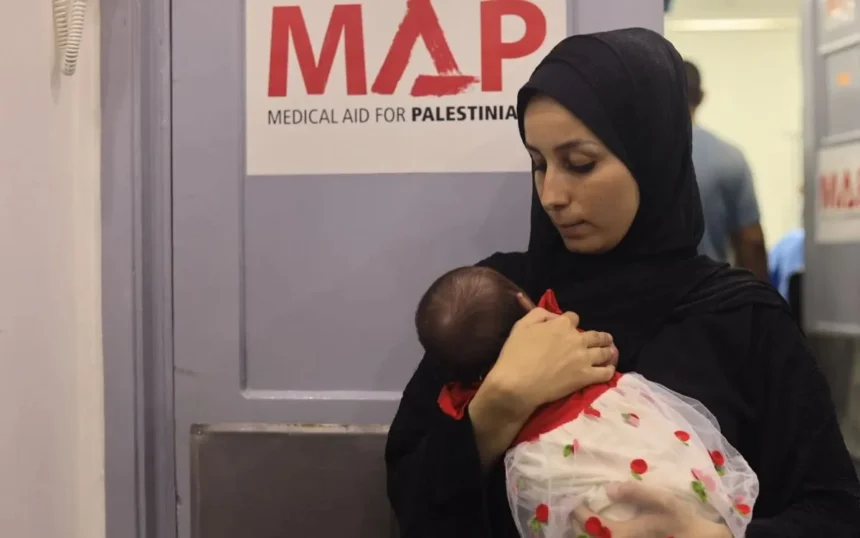
In Gaza, around 50,000 women are pregnant at any time, with up to 160 giving birth daily. As reported by Samaher Said of Medical Aid for Palestinians (MAP) in Big Issue, humanitarian workers support these women amid a dismantled healthcare system. Almost every hospital has been damaged or destroyed by Israeli military actions.
Pregnancy involves exhaustion, trauma, and survival struggles. Said describes women undergoing cesareans without anesthesia due to medication shortages. One in three pregnancies is high-risk, and 70% of newborns are premature or underweight.
What Challenges Do They Face?
According to the International Rescue Committee (IRC), approximately 60,000 pregnant women have little access to prenatal services, with only two of 12 partially functioning hospitals offering maternity care. At least 183 women give birth daily without midwives or doctors. Stress from bombardment and displacement causes premature labor, often fatal without emergency care.
UNFPA reports one in five people faces starvation, raising miscarriage and stillbirth risks for 55,000 pregnant women. A doctor at Al-Awda Hospital told UNFPA, “There’s a severe shortage of food and essential medicines… It’s had a devastating impact on pregnant women.” Only five hospitals provide maternity care across Gaza.
Human Rights Watch (HRW) states Israeli blockades and attacks create life-threatening dangers, with emergency care at just seven hospitals. Arvind Das of IRC noted, “Women are giving birth outside of hospitals – among ruins, in cars or tents… There is a complete lack of privacy and proper medical care.”
Supporting Details
About 15 births occur weekly outside facilities in unsanitary tents, per Said. Malnutrition, high blood pressure, and anemia drain women’s strength, contributing to miscarriages. Breastfeeding struggles arise from stress and unavailable formula, with limited postnatal checks worsening complications.
IRC reports over 155,000 pregnant and breastfeeding women at high malnutrition risk as of December 2024. HRW interviewed women facing starvation, dehydration, and overcrowding, like five babies sharing one incubator. UNFPA notes infectious diseases rise without hygiene products.
What Are the Long-Term Implications?
Mothers shield children during bombardments and prioritize their food despite personal illness, Said observes. Emotional burdens include shame over pregnancy in tents and grief from losses like stillborns. Aid restrictions limit hygiene supplies, water, and nutrition.
IRC calls for full UN Security Council Resolution 2728 implementation for ceasefire and aid access. HRW urges allies to end violations and support UNRWA despite new Israeli laws restricting it. UNFPA seeks $99 million for 2025 needs, with supplies blocked at borders.
Ongoing attacks post-2025 ceasefire persist, with over 100 children killed since October 2025, per Said. Humanitarian groups stress immediate aid scaling and protection for civilians, including mothers and newborns, amid famine threats and healthcare collapse.
Samaher Said of MAP reports daily survival fights for Gaza’s pregnant women and new mothers against malnutrition, destroyed facilities, and trauma. Verified accounts from IRC, UNFPA, and HRW confirm heightened risks of miscarriages, preterm births, and deaths without urgent aid and ceasefire.