


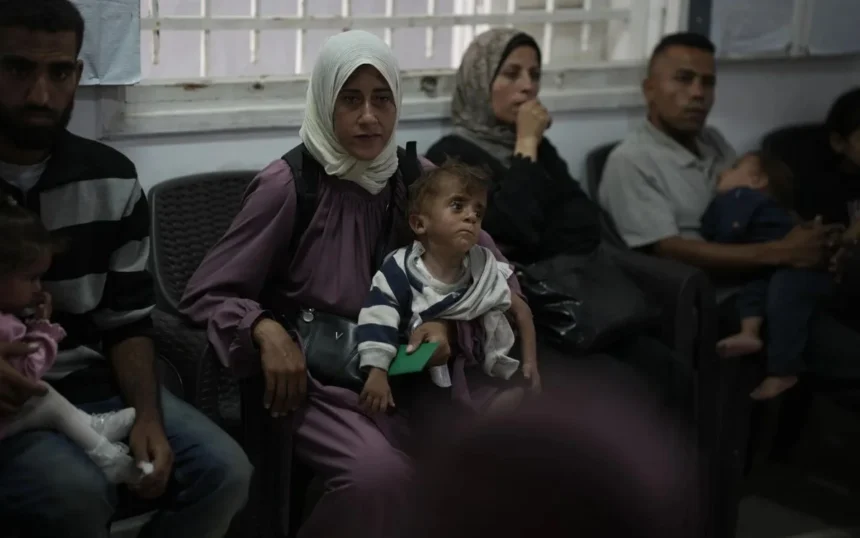
Médecins Sans Frontières (MSF), also known as Doctors Without Borders, has issued a stark warning about the humanitarian situation in Gaza. The organization reports that screenings at its facilities revealed 25 percent of young children and pregnant women are malnourished. This assessment comes amid ongoing restrictions on aid entering the region.
As reported by MSF, the Israeli authorities have restricted food entry to minimal levels for survival. They have also militarized distribution processes while destroying much of Gaza’s local food production capacity. MSF describes this as deliberate starvation rather than mere hunger.
According to MSF, the number of malnourished patients at its Gaza City clinic has quadrupled since mid-May. Severe malnutrition rates in children under five have tripled in recent weeks alone. Clinic staff report enrolling 25 new patients daily for treatment.
General Context
MSF staff in Gaza are witnessing unprecedented levels of hunger affecting patients and colleagues alike. Caroline Willemen, project coordinator at the MSF clinic in Gaza City, stated, “We see the dire consequences of these shortages in Gaza on a daily basis in our clinic.” She added, “We are now enrolling 25 new patients every single day for malnutrition. We see the exhaustion and the hunger in our own colleagues.”
The organization emphasizes that across its facilities last week, 25 percent of screened children aged six months to five years, plus pregnant and breastfeeding women, showed signs of malnutrition. This data stems from direct screenings conducted by MSF teams on the ground. MSF attributes the crisis directly to policies enforced by Israeli authorities.
Doctors Without Borders warns that the weaponization of food against civilians must not become normalized. They call for Israeli authorities to allow food and aid supplies into Gaza at scale. MSF teams report daily struggles with shortages impacting their operations.
What Are the Reactions?
MSF has publicly demanded immediate action to reverse the starvation policy. “This is not just hunger – it’s deliberate starvation, manufactured by the Israeli authorities,” the organization stated in its release. Over 100 organizations have joined MSF in sounding alarms about catastrophic starvation risks.
Caroline Willemen highlighted the personal toll on healthcare workers. “We see the exhaustion and the hunger in our own colleagues,” she noted. MSF stresses that markets in Gaza are empty, waste piles up, and illnesses like acute watery diarrhea spread rapidly.
According to MSF, aid distributions average just 28 trucks per day, insufficient for over two million people. Many residents have gone weeks without assistance. The group warns of adults collapsing from hunger and dehydration in the streets.
Supporting Details
MSF clinics in northern Gaza, including Gaza City, face surging malnutrition cases. Enrollment for treatment quadrupled since May 18, with severe cases in young children tripling recently. Screenings confirm one in four vulnerable individuals malnourished.
The organization points to destroyed local food production as a key factor. Israeli restrictions limit aid trucks far below needs. MSF doctors report record acute malnutrition rates, especially among children and the elderly.
Healthcare workers themselves battle hunger while treating patients. MSF notes rising cases of exhaustion among staff. This compounds the strain on already overwhelmed facilities.
What Lies Ahead for Gaza?
MSF urges Israeli authorities to permit scaled-up aid entry and distribution. Without this, mass starvation will spread further across Gaza. The organization calls for an immediate ceasefire to enable humanitarian access.
Doctors report worsening outbreaks of waterborne diseases amid the crisis. Markets remain barren, exacerbating food scarcity. MSF warns that current aid levels sustain bare survival at best.
Over 100 groups echo MSF’s demands for lifesaving aid. They highlight weeks-long gaps in assistance for many. Future developments hinge on policy shifts to allow sufficient trucks daily.
MSF teams continue screenings and treatments despite challenges. They document daily enrollments and rising severe cases. Staff hunger underscores the urgency for intervention.
The deliberate restriction of food has led to empty markets and collapsing residents. Aid blockages persist, with distributions averaging 28 trucks daily. MSF insists on full humanitarian access to avert catastrophe.
Caroline Willemen’s observations from Gaza City clinic paint a grim picture. Daily patient influxes strain resources further. MSF reiterates that starvation tactics target civilians broadly.
Screening data from last week shows consistent 25 percent malnutrition rates. This affects children under five and pregnant women equally. MSF links it to calculated aid controls.
Doctors Without Borders demands normalization of aid flows. They decry militarized distributions as ineffective. Local production destruction amplifies the shortages.
Illnesses spread as waste accumulates unchecked. Dehydration claims adults in public spaces. MSF calls for policy reversal to save lives.
The crisis impacts MSF operations directly, with staff malnourished. Clinics quadruple enrollments amid tripling severe cases. Gaza faces ongoing starvation risks without change.
MSF’s warnings align with broader humanitarian alerts. Over 100 organizations demand action now. Aid scale remains critically low for population needs.
Northern Gaza clinics bear the brunt of surges. Gaza City reports exhaustion across teams. MSF pushes for unrestricted food supplies.
The situation confirms deliberate choices worsening malnutrition. Truck entries stay minimal despite pleas. MSF documents impacts to urge global response.
Future aid increases could stem the tide. Ceasefire calls grow louder from aid groups. MSF screenings will track evolving rates.
MSF staff fight to survive while aiding others. Patient loads overwhelm daily capacities. The cycle demands immediate policy shifts.
Gaza’s malnutrition reaches record levels per doctors. Vulnerable groups suffer most acutely. MSF attributes it to enforced restrictions.
Calls for scaled aid persist from the frontlines. MSF vows continued reporting on ground realities. Humanitarian access remains the key demand.
The verified reports from MSF outline a manufactured crisis through aid limits and destruction. Clinics enroll record patients amid staff hunger. Over 100 groups reinforce the starvation warnings, pressing for unrestricted supplies to Gaza.
Houseoflucklogin? Oh man, that place is like my comfort zone online. Quick logins, decent games, what’s not to love? Check it out houseoflucklogin.
I’m feeling lucky playing luckypkr777game! Give it a shot, you might get lucky too. Check it out here: luckypkr777game
Trying to log in to pk777login now. Hopefully, it’s quick and easy. Hate when login processes are a pain. Wish me luck: pk777login
CasinoLeoVegas, eh? Heard a lot about this one. Seems like a pretty popular choice for a reason. Nice selection of games and the bonuses aren’t too shabby either. Take a peek casinoleovegas.