


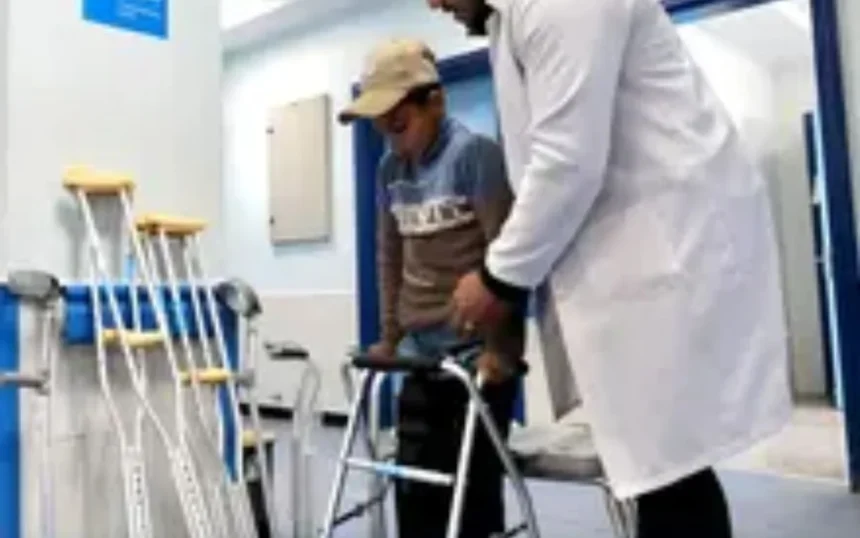
The World Health Organization’s latest update on trauma rehabilitation needs in the Gaza Strip paints a stark picture of a long‑term physical‑recovery crisis unfolding amid a shattered health‑care system. As reported by the UN’s ReliefWeb platform, the May 2026 technical note builds on earlier WHO analyses that first estimated around 42,000 people in Gaza living with life‑changing injuries from the ongoing conflict. Those injuries include thousands of amputations, spinal‑cord lesions, traumatic brain injuries, and major burns, with at least one‑quarter of all recorded injuries considered severe enough to require years of rehabilitation support.
According to the WHO technical note, the cumulative number of life‑changing injuries in Gaza has continued to rise since the conflict escalated in October 2023, with the latest data drawn from 22 WHO‑supported Emergency Medical Teams, the Gaza Ministry of Health, and key health and humanitarian partners. The document notes that life‑changing injuries now account for roughly a quarter of a total of more than 167,000 people reported injured, a figure that WHO and other UN agencies have repeatedly highlighted in recent briefings. Among these, children represent a disproportionate share; earlier September 2025 WHO estimates indicated that one in four severe injuries occurred in minors, underscoring the intergenerational impact of the crisis.
Why is rehabilitation demand so high
The update underscores that trauma‑related injuries in Gaza have shifted the immediate focus from emergency surgery to long‑term rehabilitation, with many survivors facing permanent disability. As reported by the WHO Health Emergencies Programme, severe limb injuries—often involving blast trauma, crush wounds, or complex fractures—are the primary driver of the need for physiotherapy, prosthetics, and orthotic devices. The same analysis estimates that between 3,100 and 4,000 limb amputations have occurred, many in patients who previously had little or no access to specialized surgical or prosthetic care.
Beyond the sheer number of amputees, the note describes a surge in spinal‑cord injuries, traumatic brain injuries, and major burns, all of which require multidisciplinary rehabilitation. According to the WHO, these categories add thousands more people to an already overstretched rehabilitation caseload, with many individuals needing long‑term physiotherapy, occupational therapy, mental‑health support, and assistive devices such as wheelchairs, crutches, or custom‑fit prostheses. The organization stresses that these needs will persist for years, even if active hostilities diminish, because musculoskeletal and neurological impairments rarely resolve without sustained therapy.
What is the current state of services
Rehabilitation services in Gaza remain severely constrained, with only a small fraction of pre‑conflict capacity still operational. According to the September 2025 WHO technical note, less than one‑third of rehabilitation‑related facilities in Gaza were functioning at that time, and none were operating at full capacity. By May 2026, OCHA’s Humanitarian Situation Report noted that rehabilitation services were reaching roughly 7,200 people per week across Gaza, a figure described as “far below” the estimated need, especially given WHO’s projection that tens of thousands of survivors require ongoing care.
Several senior WHO officials have publicly tied the gap between need and capacity to the destruction of infrastructure and the displacement or killing of health‑workforce members. For example, WHO Regional Director for the Eastern Mediterranean Dr. Hanan Balkhy stated in a May 2026 social‑media post that more than 400 rehabilitation professionals, including physiotherapists and other specialists, had been displaced or killed since the conflict intensified, and that no rehabilitation‑specific equipment had entered Gaza between May 2024 and mid‑April 2026. ReliefWeb and UN sources report that even basic items such as wheelchairs, prostheses, and simple orthotic devices have been in short supply, forcing many injured patients to manage without critical mobility aids.
How are patients and families coping
For patients and their families, the lack of rehabilitation services has turned what might be a temporary disability into a near‑permanent condition. As reported by UN‑affiliated health‑and‑humanitarian briefings, many amputees in Gaza are surviving on basic stump care, often without access to prostheses or regular fitting sessions, which can lead to chronic pain, pressure sores, and secondary medical complications. Spinal‑cord and traumatic‑brain‑injury patients face similar challenges, with limited access to specialized rehabilitation centers, adapted housing, or accessible transport, effectively confining them to cramped, often overcrowded, makeshift shelters.
Outside health‑facility reports, anecdotal accounts shared through UN‑and‑partner channels describe families devoting hours each day to manually mobilizing injured members, applying basic dressing changes, and improvising therapy in the absence of trained therapists. Some humanitarian field reports note that caregivers—often women and older children—are themselves at risk of musculoskeletal strain and mental‑health burdens, yet have few avenues to receive support themselves. The WHO’s May 2026 update frames these conditions as a “silent emergency” layered on top of the visible trauma of the conflict, emphasizing that the social and economic costs of unmet rehabilitation needs will deepen poverty and dependency across Gaza.
What are the international actors saying
The WHO and its partners have repeatedly called for increased funding, protection of health‑care facilities, and the unimpeded entry of medical supplies and rehabilitation equipment as prerequisites for scaling up services. As reported by UN‑affiliated media and situation reports, WHO has urged parties to the conflict to ensure the safety of hospitals, clinics, and medical transport, noting that repeated damage to facilities has forced the consolidation or closure of rehabilitation departments. The organization has also highlighted that restrictions on fuel, electricity, and the movement of goods have hampered the operation of existing services, including the ability to power assistive‑device‑fabrication units or maintain cold‑chain requirements for certain medical supplies.
At the policy level, the United Nations Office for the Coordination of Humanitarian Affairs (OCHA) has integrated rehabilitation needs into its broader Gaza‑response plans. OCHA’s May 2026 Humanitarian Situation Report notes that appeals for Gaza in 2026 have fallen far short of their funding targets, with only about 10 percent of required humanitarian financing secured by early May. The report observes that this shortfall directly affects the ability of health‑cluster partners, including WHO‑supported teams, to expand rehabilitation‑specific interventions such as outreach physiotherapy, mental‑health support, and community‑based rehabilitation programs.
What are the broader implications
The May 2026 update suggests that the rehabilitation‑needs crisis in Gaza is not only a medical challenge but also a long‑term socioeconomic and human‑rights issue. As analyzed by WHO‑partner research published in late 2025, disruptions to rehabilitation capacity in conflict‑affected areas can lead to higher rates of preventable disability, lower educational and employment outcomes, and increased dependence on social‑protection systems. In Gaza, where health‑system recovery is already described as one of the most urgent post‑conflict priorities, the scale of physical‑rehabilitation demand may outstrip available resources for years.
Some experts associated with WHO‑linked publications have warned that children with life‑changing injuries may face lifelong mobility and cognitive limitations if early and intensive rehabilitation is not provided. The 2025 technical note and subsequent WHO‑hosted briefings emphasize that early intervention—within the first weeks or months after injury—can significantly improve functional outcomes and reduce the likelihood of secondary complications. However, in the current environment, many injured children are receiving only basic care, if any, with rehabilitation often deferred due to security risks, lack of trained staff, or insufficient equipment.
What is likely to happen next
Looking ahead, the WHO and partnering agencies have outlined several near‑term priorities, all of which are contingent on improved security, access, and funding. According to the May 2026 update and supporting OCHA documents, those priorities include restoring and expanding prosthetic‑and‑orthotic services, training additional health‑workers in trauma‑rehabilitation techniques, and establishing community‑based rehabilitation networks that can reach patients in remote or newly‑displaced areas. The organizations also stress the need for integrating mental‑health and psychosocial support into rehabilitation programs, recognizing that psychological trauma frequently accompanies physical injury in conflict settings.
At the same time, humanitarian‑coordination reports note that any meaningful expansion of rehabilitation services will depend on durable ceasefire arrangements and unhindered humanitarian access corridors. OCHA’s May 2026 situation report points out that fluid front lines, ongoing bombardments, and movement restrictions continue to hamper the delivery of medical supplies and the safe relocation of critically injured patients between facilities. The WHO, in its technical note and accompanying public statements, has reiterated that “the most effective intervention” for rehabilitation needs in Gaza remains a sustained reduction in violence and the protection of health‑care infrastructure, even as its teams work to scale up services with the resources currently available.
In practical terms, the May 2026 update confirms that tens of thousands of people in Gaza now live with life‑changing injuries that will require structured rehabilitation for years, while the local health‑system capacity to meet those needs remains a fraction of what is required. The document underscores that many amputees, spinal‑cord‑injury survivors, and burn‑victims are receiving only partial or no formal rehabilitation, and that the absence of equipment and personnel is compounding both medical and social hardship. Without a significant increase in funding, access, and workforce support, health‑and‑humanitarian agencies warn that the unmet rehabilitation burden in Gaza will continue to grow, with lasting consequences for individual survivors, families, and the broader reconstruction of the territory.
Best betting options for local players. The odds are competitive and the app is very user friendly. Big thumbs up for ph1xbetph.
I’ve tried a few different platforms lately but this one stands out for its reliability. The registration process was a breeze. Check out idsampan303 for a great experience.
Such a vibe! The game variety is huge and everything feels very fair. My go-to spot for relaxing after work is vn678wingame.
I’ve been playing here for a while now and the interface is super smooth. Definitely one of the best spots to hang out and win big. Check out marvel77login for a great experience!
Best collection of slots I have seen in a while. Everything loads fast and the gameplay is very addictive. jili00games
The registration process was super quick and the welcome bonus is actually legit. I am really enjoying the experience here so far on phgl777
Finally found a site that actually cares about its users. The customer support team is super helpful and the bonuses are actually worth it. Love krktwin33 so far.