


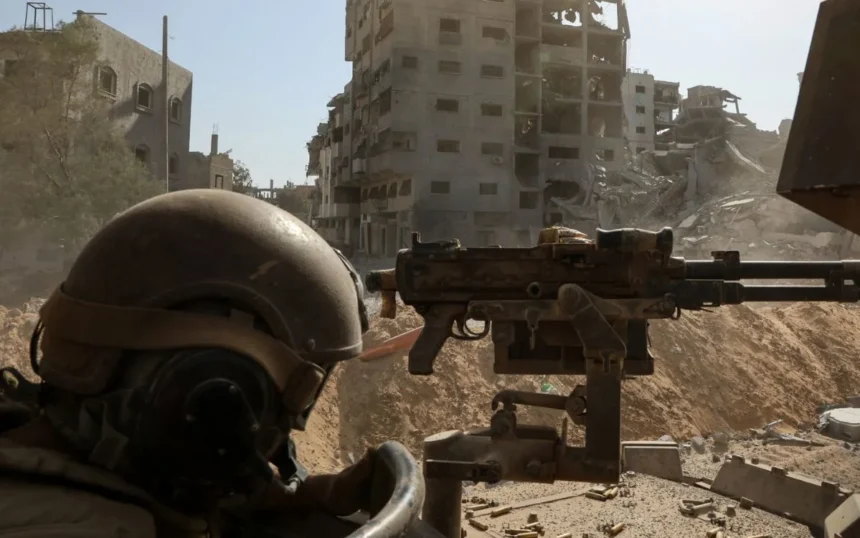
Israeli soldiers serving in the Gaza Strip have described receiving orders to kill any Palestinian man they encountered during Israel’s ongoing military campaign, according to multiple reports citing interviews and testimony by troops. The accounts, drawn from conversations with active‑duty and former soldiers, portray a pattern in which Israeli forces shot men regardless of age, whether they were armed, or whether they were holding white flags. These claims have drawn sharp international attention amid already extensive scrutiny of Israel’s conduct in Gaza since the war began in October 2023.
General context behind the orders
Reports first emerged through a detailed piece published by Middle East Eye, which summarized interviews with Israeli soldiers who described explicit instructions relayed to them in the field. One soldier recounted being told: “A man, no matter what age, don’t play games with it; kill immediately,” describing this as the standing order for any Palestinian male encountered. Other accounts, cited by the outlet, indicate that troops were instructed to treat any man walking on two legs as a potential threat and to open fire without distinguishing between civilians and combatants.
The statements reflect a broader pattern of conduct that several human rights organizations and international investigators have previously alleged in Gaza, including mass casualties among Palestinian men and adolescents. United Nations agencies and independent monitoring groups have repeatedly documented high ratios of male deaths, especially among young men, in specific areas of Gaza, which they have cited as evidence of disproportionate targeting.
Reactions from Israeli military and political figures
Israeli military spokespersons have not issued a blanket denial of the specific wording attributed to field orders, but the Israel Defense Forces has repeatedly insisted that its operations are conducted in accordance with international law and are aimed at neutralizing Hamas fighters. The military has pointed to the urban‑warfare environment in Gaza, where it says Hamas operatives often blend into the civilian population, as the reason for extremely strict rules of engagement. Israeli officials have also emphasized that investigations are routinely launched into alleged violations, though they have not publicly confirmed any internal probe into the “kill any man” claims as of the latest reporting.
Within Israel, the statements have triggered debate among security experts and former officers. Some retired military figures, speaking to media outlets, have described the alleged orders as consistent with the highly permissive combat environment troops have experienced in Gaza, in which commanders were encouraged to err on the side of lethality. Others have criticized such directives as running counter to both the IDF’s professed doctrine and international humanitarian standards, warning that they could expose Israeli soldiers and commanders to legal liability.
International and human rights responses
International human rights groups have seized on the soldiers’ accounts as further evidence of systemic violations in Gaza. Amnesty International and Human Rights Watch have previously documented cases in which Israeli forces opened fire on unarmed civilians, including men and boys, under circumstances that appeared to violate the principle of distinction between combatants and civilians. The new testimony strengthens calls by these organizations for independent, international investigations into alleged war crimes committed by Israeli forces in Gaza.
At the United Nations, senior officials have reiterated demands for accountability following the publication of the soldiers’ statements. The Office for the Coordination of Humanitarian Affairs has highlighted that since 2023 more than 80 percent of Gaza’s territory has been covered by Israeli‑issued displacement orders or military zones, exacerbating civilian exposure to lethal force. UN officials have warned that orders treating all Palestinian men as legitimate targets could amount to collective punishment, which is prohibited under international humanitarian law.
Legal and humanitarian implications
The alleged directives to “kill any man” raise serious questions under the Geneva Conventions and other bodies of international law. International legal experts have told Middle East Eye that such orders, if proven, would likely constitute violations of the principles of distinction, proportionality, and the prohibition of arbitrary killing. They note that even in asymmetric urban conflicts, modern militaries are required to treat individuals as presumed civilians unless and until hostile intent is demonstrated.
Some legal analysts have warned that if the orders were given at a higher command level, Israeli officers and potentially civilian leaders could face scrutiny from international courts or hybrid tribunals in the future. Several experts have pointed to the International Criminal Court’s ongoing investigation into the situation in Palestine as a potential forum where such allegations could be examined, though any prosecutions would require extensive evidentiary work. Within Israel, defense lawyers and military‑law scholars have said that soldiers could also be prosecuted under domestic law if they can be shown to have carried out unlawful orders, underscoring the tension between obedience and legality in wartime commands.
Impact on Gaza’s civilian population
The soldiers’ descriptions of their orders echo the lived experience of many Palestinian families in Gaza. Across different governorates, including Gaza City, Khan Younis, and Rafah, local residents and medical workers have reported an overwhelming number of dead men and young boys in areas hit by Israeli ground and aerial assaults. Survivors have described scenes in which men were shot at close range, even when they were attempting to evacuate or carrying white flags, corroborating the pattern outlined by the Israeli troops.
Humanitarian agencies operating in Gaza have flagged an alarming skew in casualty figures, with a disproportionate share of deaths among males, particularly in the 15–35 age range. Médecins Sans Frontières and other medical NGOs have repeatedly urged greater transparency on targeting policies, noting that the absence of clear, law‑compliant rules of engagement increases the risk of civilian deaths. For displaced families living in overcrowded camps and makeshift shelters, the fear that any man leaving a tent could be shot has reshaped daily routines, with many women and children assuming the primary risk when moving between locations.
How this fits into the broader Gaza war
The testimony about orders to kill any man encountered in Gaza comes roughly three years after the war began in October 2023, following the Hamas‑led cross‑border attack on Israel that killed more than 1,100 people. Since then, Israeli forces have launched a large‑scale air and ground campaign in Gaza, which has resulted in tens of thousands of Palestinian deaths and widespread destruction of homes, hospitals, and infrastructure. The conflict has been marked by a series of declared military phases, including repeated clearance operations in urban centers and the expansion of “humanitarian zones” that humanitarian actors have criticized as inadequate and unsafe.
Within this context, the soldiers’ accounts add a deeper layer to the debate over how Israel’s military strategy is translated into battlefield conduct. Analysts have pointed out that the intensity of Israeli operations, combined with a high operational tempo and persistent pressure to locate Hamas fighters, may have contributed to an environment where broad, lethal orders were passed down to units. At the same time, critics argue that no security imperative justifies treating entire categories of civilians—such as adult or adolescent men—as presumptively hostile.
What may happen next
The immediate fallout from the soldiers’ statements appears likely to center on investigations, both inside Israel and in international forums. Israeli media outlets have reported unofficial discussions within army leadership about reviewing command‑and‑control procedures and the dissemination of rules of engagement, though no formal public commission has yet been announced. International prosecutors and UN bodies, already engaged with the Gaza‑related caseload, may treat the testimony as additional evidence to be folded into existing inquiries, especially if corroborating documents or witness accounts emerge.
On the political front, the revelation may intensify diplomatic pressure on Israel from some Western governments and regional actors. Some foreign‑ministry officials have privately signaled that they are watching for any new developments in field‑order allegations, fearing that such practices could further erode support for Israel’s position in public opinion and international institutions. At the same time, Israeli officials may attempt to downplay the accounts by emphasizing the fog of war and the difficulty of distinguishing fighters from non‑combatants in densely populated areas.
What is confirmed so far
What is currently verified is that several Israeli soldiers have described being ordered to kill any Palestinian man they encountered in Gaza, including unarmed men and those holding white flags. These accounts have been reported by multiple outlets that have cross‑checked statements with at least one Israeli official who acknowledged contact with troops involved in the relevant incidents. The testimony has not yet been formally confirmed in a court of law, but it aligns with broader patterns of targeting and casualty distributions documented by international agencies and human rights groups over the course of the Gaza war.
Really impressed with the withdrawal speed here. It is rare to find a site that pays out this quickly. Truly trust jili98login with my deposits.
Finally found a platform that doesn’t lag during peak hours. The registration process was a breeze. Great job guys at phjljl1.
AH88APP, the REAL deal! Finally a decent app that lets me get my game on while I’m waiting in line. No lag, smooth gameplay on my phone. Worth checking out if you’re tired of desktop. ah88app
The winning streaks here are insane! I’ve tried many sites but the odds at slotjagowin404 feel much fairer. Love the vibe here.
Such an exciting atmosphere and the games are incredibly addictive. I spend a few hours here every evening just to unwind. Love the vibe. See it at phgalaxyph