


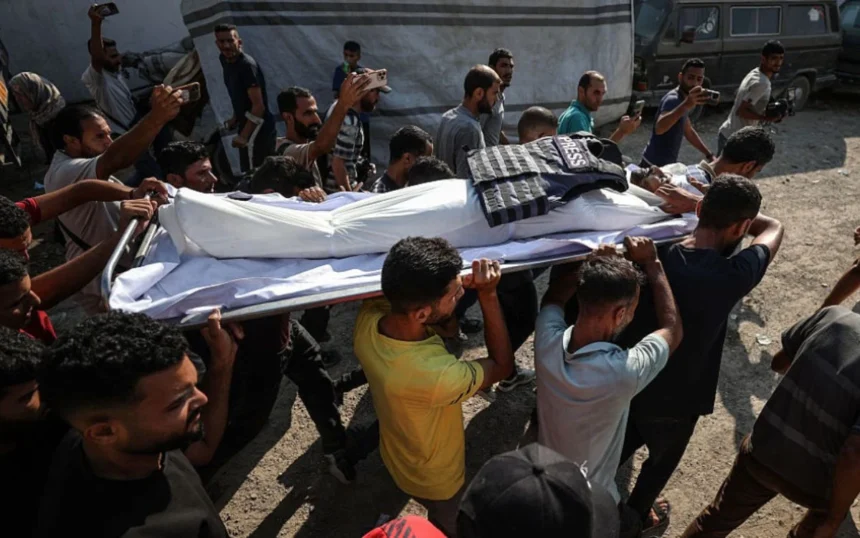
For journalists in Gaza, World Press Freedom Day on May 3 does not feel like a ceremonial celebration but a stark reminder that every assignment can be their last. According to The New Arab, local journalists mark the day with protests, vigils, and public statements recalling colleagues who have been killed or injured while covering the war between Israel and Hamas. They describe reporting in Gaza not as a profession with risks, but as a daily gamble with survival, where the line between gathering news and becoming a casualty has blurred almost entirely.
As reported by multiple international press‑freedom groups, Gaza has become the deadliest place in the world for journalists in recorded history. The Committee to Protect Journalists (CPJ) has documented that more than 230 journalists and media workers have been killed in Gaza since the conflict erupted in October 2023, most of them Palestinian. Several of these deaths have been concentrated in single incidents, including Israeli strikes on locations where journalists were reporting, resulting in losses that CPJ and other watchdogs describe as unprecedented in scale and frequency.
How journalists in Gaza experience the day
On World Press Freedom Day, Palestinian journalists and media workers in Gaza have gathered in places such as Gaza City and Khan Younis to hold small demonstrations and pay tribute to slain colleagues. According to The New Arab, the protests have featured placards reading “Stop killing journalists” and “With our blood, we write for Palestine,” underscoring how central fear and loss have become to their professional identity. Many of the participants speak in terms of collective trauma, noting that entire newsrooms have been wiped out and that almost every working journalist in Gaza knows someone who has been killed on duty.
Speakers at the events have described the situation in Gaza as one in which the protections normally associated with press freedom simply do not exist. As reported by The New Arab, Palestinian journalists say they no longer feel safe wearing press vests or helmets, which they once believed might distinguish them from combatants or civilians. Instead, some say those symbols now feel like targets, a perception amplified by repeated incidents in which Israeli strikes have hit groups of journalists or media‑related facilities. The Palestinian Journalists’ Syndicate has called not only for the day to be observed but for the international community to treat Gaza’s media workers as a protected group in armed conflict.
What do press‑freedom groups and researchers say?
International press‑freedom organisations have repeatedly warned that the Gaza war is the most lethal conflict for journalists in modern record. According to the Committee to Protect Journalists, the rate of journalist deaths in Gaza has far exceeded the tolls seen in previous major conflicts, including the wars in Afghanistan, Vietnam, and the former Yugoslavia. A 2025 report cited by Al Jazeera and other outlets concluded that the number of journalists killed in Gaza surpasses the combined journalist deaths in both World Wars, the Vietnam War, and the Yugoslav wars.
The French‑based press‑freedom group Reporters Without Borders (RSF) has designated Gaza as the deadliest place in the world for journalists for 2025, noting that a significant share of global journalist killings that year occurred in the Strip. According to RSF, the nature of the attacks—including strikes on media offices, transmission sites, and individual journalists in exposed areas—raises serious questions about adherence to international humanitarian law. Both RSF and CPJ have called for independent investigations, emphasizing that most of the killings in Gaza remain legally unresolved, with few cases held accountable.
What conditions make Gaza so dangerous?
The peril for journalists in Gaza is compounded by several overlapping factors documented by press‑freedom groups and UN‑affiliated bodies. According to UN and watchdog reporting, Israel has largely barred foreign journalists from entering Gaza for extended periods, leaving Palestinian‑based reporters as almost the only source of on‑the‑ground coverage. These local journalists work with limited equipment, uneven communication networks, and little access to legal or safety support, while operating in an environment in which entire infrastructure—Power grids, internet nodes, and broadcast facilities—have been repeatedly damaged by bombardment.
Safety‑in‑the‑field guidance that protects journalists in many war zones is often impossible to follow in Gaza. As reported by The New York Times and Al Jazeera, journalists have described being unable to verify incoming fire or distinguish between military targets and civilian or media‑related sites because of the speed and density of strikes. Some have recounted scenes in which colleagues were killed as they ran to assist injured people or document scenes of destruction, in effect being hit by follow‑up strikes that singled out responders and witnesses together. These circumstances, observers say, make it difficult for Palestinian journalists to operate without exposing themselves to extreme risk.
How families and colleagues are affected
The human cost of Gaza’s media losses extends far beyond newsrooms and battlefronts. According to The New Arab and other outlets, the families of slain journalists in Gaza have described agonizing uncertainty about the circumstances of their relatives’ deaths, often learning of them through fragments of video, social‑media messages, or secondary accounts. Many relatives say they receive little or no official information from Israeli or Palestinian authorities and that the process of seeking accountability is slow, opaque, and often blocked by the broader dynamics of the conflict.
Colleagues of the dead and wounded speak of a constant sense of foreboding. As Al Jazeera reported in a 2025 dispatch, one Gaza‑based correspondent described going on assignment with the question, “Will I make it back alive?” as a persistent mental refrain. Some journalists told The New York Times that they have begun to film more of their work in ways that protect their locations or identities, or that they have restricted their presence in certain areas altogether, even if that means accepting partial coverage gaps. These choices, they say, are not about professional caution alone but about basic survival.
What are the broader implications?
The situation for Gaza’s journalists raises broader questions about how modern wars are reported and how the international community treats press‑freedom norms in active conflict. As RSF and CPJ have noted, the scale of journalist deaths in Gaza may set a precedent that could normalize the targeting of media workers in future conflicts unless states and militaries are held to account. Both groups stress that existing international humanitarian law already includes protections for media personnel, and that repeated incidents in Gaza appear to challenge those standards rather than uphold them.
For news organisations relying on Gaza‑based reporters, the practical effect is a growing risk of self‑censorship or withdrawal from coverage as safety concerns mount. According to The New Arab and other outlets, some international broadcasters have had to rely on pre‑recorded material, remote interviews, and social‑media content rather than live, on‑site reporting, which can limit the immediacy and depth of coverage. At the same time, Palestinian journalists insist that without local camerapersons, photographers, and reporters, the world would see even less of what is happening in Gaza, making their continued presence both perilous and essential.
What lies ahead for Gaza’s media workers
The future for Gaza’s journalists remains uncertain, but several directions are visible in the current environment. According to The New Arab, the Palestinian Journalists’ Syndicate and allied groups have called for binding security guarantees, transparent investigations into past killings, and mechanisms for identifying and protecting media workers in conflict zones. They have also urged foreign governments and international bodies to press Israel to fully investigate incidents involving journalists and to stop treating media offices and transmission sites as legitimate military targets.
At the same time, many Gaza‑based journalists say they will continue to report despite the risk, framing their work as a form of resistance and a service to the public. According to statements gathered by The New Arab, some journalists see World Press Freedom Day as both a mourning event and a defiant act, a way to keep the names of their colleagues alive and to insist that journalism in Gaza cannot be silenced by force. The day’s slogan in Gaza—“With our blood, we write for Palestine”—captures the sense that, in this context, press freedom is not an abstract principle but a literal matter of life and death.
Finally found a site that doesn’t lag during the big wins. The customer support is actually helpful and responsive. Great experience so far with bd96xbajee.
Great customer support and very easy registration. I feel safe playing here because everything is transparent. Love vnsv168.