


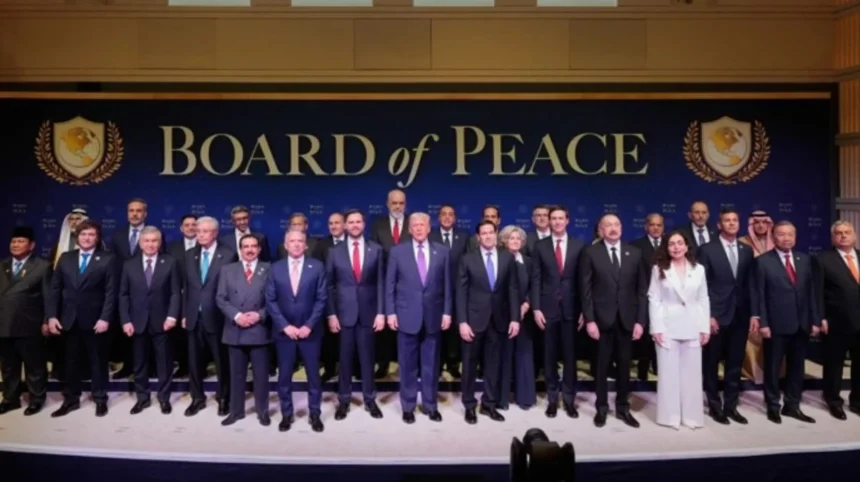
According to Al Jazeera English, US President Donald Trump convened the first formal meeting of his newly established Board of Peace to oversee Gaza’s reconstruction, security and governance following the recent war. The broadcaster reports that Trump first promoted the gathering at the World Economic Forum in Davos, describing it as one of the “most important meetings” of his presidency. The board is tasked with implementing phase two of Trump’s 20‑point Gaza peace plan, which aims to consolidate the ceasefire, rebuild the territory and reshape its political and security structures. Al Jazeera English notes that the initiative has quickly become a focal point of international debate, with governments divided over its implications for the United Nations and the broader multilateral system.
As reported by Reuters, the Board of Peace is designed to outlive its initial mandate in Gaza and eventually take on a wider role in managing global conflicts. The White House has named high‑profile figures to the body, including US Secretary of State Marco Rubio, Trump’s special envoy Steve Witkoff, former British prime minister Tony Blair and Trump’s son‑in‑law Jared Kushner. According to Reuters, Israel and Hamas have both signed off on Trump’s plan for Gaza, which foresees an internationally supervised technocratic Palestinian administration during a transitional period. The board is intended to supervise this arrangement as Gaza moves from wartime governance to a reconstruction‑focused phase.
Al Jazeera English reports that membership on the board requires a contribution of 1 billion dollars for a permanent seat, with Trump claiming that approximately two dozen countries have already signed up. In his public remarks, Trump has portrayed the board as a vehicle for “new ideas” to resolve conflicts and as a platform for major powers and wealthy states to directly fund and staff peace‑building efforts. According to Al Jazeera English, Trump has also suggested the Board of Peace could become an alternative forum to the United Nations over time, reflecting his longstanding criticism of the UN’s performance.
How are governments reacting to Trump’s Board of Peace?
Reuters reports that world leaders have reacted cautiously to Trump’s invitations to join the broader Board of Peace initiative, which has been sent to around 60 countries. Diplomats told Reuters they fear the project could undermine the United Nations by diverting political energy and resources into a parallel structure led by Washington. Only Hungary, whose government maintains a close relationship with Trump, has given a clear and unequivocal yes to the invitation so far. Other traditional US allies have either withheld a response or signaled reservations.
According to Reuters, key European allies such as France, the United Kingdom, Germany and Poland have declined to join or expressed strong hesitation about participating. Al Jazeera English notes that some of these governments are concerned both about Trump chairing the board and about Russia’s presence as a member, given existing tensions and mistrust among Western capitals and Moscow. Officials quoted in these reports say they worry that the board’s structure and its focus on Gaza could sideline established UN‑led processes and complicate broader diplomacy in the Middle East.
Al Jazeera English further reports that critics in Europe and beyond see the billion‑dollar membership model as privileging wealthier states and large private capital, raising questions about representation and accountability in decisions affecting conflict zones. At the same time, some countries outside the traditional Western alliance system, including states with historically strained ties to Washington, have accepted Trump’s invitation. Reuters notes that Belarus is among those that have aligned with the initiative, underlining how the board is contributing to new geopolitical fault lines.
Supporting details and structural features of the board
Reuters explains that the Board of Peace emerged amid a widening transatlantic divide over issues such as trade, security and climate, and has intensified concerns among some allies about Washington’s “America First” diplomatic posture. The initiative is framed by the Trump administration as a way to deliver faster, more decisive action on crises, particularly in Gaza, than the UN Security Council has been able to achieve. The board’s Gaza‑focused mandate includes supervising the territory’s temporary governance under a fragile ceasefire that has held since October, as well as coordinating reconstruction funding and security reforms.
Al Jazeera English reports that, in the Gaza context, Board of Peace members have pledged about 5 billion dollars and thousands of personnel to support rebuilding the enclave and stabilizing the ceasefire. The board’s role encompasses helping implement phase two of Trump’s peace blueprint, which is aimed at ending “generations of hatred and bloodshed” by transforming Gaza’s security and economic landscape. The broadcaster notes that this involves working alongside a Palestinian technocratic administration and an international presence, as envisaged in Trump’s plan agreed with Israel and Hamas.
According to Reuters, the White House has emphasized that the board is not meant to immediately replace the United Nations but rather to supplement and accelerate peace efforts. Trump has publicly downplayed fears that the Board of Peace is intended to supplant the UN, while repeating his view that the global body has been ineffective in addressing some major conflicts. Diplomats quoted by Reuters nonetheless remain wary, citing a lack of clarity on decision‑making rules, oversight mechanisms and how the board will interact with existing international institutions.
What are the implications and possible future developments?
Al Jazeera English reports that the inaugural meeting of the Board of Peace marks a critical test of Trump’s broader foreign‑policy vision, which seeks to channel substantial financial commitments and political leverage into a new conflict‑management structure. If the board successfully steers Gaza’s reconstruction and maintains the ceasefire, it could strengthen arguments in Washington and among participating states for expanding its remit to other crises. At the same time, sustained resistance from influential allies and questions over Russia’s participation could limit its legitimacy and complicate cooperation with NATO and EU partners.
According to Reuters, the global split over Trump’s initiative is likely to persist as long as there are unanswered questions about how the Board of Peace interacts with the UN and whether it respects existing international legal frameworks. Some diplomats told Reuters that they expect continued debate in European capitals and at the UN over how far governments should engage with the board without weakening multilateral institutions. Future developments will depend on how the board performs in its initial mandate in Gaza, the transparency of its operations and whether it can demonstrate tangible improvements on the ground.
Al Jazeera English notes that Trump continues to present the Board of Peace as an avenue for “new ideas” and more direct action in conflict zones, indicating that the administration intends to push ahead despite objections. As the board meets and begins implementing elements of the Gaza peace plan, its success or failure could shape broader discussions about reforming or supplementing the UN system. For now, the inaugural gathering underscores a widening divide between countries willing to sign on to Trump’s new structure and those that prefer to keep peace and security efforts anchored firmly within the United Nations.