


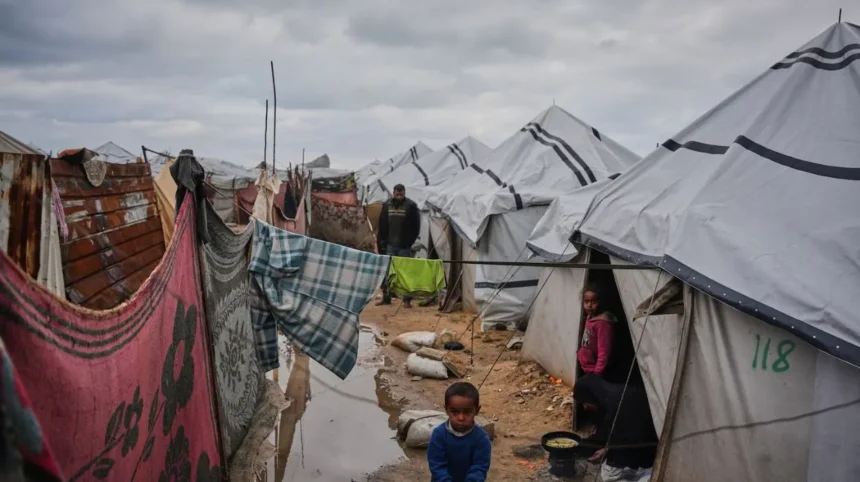
- Seventeen international humanitarian organisations petitioned Israel’s Supreme Court to overturn new regulations that could halt their work in the Gaza Strip, occupied West Bank and East Jerusalem from 1 March.
- Israel introduced rules in 2025 requiring foreign aid groups working with Palestinians to submit staff names and contact details and provide detailed information about funding sources and activities, with non‑compliance leading to deregistration.
- On Friday, Israel’s Supreme Court issued a temporary injunction allowing the aid groups to continue operating while it considers the legality of the regulations and the government’s wider ban.
- The case centres on Israel’s obligations under international humanitarian law as an occupying power and whether the state can use registration rules to restrict NGOs working in Gaza and other Palestinian territories.
- Aid organisations argue the rules are intrusive, undermine neutrality and could block life‑saving assistance to civilians during the ongoing conflict in Gaza, while the government cites security and regulatory concerns.
- The injunction preserves the status quo for now but does not resolve the underlying dispute over Israel’s control of humanitarian access or the scope of its obligations towards Palestinian civilians.
- A final ruling is expected to have significant implications for humanitarian operations, Israel’s international standing, and future legal challenges over aid access to Gaza and the West Bank.
Israel’s Supreme Court has allowed international aid organisations to continue operating in the Gaza Strip and other Palestinian territories, issuing a temporary injunction that freezes a government decision to bar dozens of groups over new regulatory requirements. The order follows a petition by 17 humanitarian organisations challenging rules that could force 37 groups to halt work in Gaza, the occupied West Bank and East Jerusalem from 1 March.
- Disputed regulations targeting foreign aid groups
- Petitioners argue breach of international humanitarian law
- Government position and earlier court stance on aid to Gaza
- Immediate effect of the injunction
- Broader context: tightening restrictions on humanitarian work
- Humanitarian consequences in Gaza and the West Bank
- Legal and diplomatic implications
- Reactions from stakeholders
- What happens next
The court’s move maintains existing arrangements for now, enabling the petitioning NGOs to keep delivering assistance while judges examine the legality of the government’s measures. No timetable has yet been announced for a final decision.
Disputed regulations targeting foreign aid groups
The dispute stems from regulatory changes adopted in March 2025 that tightened the registration framework for foreign organisations working with Palestinians. Under the new rules, NGOs must submit the full names and contact details of staff, provide extensive information on funding sources and operational activities, and accept the possibility of deregistration or denial of applications if the authorities deem them non‑compliant.
Israeli officials say the measures are intended to improve oversight, prevent abuse of humanitarian channels and address security concerns in the context of ongoing hostilities with Hamas and other armed groups. Aid organisations argue that transforming humanitarian registration into what they describe as a potential information‑gathering mechanism for one side to the conflict undermines core principles of neutrality and independence.
According to a petition cited by Yahoo News, the groups contend that “transforming humanitarian organizations into a mechanism for collecting information for one side in the conflict fundamentally contradicts the principle of neutrality.” This information could not be independently verified.
Petitioners argue breach of international humanitarian law
The 17 petitioning organisations, some of which are part of a coalition representing more than 100 NGOs active in the Palestinian territories, say the regulations are incompatible with Israel’s responsibilities under international humanitarian law. They maintain that as an occupying power in parts of the Palestinian territories, Israel is obliged to facilitate the delivery of food, medicine and other essential assistance to the civilian population.
Lawyers for the groups argue that the state cannot use administrative tools to effectively shutter organisations operating in areas under the nominal governance of the Palestinian Authority, particularly where their work is focused on basic services and emergency relief. They also say the rules could expose local staff to heightened risk, in an environment where humanitarian workers have already suffered significant casualties since the escalation of fighting in Gaza in October 2023.
The United Nations has previously reported that more than 100 NGO workers, including staff from Médecins Sans Frontières (MSF), have been killed in strikes and other incidents in Gaza since late 2023. The exact figures cited in some reports could not be independently verified.
Government position and earlier court stance on aid to Gaza
The case comes against the backdrop of earlier litigation over humanitarian access to Gaza. In March 2025, the Supreme Court—sitting as the High Court of Justice—rejected a separate petition seeking an order compelling the government to allow more aid into the enclave.
In that ruling, summarised by Just Security, the court held that while Israel is obligated to allow and facilitate humanitarian aid, those duties are relative and the petitioners had not shown a generalised violation during the conflict. The judges found that the government retained broad discretion over the type and amount of assistance permitted, and declined to recognise a positive obligation to ensure distribution inside areas that, in the court’s view, were not under Israel’s “effective control” for the purposes of the law of occupation.
At the same time, the court emphasised the army’s duty to monitor humanitarian conditions in Gaza and engage with aid agencies, grounding that responsibility largely in Israeli administrative law. The current petition tests how far that framework extends when the state uses domestic regulatory powers to restrict or suspend external organisations.
Immediate effect of the injunction
Friday’s injunction suspends the enforcement of the government’s planned ban and keeps in place the current operational status of the petitioning NGOs. As a result, the organisations may continue to run programmes in Gaza, the West Bank and East Jerusalem while the court reviews written submissions and, potentially, hears oral arguments.
Legal representatives for the aid groups described the order as providing “breathing room” for Palestinian communities relying on international assistance, although they stressed that the underlying legal and policy questions remain unresolved. Athena Rayburn, executive director of AIDA, a network that advocates for more than 80 to 100 organisations working in the Palestinian territories, welcomed the decision as a positive step but warned that “there is still a long way to go” in securing stable access for humanitarian operations.
The government has not yet publicly indicated whether it will seek to narrow the scope of the injunction or introduce revised regulations while the proceedings continue.
Broader context: tightening restrictions on humanitarian work
The proposed ban on 37 NGOs follows a series of steps by Israel tightening controls on international and UN‑affiliated organisations linked to Palestinian areas. In early 2025, authorities barred the UN agency for Palestinian refugees, commonly referred to as UNRWA, from operating within Israel after alleging that some employees were involved in the 7 October Hamas attack. UNRWA has denied institutional involvement and has called for independent investigations, but those claims could not be independently verified.
The regulatory changes affecting foreign NGOs in March 2025 were part of this broader shift, introducing new grounds for denying or revoking registration where officials consider groups to pose security or public‑order concerns. Critics say the measures risk conflating legitimate humanitarian activity with political advocacy or perceived criticism of government policy.
According to reports by agencies including Al Jazeera and international wire services, Israel has ordered affected organisations to stop work across “war‑torn Gaza” as well as in the occupied West Bank and East Jerusalem, raising fears of a significant drop in humanitarian coverage if the court ultimately backs the government’s position.
Humanitarian consequences in Gaza and the West Bank
The legal battle unfolds against a continuing humanitarian emergency in Gaza, where widespread damage to infrastructure, displacement and recurrent hostilities have left large sections of the population dependent on external aid. International agencies report shortages of food, fuel, medical supplies and clean water, although precise needs assessments vary and some figures could not be independently verified.
In the West Bank, restrictions on movement, periodic security operations and the expansion of settlements have also increased reliance on NGOs for basic services in certain areas. Aid groups warn that deregistering or banning organisations could disrupt health projects, education support, protection programmes and livelihood initiatives, particularly in communities already facing high levels of vulnerability.
The petition argues that the cumulative effect of the new rules, combined with earlier bans, is to narrow the space for independent humanitarian work and complicate coordination mechanisms set up with Israeli authorities during the conflict.
Legal and diplomatic implications
The Supreme Court’s handling of the case is likely to be closely watched in foreign capitals, at the United Nations and by international legal observers. Previous rulings on Gaza aid have been cited in debates over Israel’s compliance with international humanitarian law and have informed submissions to foreign courts and international bodies.
A decision upholding the regulations could reinforce the government’s authority to regulate and, where it deems necessary, restrict the activities of foreign NGOs on security or public‑order grounds, even in conflict zones where civilian needs are acute. Conversely, a judgment siding with the petitioners could require Israel to amend or scale back its rules, and might strengthen arguments that occupying powers must avoid using administrative tools to impede impartial relief operations.
Diplomatically, the case intersects with ongoing discussions between Israel and key donors over the future of aid to Gaza and the wider Palestinian territories, including funding for reconstruction and support for local governance structures.
Reactions from stakeholders
Humanitarian coalitions and rights groups have generally welcomed the injunction while urging the court to go further and strike down the contested regulations. Organisations involved in the petition say they will continue to document the impact of the rules and provide the court with evidence on how restrictions could affect civilians’ access to assistance.
Israeli officials have defended the regulatory framework, pointing to the prolonged conflict and the risk that actors hostile to Israel might exploit humanitarian channels. They argue that the state must retain tools to screen staff and donors in order to prevent diversion of resources or infiltration by armed groups, and insist that they remain committed to enabling essential aid consistent with security considerations.
Foreign governments and multilateral bodies have so far responded cautiously in public, reiterating general calls for unimpeded humanitarian access and adherence to international law without directly commenting on the court’s interim step.
What happens next
The Supreme Court will now examine written submissions from both the petitioners and the state, and may schedule hearings before issuing a final ruling on the legality of the regulations and the associated bans. Until that decision is handed down, the temporary injunction will remain in place, allowing the 17 organisations and other affected aid groups to continue operating in Gaza, the West Bank and East Jerusalem.
Depending on the outcome, the government could be required to revise its regulatory approach, introduce new safeguards for humanitarian neutrality, or proceed with suspensions and deregistrations subject to any limitations set by the court. The judgment is expected to shape future legal challenges over humanitarian access in the context of the Gaza conflict and Israel’s broader administration of the occupied Palestinian territories.