


Israeli officials have signaled a new phase in the Gaza crisis with a Netanyahu 60-day Hamas disarmament deadline tied to US-backed diplomatic efforts. An aide to Prime Minister Benjamin Netanyahu said Hamas will be given 60 days to surrender its weapons or face the prospect of a renewed full-scale military campaign in the Gaza Strip.
As reported by the staff of Antiwar.com, Israeli Cabinet Secretary Yossi Fuchs outlined the ultimatum during remarks at a conference in Jerusalem. Fuchs said that if Hamas does not disarm within the 60-day period, Israel would resume its major bombing operations in Gaza, reversing the relative lull that followed a US-backed truce agreement.
According to Antiwar.com, Fuchs stated that Israel is responding to a request from the administration of US President Donald Trump, which asked Israel to provide Hamas with a 60-day window to disarm. The comments follow earlier reporting that Trump and Netanyahu had discussed a two‑month disarmament timetable for Hamas in meetings at Mar‑a‑Lago in Florida late last year.
Israeli media accounts cited by Report.az and other outlets describe the same Netanyahu 60-day Hamas disarmament deadline as part of an emerging framework for Gaza’s future. Report.az, summarizing coverage from The Times of Israel, noted that Fuchs emphasized Hamas would be required to give up all of its weapons, including assault rifles such as AK‑47s, and that those weapons “will be taken from them entirely.”
The timing of when the 60-day clock starts remains uncertain, but Fuchs suggested it could begin after the first formal session of a new US‑led “Board of Peace” in Washington. The board, convened by President Trump, was endorsed by a UN Security Council resolution as part of Washington’s plan to solidify a ceasefire and craft a broader political arrangement for Gaza.
Antiwar.com reported that the ceasefire in Gaza, agreed in early October, has been marred by what critics describe as repeated Israeli violations, even as the broader level of bombardment has declined. The outlet also noted that more than 600 Palestinians have been killed in Gaza since the truce deal was signed, underscoring the fragility of the current pause in large‑scale fighting.
According to The National, the US‑backed “Board of Peace” is expected to bring together representatives from at least 20 countries in Washington. The 20‑point plan underpinning the board specifically calls for the disarmament of Hamas as a central condition for stabilizing Gaza and moving towards reconstruction.
Other regional and international media, including Asharq Al‑Awsat and Middle East Online, have reported that Israeli officials see the Netanyahu 60-day Hamas disarmament deadline as a binding condition for any political or economic progress in Gaza. These accounts describe an ultimatum backed by US coordination and framed as a decisive step toward neutralizing Hamas’s armed capabilities.
Context and Reactions: How Are Key Actors Responding?
Coverage of the ultimatum shows sharply different responses among the parties involved and observers around the region. Hamas has consistently rejected unilateral disarmament, linking any discussion of its weapons to broader political demands and the future status of a Palestinian state.
As reported by Antiwar.com, Hamas figures have ruled out simply handing over their arsenal without a clear political horizon, although some officials have floated ideas such as “freezing” weapons or placing them under the control of an Arab or international force. These suggestions, while not a formal offer, point to internal debates within Hamas over how to respond to mounting pressure without abandoning its core military infrastructure.
Asharq Al‑Awsat wrote that Israeli sources see Hamas as still operational and far from collapse, despite heavy losses during the war in Gaza. According to that outlet, Israeli intelligence assessments say Hamas continues to maintain control in parts of Gaza, rebuild underground tunnels, and reorganize its combat forces.
Middle East Monitor reported that a US‑backed ceasefire has been in force since October 10, bringing an end to a two‑year war that has killed tens of thousands of Palestinians. Yet the outlet also noted that Israel’s new ultimatum injects uncertainty into the truce’s durability, with the Netanyahu 60-day Hamas disarmament deadline potentially marking a countdown to renewed hostilities.
The National quoted Yossi Fuchs as saying that Hamas “will have to give up all of its weapons” during the 60‑day period and that Israel would assess whether the process is working. Fuchs added that if disarmament fails, the Israeli military “will have to complete the mission,” language interpreted by observers as a warning of a more intense and less constrained offensive in Gaza.
In its report, Antiwar.com cited earlier analysis from The Times of Israel suggesting that any resumed full‑scale bombing campaign could be even more intense than previous rounds. The reasoning, according to those reports, is that Israeli forces would no longer be limited by the presence of Israeli and foreign hostages in Gaza, potentially altering the military’s calculus on targets and tactics.
Asharq Al‑Awsat further noted that US officials have been exploring proposals that could allow Hamas members to receive amnesty if they surrender weapons and abandon armed activity. Such ideas appear aimed at separating Hamas’s political and military wings and encouraging rank‑and‑file fighters to disengage from armed operations.
US officials have also been quoted in outlets such as Reuters and regional media as saying that any Hamas disarmament plan would likely involve phased steps. These may include dismantling tunnels, shutting down weapons factories, removing rockets and heavy arms, and building up a unified security force under a technocratic administration in Gaza.
Supporting Details: Diplomatic Plans and Military Calculations
The Netanyahu 60-day Hamas disarmament deadline fits into a broader US‑Israeli approach that links Gaza’s reconstruction to the dismantling of Hamas’s military structures. Asharq Al‑Awsat reported that Israel and the United States have agreed that Hamas disarmament is not just a stated goal but a prerequisite for progress on governance and economic support for Gaza.
According to Asharq Al‑Awsat and other regional outlets, the ultimatum is tied to the establishment of a “peace council” and a technocratic administration in Gaza, which would receive international backing and funding only if armed factions relinquish their weapons. In this framework, the two‑month period begins once these governing structures are in place, giving Hamas a defined timeline to comply.
Israeli media accounts summarized by Middle East Online say that the Israeli military is already preparing operational plans in case the ultimatum is rejected. Channel 12 in Israel, cited by Asharq Al‑Awsat, reported that the army has been instructed to be ready for a decisive operation if Hamas refuses to disarm or is seen as stalling.
Antiwar.com highlighted reporting from The New York Times that the US once considered a draft plan allowing Hamas to retain some small arms under strict conditions. According to that account, Netanyahu firmly rejected any arrangement that would leave Hamas with even limited weaponry, insisting instead on total disarmament.
Middle East Monitor wrote that Israel has made clear it will not accept partial or symbolic measures, arguing that Hamas must lose its ability to conduct military operations before any long‑term political arrangement can be finalized. This stance has shaped the Netanyahu 60-day Hamas disarmament deadline, making it a benchmark for whether the current ceasefire evolves into a lasting settlement or collapses back into war.
Report.az, relaying The Times of Israel coverage, noted that Fuchs said the 60‑day period was requested by the Trump administration and that Israel is “respecting that.” He also said that the start date remains flexible but could coincide with the inaugural session of the Board of Peace, underscoring the interplay between diplomatic milestones and military timelines.
Asharq Al‑Awsat added that US and Israeli officials are discussing possible amnesty mechanisms for Hamas members who agree to surrender weapons. Such arrangements would be part of a broader attempt to integrate vetted security personnel into a restructured force under the technocratic government, while excluding those deemed committed to armed struggle.
Regional reporting suggests that Hamas has signaled readiness to cede administrative control of Gaza to a technocratic cabinet but has stopped short of agreeing to disarm. This distinction highlights the central sticking point: whether Hamas can retain any armed capacity while participating, directly or indirectly, in Gaza’s political life.
Implications and Future Developments: What Could Happen After 60 Days?
The Netanyahu 60-day Hamas disarmament deadline raises critical questions about whether the fragile pause in Gaza can transition into a more durable political framework, or whether it sets the stage for renewed large‑scale conflict. If Hamas refuses to disarm, Israeli officials have repeatedly indicated that a new military campaign would follow, potentially on a broader and more intense scale than previous rounds.
The National reported that Fuchs described it as “reasonable” that before possible Israeli elections in June, Hamas will either have surrendered its weapons or Israel will be in the midst of a renewed offensive. This timeline suggests that domestic political calculations in Israel may be intertwined with decisions on whether to resume major operations in Gaza.
Asharq Al‑Awsat and Middle East Online indicated that Israel sees the current transitional period as favorable to Hamas, allowing it to regroup and rearm. For Israeli decision‑makers, this assessment reinforces the argument for a clear, time‑limited ultimatum rather than an open‑ended ceasefire.
For Hamas, the demand to surrender all weapons, including rifles and light arms, strikes at the core of its identity as an armed resistance movement. Statements reported by Antiwar.com and other outlets show that the group continues to link disarmament to unresolved political issues, including statehood and long‑term guarantees.
International actors, including the United States and UN‑backed mechanisms like the Board of Peace, are positioning themselves as guarantors of any future arrangement in Gaza. US officials quoted in regional media argue that disarmament could be phased and accompanied by economic incentives, reconstruction aid, and amnesty programs for those who lay down arms.
The outcome of the Netanyahu 60-day Hamas disarmament deadline will likely shape not only Gaza’s security landscape but also broader regional dynamics. A successful disarmament process could open the way for significant international investment and a shift in governance, while failure may lead to another cycle of war with heavy humanitarian and political costs.
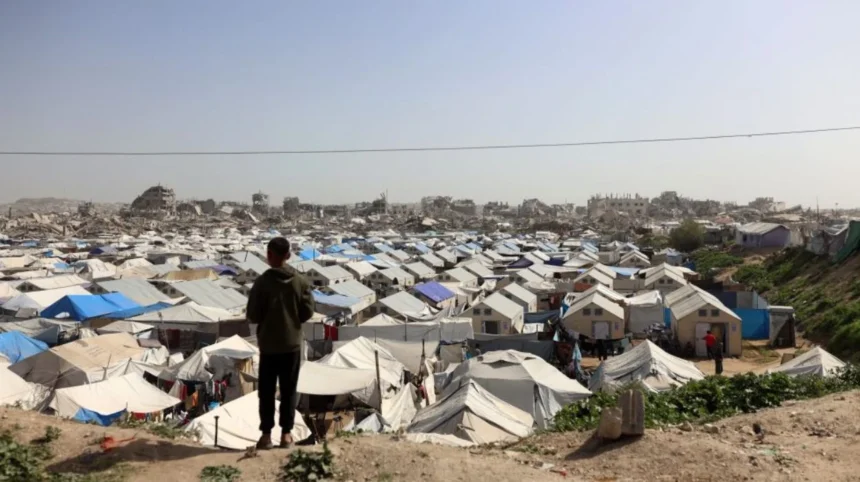
In the meantime, Gaza remains in a precarious state, with a damaged infrastructure, a displaced population, and a ceasefire that holds but is under constant strain. The next steps by Israel, Hamas, the United States, and international partners during the 60‑day period will determine whether the ultimatum becomes a turning point toward de‑escalation or a prelude to renewed conflict.
Ultimately, the newly declared Netanyahu 60-day Hamas disarmament deadline encapsulates the core dilemma of the post‑war Gaza trajectory: whether armed groups will relinquish their military leverage in exchange for political and economic promises, and whether Israel and its allies can offer a framework that persuades them to do so while addressing long‑standing grievances.