

According to Türkiye Today, United States President Donald Trump has signed the founding charter of a new “Board of Peace,” naming 26 countries as initial members of the body. The announcement came a week after Trump formally presented the initiative at the World Economic Forum in Davos, Switzerland, positioning the board as a central platform for conflict resolution and post-war reconstruction.
As reported by Türkiye Today, the Board of Peace was originally conceived to oversee the ceasefire and reconstruction efforts in Gaza. The charter, however, extends its mandate beyond Gaza, allowing the body to engage in peace-building and mediation in regions affected by, or at risk of, conflict worldwide.
Türkiye Today notes that the board launched an official presence on the social media platform X, where it published the list of 26 founding member states. These include countries such as Türkiye, Saudi Arabia and Qatar, reflecting a strong participation from Middle Eastern and Global South actors rather than traditional Western European powers.
According to Türkiye Today, invitations were initially sent to around 50 heads of state, who publicly confirmed receipt of the proposals over several days. The final list of 26 founding members represents those governments that have formally agreed to join at this stage, with others still weighing the political and diplomatic implications.
Why Is Europe Largely Absent from the New Peace Board?
As reported by Türkiye Today, major European powers such as France, Germany and the United Kingdom are notably absent from the list of 26 founding members. Their non-participation has been widely interpreted as a sign of strained relations with Washington, following disagreements over issues including tariffs and Trump’s earlier dispute with Denmark over Greenland.
According to Türkiye Today, within the European Union only a small number of states received invitations or signaled openness to participation. Some European governments have either declined outright or indicated that they are still “considering” the proposal, citing concerns over the board’s scope, governance and its relationship to existing institutions like the United Nations.
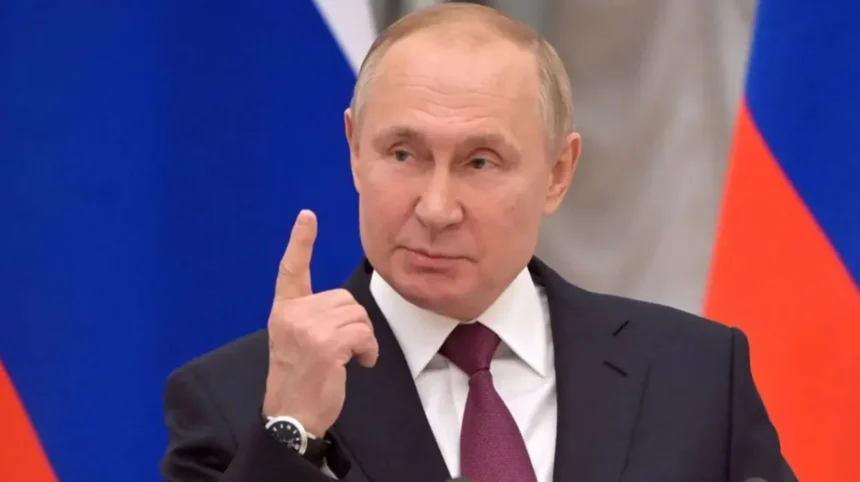
Türkiye Today reports that Russia has also been left out of the founding lineup despite comments by Russian President Vladimir Putin expressing readiness to contribute financially. Putin had indicated Moscow could allocate up to 1 billion dollars from Russian assets frozen under the previous US administration to support the board’s budget, a proposal Trump described as “an interesting idea.”
The outlet further notes that Canada’s invitation was rescinded after Prime Minister Mark Carney delivered a critical speech at Davos cautioning against economic coercion by major powers. This decision, alongside European absences, has reinforced perceptions that the board’s initial configuration sidelines several traditional Western partners.
Supporting Details and Background
According to Türkiye Today, Belarus accepted an invitation to join the Board of Peace, while Ukraine publicly questioned how it could participate in a body that includes both Russia and Belarus. This reflects broader geopolitical tensions shaping the board’s early membership and complicating notions of a unified peace framework.
The report states that the Board of Peace’s charter grants it a broad mandate to intervene diplomatically in conflict zones, facilitate reconstruction, and coordinate international assistance. However, detailed information on its leadership structure, decision-making mechanisms and implementation timeline has yet to be formally released, leaving many operational questions unresolved.
Türkiye Today highlights that the initiative emerged at a time when multilateral institutions, particularly the United Nations, face pressure over their responsiveness and effectiveness in crises such as Gaza. Some analysts cited by the outlet suggest that the board could evolve into a parallel arena for global diplomacy, though its precise relationship to the UN system remains unclear from official documents.
The article also points out that Trump has portrayed the Board of Peace as one of the most consequential international bodies created in recent decades. By emphasizing its global reach and flexible mandate, the administration appears to be positioning the board as a flagship foreign-policy instrument of the current US presidency.
What Are the Implications and Possible Next Steps?
According to Türkiye Today, the exclusion or self-exclusion of major European states from the initial roster may have long-term implications for both transatlantic relations and the effectiveness of the Board of Peace. Without France, Germany, the United Kingdom and Canada as founding members, the body launches with a membership profile that leans toward non-Western and regional middle powers.
The report notes that European governments and other non-participating states are likely to watch closely how the board operates in its early missions, especially in Gaza. Key questions include whether it will complement or compete with UN-led efforts, how transparent its decision-making will be, and whether it can maintain neutrality amid competing geopolitical interests.
Türkiye Today adds that further announcements are expected regarding the board’s governance, including its permanent leadership, funding mechanisms and criteria for taking on new cases. Any future expansion of membership could offer an avenue for European states or other skeptics to join at a later stage, depending on how the board’s role and credibility evolve.
For now, the creation of the 26-nation Board of Peace marks a significant shift in how Washington is attempting to structure international peace efforts, with Europe largely on the sidelines. The next phases of implementation, particularly in Gaza and other conflict zones, will help determine whether the new body becomes a durable fixture of global diplomacy or remains a more limited, politically contested initiative.