


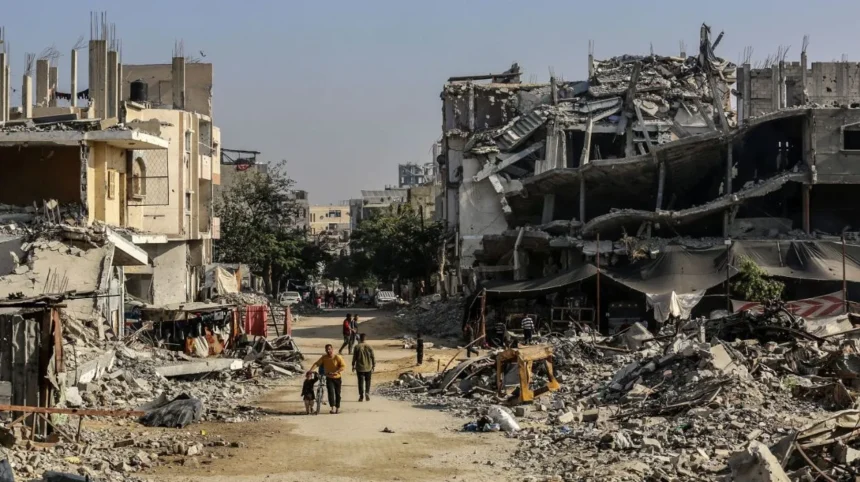
Israel’s prolonged military campaign in Gaza has not only taken tens of thousands of lives, it has also extinguished entire family lines, erasing more than 2,700 Palestinian families from the civil registry and shattering the social fabric of a besieged society. This scale of loss has intensified global discussion about whether Israel’s actions meet the legal and moral definition of genocidal violence against the Palestinian people in Gaza.
- The meaning of erasing entire families
- Gaza in numbers: death, injury, and disappearance
- How mass family loss relates to genocide
- The role of famine, siege, and infrastructure collapse
- Psychological and cultural annihilation
- International law, accountability, and global response
- Why the loss of 2,700 families matters for the future
- Memory, resistance, and the struggle to document
- What an evergreen perspective adds
- Conclusion
The meaning of erasing entire families
When airstrikes or artillery fire kill three generations within the same household, a family line ends in a single moment. In Gaza, these are not rare tragedies but a recurring pattern, with more than 2,700 families completely wiped from official records and roughly 40,000 families suffering multiple deaths in the same kin group. In many cases, only one child or a lone adult survives, carrying both the trauma of loss and the weight of preserving memories, traditions, and names that can never again be passed down.
Such destruction goes beyond individual fatalities and strikes directly at the continuity of a people. Names, oral histories, cultural practices, and inherited property are lost when no surviving descendants remain to transmit them. Survivors describe this as an assault not only on life but on identity itself, a deliberate unmaking of community that they understand as the core of genocidal intent.
Gaza in numbers: death, injury, and disappearance
The human toll in Gaza is staggering. Local health authorities and international monitors report that more than 40,000 Palestinians have been killed, with thousands more missing under rubble and presumed dead, pushing the real total significantly higher. A large majority of the dead and injured are women and children, a pattern confirmed by humanitarian organizations and UN human rights reporting. Millions have been displaced, with almost the entire population uprooted at least once, turning the territory into a landscape of tents, ruins, and mass graves.
These numbers do not exist in a vacuum. International agencies that track armed conflicts note that Gaza has seen more women and children killed over a similar timeframe than any other conflict in recent decades, underscoring how civilians are bearing the brunt of the violence. For each documented death, families often face additional missing relatives, bodies that cannot be recovered, and injuries that permanently disable survivors, further compounding the long-term demographic and social impact.
How mass family loss relates to genocide
Under the Genocide Convention, genocide involves specific acts—such as killing, causing serious harm, inflicting destructive conditions of life, preventing births, or transferring children—carried out with the intent to destroy a national, ethnic, racial, or religious group in whole or in part. The systematic killing of entire households, the targeting of multi-generational family buildings, and the creation of conditions that produce mass starvation and disease all form part of how many legal scholars and human rights experts analyze the situation in Gaza.
Leading genocide scholars and international advocacy groups have argued that the pattern of attacks on civilians, combined with the rhetoric of dehumanization and the obstruction of essential supplies, aligns with core elements of genocidal practice. International courts, including the International Court of Justice and the International Criminal Court, have opened proceedings and issued arrest warrants against senior Israeli officials for war crimes, crimes against humanity, and alleged genocidal acts, even as litigation over intent and responsibility continues. The obliteration of family bloodlines, in this reading, is not a tragic side effect but one of the clearest indicators that a people’s future is being deliberately curtailed.
The role of famine, siege, and infrastructure collapse
Killing in Gaza has not been limited to bombs and bullets. UN-supported monitors have confirmed that famine conditions are present in parts of the territory, driven by tight restrictions on food, fuel, and medical supplies. Health systems have largely collapsed: hospitals have been bombed, medical staff killed or displaced, and essential equipment and medicines blocked, leaving treatable injuries and diseases to become fatal.
These conditions match what experts call “destructive conditions of life,” a recognized genocidal act when imposed intentionally on a protected group. In Gaza, the combination of bombardment, siege, and the systematic degradation of essential infrastructure—water, sanitation, electricity, and health care—has dramatically increased indirect deaths, particularly among infants, pregnant women, the elderly, and the chronically ill. When entire families are already traumatized or decimated by violence, the added burden of hunger and disease pushes communities closer to irreversible demographic and social collapse.
Psychological and cultural annihilation
Genocide is never only physical; it is also psychological and cultural. Survivors in Gaza describe feelings of profound disorientation as familiar neighborhoods vanish, cemeteries fill beyond capacity, and family homes—often shared by three or more generations—are reduced to dust. Children who survive often do so as the sole remaining member of their immediate family, growing up without parents, siblings, or grandparents to anchor their identity.
Heritage is also under threat. When a family is erased, so too are its stories, recipes, songs, and lineages—the everyday practices that link a people to their land and to each other. Religious and cultural sites have been damaged or destroyed, further weakening the community’s ability to preserve memory and ritual. In Palestinian testimony, this combined loss of life, place, and memory is experienced as an attempt to unmake their very existence as a people in Gaza.
International law, accountability, and global response
International law provides multiple avenues for accountability. The International Court of Justice can assess state responsibility for genocide, while the International Criminal Court can pursue individual criminal liability for war crimes, crimes against humanity, and genocidal acts. In the Gaza context, both institutions have become focal points as states, civil society groups, and legal experts bring forward evidence of mass killing, indiscriminate destruction, and the deliberate infliction of life-destroying conditions.
At the same time, global institutions such as the UN, along with regional bodies and human rights organizations, have documented the humanitarian catastrophe and called for immediate, sustained ceasefires, unimpeded aid access, and reconstruction. Yet accountability processes move slowly, often taking years or even decades, while communities on the ground continue to endure displacement, hunger, and unresolved grief. For many Palestinians, the erasure of thousands of families is already an irreversible historical fact, regardless of how courts ultimately define the crime.
Why the loss of 2,700 families matters for the future
The destruction of more than 2,700 families in Gaza is not just a statistic; it reshapes the territory’s demographic, social, and economic future. Families are the primary unit of support in Palestinian society, providing childcare, elder care, economic cooperation, and emotional resilience across generations. When these networks are shattered, surviving relatives face deeper poverty, reduced access to education, and long-term psychological trauma, all of which limit community recovery.
From an economic perspective, the loss of working-age adults and skilled professionals erodes the human capital necessary for rebuilding. Global development institutions consistently emphasize that societies emerging from conflict need stable family structures, functioning health and education systems, and secure livelihoods to escape cycles of violence and deprivation. In Gaza, the overlapping destruction of people, families, and infrastructure risks locking the population into a prolonged humanitarian emergency, even if large-scale bombing eventually stops.
Memory, resistance, and the struggle to document
In response to the mass erasure of family lines, Palestinians and their allies have turned to documentation as a form of resistance. Civil society groups compile lists of the dead, collect photos and stories, and build digital archives to preserve the identities of those killed. Social media campaigns, grassroots memorials, and oral history projects seek to ensure that the disappearance of entire households is recorded and remembered, not reduced to anonymous numbers.
Human rights organizations and research institutions rely on these records, along with satellite imagery and field reporting, to corroborate patterns of destruction and identify possible violations of international law. This work matters for future legal accountability and for historical memory, giving survivors a measure of recognition and countering attempts to minimize or deny the scale of the killings. In a context where entire family names vanish from civil registries, preserving their existence in collective memory becomes an essential act of protection against erasure.
What an evergreen perspective adds
Looking beyond immediate headlines, the story of over 2,700 erased families in Gaza highlights enduring themes that recur in studies of mass atrocity: the targeting of civilians, the destruction of social structures, and the weaponization of hunger and infrastructure. International organizations stress that preventing atrocities requires early warning, meaningful political pressure, and the consistent application of human rights standards, regardless of the actors involved. When these safeguards fail or are selectively applied, entire communities bear the cost, and phrases like “never again” lose their moral force.
For readers seeking to understand this crisis in a longer frame, Gaza stands as a stark illustration of how modern warfare, advanced weaponry, and prolonged siege can converge to threaten the survival of a distinct population within a very small territory. The elimination of thousands of family lines is one of the clearest signs that what is at stake is not only political control or territorial borders, but the continued existence of a people in their homeland.
Conclusion
The erasure of more than 2,700 Palestinian families in Gaza represents one of the most devastating dimensions of the ongoing campaign many experts describe as genocidal. Beyond the staggering death toll, it is the deliberate destruction of family networks, the imposition of life-destroying conditions, and the targeting of a besieged civilian population that define this as a profound assault on a people’s right to exist. Whether through legal accountability, historical documentation, or global solidarity, confronting and naming this reality is essential to any hope of preventing similar atrocities in the future.

