


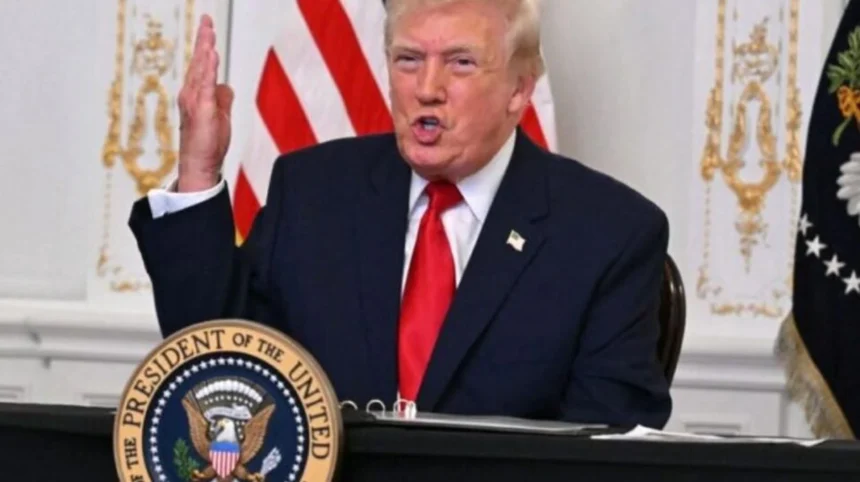
U.S. President Donald Trump is seeking to charge countries 1 billion dollars each for permanent membership on a new international body known as the “Board of Peace,” according to multiple major news outlets that have reviewed a draft charter for the initiative. Bloomberg reported that a draft document circulating among foreign governments describes the Board of Peace as a new organization focused on rebuilding Gaza and promoting stability in conflict zones, with Trump installed as its inaugural chairman. According to Bloomberg’s reporting, membership would be limited to states invited by the chairman, and decisions would be made by majority vote but subject to the chairman’s approval. Other outlets, including France 24 and El País, report that the United States has begun approaching governments around the world to solicit interest in joining the body.
As reported by Bloomberg, the draft charter indicates that ordinary membership would last for a fixed term of three years, but that countries could secure lifetime membership by paying a 1 billion dollar contribution. According to CNBC, a U.S. official said there would be no initial fee to join, but that the 1 billion dollars would guarantee permanent status on the board and help fund its stated mission to “rebuild all of Gaza,” with most of the money earmarked for that purpose. Reporting by France 24 notes that the charter language also frames the Board of Peace as an alternative to existing multilateral institutions, criticizing established organizations for what it describes as repeated failures to prevent or resolve major crises. El País further reported that at least 60 countries have been invited to consider taking part, positioning the project as a global assembly centered on Gaza but with a wider mandate.
According to France 24, the draft charter gives Trump sweeping powers over the new body’s composition and operation. Membership would be restricted to states personally invited by the chairman, who would also have authority to expel countries and to name a successor if he steps down. Other reporting indicates that Trump would hold the chairmanship indefinitely, extending beyond his presidential term, while member states would each have one vote but remain subject to his approval for key decisions. Outlets reviewing the draft say these provisions would give the U.S. president an unusually dominant role in a supposedly multilateral institution, including the ability to veto decisions, remove members, and shape the board’s long‑term direction.
International media also report that the initiative is closely tied to the ongoing war and humanitarian crisis in Gaza. El País describes the Board of Peace as initially presented by Washington as a mechanism to help resolve the conflict in the Palestinian enclave, before expanding into a broader global forum that Trump would lead. CNBC cites U.S. officials saying that “virtually every dollar” raised through membership payments is meant to support reconstruction and stabilization efforts in Gaza. France 24 notes that the charter’s language suggests a broader ambition to promote “dependable lawful governance” and “enduring stability” in areas affected or threatened by conflict, although there is limited detail so far on specific mechanisms, oversight, or coordination with existing international bodies.
Context and reactions: how are governments responding?
Early reactions from foreign capitals appear cautious, with some leaders signaling skepticism about the structure and cost of the proposed Board of Peace, according to international coverage. Slate reported that membership would normally last three years but could become permanent for states willing to pay the 1 billion dollar fee, a structure that critics say risks appearing transactional and potentially exclusionary. The same outlet described the charter as granting Trump veto rights and unilateral powers that go far beyond the norms of most multinational organizations, prompting concerns among some observers about governance and accountability. While not all invited governments have commented publicly, reporting indicates that some leaders known for emphasizing multilateralism and international law have declined invitations or expressed reservations.
According to France 24, the effort to build the board began as the Trump administration approached leaders from countries including Egypt, Turkey, Argentina, and Canada to join. The outlet notes that the proposal comes against a backdrop of Trump’s longstanding criticism of the United Nations and other multilateral frameworks, as well as moves by his administration to withdraw the United States from a number of international arrangements. El País highlights that at least 60 countries have been contacted, though it remains unclear how many have signaled willingness to commit to the 1 billion dollar permanent membership payment. Some commentary in international media raises questions about whether lower‑income or conflict‑affected states would be able to participate meaningfully under such a financial model, potentially shaping the board’s eventual composition.
Media analysis also underscores how the Board of Peace concept fits into Trump’s broader approach to foreign policy and international institutions. Outlets such as Slate have characterized the plan as emblematic of a more unilateral, personality‑driven mode of global leadership, with the draft charter centering authority in the U.S. president rather than in a distributed, rules‑based structure. At the same time, reporting by CNBC emphasizes that U.S. officials close to the initiative present it as a practical mechanism to mobilize large‑scale funding for Gaza’s reconstruction at a time when traditional multilateral funding channels face political hurdles. This contrast between critics’ concerns and supporters’ framing is shaping the early debate around the project in diplomatic and policy circles.
Supporting details and structure of the Board of Peace
According to Bloomberg and other outlets that have reviewed the draft charter, the Board of Peace would function as a formal organization with its own voting rules, membership criteria, and leadership hierarchy. Each member state would receive one vote on resolutions and policies, but key decisions would ultimately be subject to the chairman’s approval, giving Trump an effective veto over the board’s actions. France 24 reports that the chairman would also be empowered to remove member states from the board, either unilaterally or with the backing of a supermajority of members, depending on the final text of the charter. The draft further allows the chairman to select a successor, ensuring continuity of leadership in line with Trump’s original design for the body.
El País notes that the proposed 1 billion dollar permanent membership fee is framed in the draft as both a contribution to Gaza reconstruction and a means of securing what amounts to lifetime tenure on the board. CNBC’s reporting clarifies that there is no up‑front cost to join as an initial member, but that the 1 billion dollar payment must be made within a defined period to convert a three‑year term into permanent status. Slate adds that the chairmanship itself would not be subject to the same term limits as ordinary members, with Trump designated as chairman indefinitely while the board is in operation. Together, these elements create an institutional structure that combines elements of a donor conference, a political forum, and a leadership model heavily centered on a single individual.
Several outlets also situate the Board of Peace within the broader diplomatic landscape surrounding Gaza and the Middle East. France 24 reports that the charter’s language calls explicitly for “departing from approaches that have too often failed,” which observers interpret as an implicit critique of the United Nations and existing peace processes. El País and Bloomberg both highlight that the board’s founding has been discussed alongside other U.S. initiatives aimed at shaping the post‑war reconstruction and governance of Gaza, though the exact relationship between the new body and current negotiations involving regional and international actors remains uncertain. Analysts quoted in international coverage say it is not yet clear how the Board of Peace would coordinate with established organizations or whether it would seek formal recognition in existing diplomatic frameworks.
Implications and future developments: what happens next?
A key question raised by international reporting is whether enough countries will agree to join the Board of Peace and, crucially, to pay the 1 billion dollar fee for permanent membership. El País notes that invitations have been extended widely, with at least 60 world leaders contacted, but there is limited confirmation of firm commitments to either membership or financial contributions at this stage. France 24’s coverage suggests that some governments are wary of the governance structure and the concentration of power in Trump’s hands, issues that could complicate efforts to build a broad and representative membership. The final composition of the board is likely to shape how much diplomatic weight it carries and how seriously it is taken as an alternative or complement to existing institutions.
Another major unknown concerns how the Board of Peace would implement its stated mission to rebuild Gaza and promote stability in conflict zones. CNBC reports that U.S. officials envision “virtually every dollar” raised through permanent membership going toward reconstruction, but detailed mechanisms for disbursing funds, ensuring transparency, and coordinating with local authorities and humanitarian agencies have not yet been publicly laid out. Bloomberg and other outlets point out that questions remain about oversight, the role of non‑member states, and the relationship between the board and existing financial institutions or development banks. How those issues are resolved, and whether they satisfy both potential member states and stakeholders in Gaza, will be central to the initiative’s credibility.
Future developments are also likely to hinge on domestic and international political dynamics around Trump’s foreign policy agenda. France 24 and other outlets emphasize that the Board of Peace proposal comes amid a broader recalibration of U.S. engagement with multilateral organizations, including moves to withdraw from or renegotiate existing treaties. If the board gains traction, it could mark a significant shift in how major powers seek to organize collective action on reconstruction and conflict resolution, particularly in the Middle East. If it fails to attract sufficient participation or funding, however, the initiative may remain largely symbolic and raise further debate about the role of personality‑driven projects in global governance.
In sum, verified reporting indicates that President Donald Trump is promoting a new Board of Peace that would charge countries 1 billion dollars for permanent membership, positioning the body as a vehicle for Gaza’s reconstruction and a broader forum for conflict‑related governance. The draft charter, as described by multiple outlets, would grant Trump extensive powers as chairman and set a high price for lifetime seats, prompting both interest and skepticism among invited governments. How many states ultimately join, whether they pay the permanent membership fee, and how the board operates in practice will determine whether this ambitious proposal becomes a significant new player in international affairs or remains a contested and limited experiment.

