


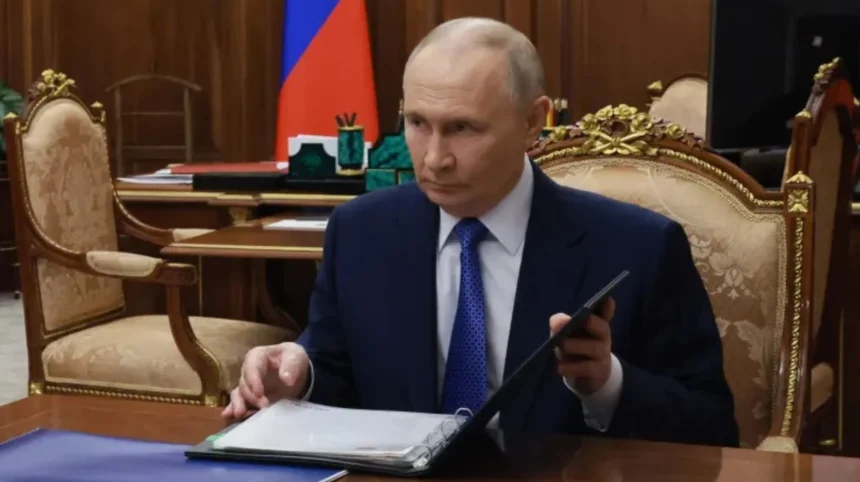
Russian President Vladimir Putin has said Moscow is prepared to allocate up to 1 billion dollars from frozen Russian assets held in Western countries to support the reconstruction of Gaza. He outlined the plan in remarks linked to the United States–initiated “Board of Peace” for Gaza, a body focused on post-war rebuilding and stabilization of the territory. According to coverage of his comments, Putin framed the pledge as part of Russia’s contribution to addressing the humanitarian and reconstruction needs of Palestinians in the enclave. He also tied the move to broader international efforts aimed at consolidating a ceasefire and supporting long-term recovery in Gaza.
Putin made the offer while discussing an invitation from US President Donald Trump to join the Board of Peace, which is designed to channel international funding and political support toward Gaza’s reconstruction. As reported by multiple outlets, he said Russia would study the invitation carefully and consult strategic partners before deciding whether to become a full member. In the meantime, he signaled that the 1 billion dollars would be an “initial step” that could be directed to Gaza even before a formal decision on membership. The Russian president stressed that any such mechanism should operate in line with United Nations resolutions and prioritize humanitarian and rebuilding needs.
Reports state that the funds would come from Russian sovereign or state-linked assets frozen in Western jurisdictions under sanctions imposed in recent years. Putin’s remarks indicate that these frozen holdings could be repurposed, with part of the money used for Gaza and potentially additional sums directed later to reconstruction in Ukraine after a future peace agreement. In his comments, he linked the use of frozen assets to “post-conflict reconstruction” more broadly, suggesting a model in which blocked Russian funds are steered into recovery efforts in multiple conflict zones.
How have key actors and partners reacted?
Media accounts note that Putin discussed the Gaza reconstruction proposal in the context of ongoing contacts with Palestinian President Mahmoud Abbas. During a meeting in Moscow, Putin reiterated Russia’s longstanding relationship with the Palestinians and said Moscow supports the creation of a fully sovereign and functional Palestinian state as essential to a lasting settlement in the region. Abbas, in turn, has been quoted in coverage describing Russia as a “great friend” of the Palestinian people and emphasizing decades of political support from Moscow. These exchanges form the political backdrop for the financial offer tied to Gaza’s rebuilding.
Reactions from Russian officials have clarified how the proposed funds might be used. Kremlin spokesperson Dmitry Peskov has been cited explaining that the 1 billion dollars, if transferred through the Board of Peace, should be directed specifically toward humanitarian purposes and the restoration of Palestinian infrastructure. He underscored that the money is intended for post-war reconstruction rather than broader political projects. The Russian Foreign Ministry has reportedly been tasked with examining the Board of Peace proposal in detail and coordinating with partners before Russia delivers a formal response to Trump’s invitation.
Internationally, the offer has been reported alongside wider diplomatic maneuvers around Trump’s Board of Peace. Coverage of the initiative notes that leaders and officials from numerous countries have attended events linked to the board and its charter, positioning it as a US-led platform for channeling reconstruction funds into Gaza. Putin’s move is seen as placing Russia inside that conversation while preserving room for negotiation over the conditions of its participation. At the same time, there has been public attention to the legal and political complexity of using frozen sovereign assets, an issue already under debate in relation to Ukraine.
Supporting details and broader context
Several reports emphasize that Putin’s pledge is closely tied to Russia’s ongoing confrontation with Western sanctions. By proposing to use frozen Russian assets for Gaza’s reconstruction, Moscow is effectively offering a way to unlock a portion of those funds for a humanitarian purpose. Analysts quoted in coverage note that this could create a precedent for channeling blocked assets into post-conflict rebuilding, though the legal mechanics would require agreement from the countries holding the funds. The offer also allows Russia to present itself as an active player in addressing a high-profile humanitarian crisis while underlining its opposition to how sanctions have been applied.
The Board of Peace framework, as described in news reports, is built around substantial financial commitments from participating states, with membership tied to fixed-term funding contributions earmarked for Gaza’s rebuilding. An official cited in international coverage has indicated that payments such as the proposed 1 billion dollars would operate on a multi-year term, with all raised funds directed to reconstruction projects in the territory. Within that structure, Russia’s offer would represent one of the larger individual pledges: both a political signal and a practical source of financing for rebuilding homes, infrastructure and public services damaged in the conflict.
Putin has also linked the concept of using frozen assets to the eventual reconstruction of Ukraine, suggesting that remaining blocked Russian funds could later be directed toward repairing war damage there once a peace treaty is reached. In his comments as reported by international outlets, he said this option is being explored with US officials and would be contingent on a negotiated settlement. By pairing Gaza and Ukraine in this way, Moscow is presenting a broader vision in which sanctioned assets become tools for post-war recovery, even as the underlying disputes over sanctions and responsibility for damage remain unresolved.
What are the implications and what happens next?
The immediate implication of Putin’s announcement is to place Russia more firmly in the center of diplomatic efforts around Gaza’s reconstruction, even before a final decision on joining Trump’s Board of Peace. If the 1 billion dollars is eventually released, it would add a significant sum to the pool of resources available for rebuilding critical infrastructure, housing and public services in the enclave. The move also sends a signal to Washington and other capitals that Moscow is willing to link discussions about its frozen assets to humanitarian and reconstruction agendas, potentially complicating broader negotiations over sanctions and reparations.
For the Board of Peace initiative, Russia’s offer introduces both opportunity and complexity. On one hand, a large Russian contribution would bolster the board’s financial base and underscore its international reach. On the other, incorporating funds derived from sanctioned assets may require careful legal arrangements and political agreements with Western governments that currently hold those assets. The process of designing and approving those mechanisms is likely to shape how quickly, and under what conditions, any of the pledged money can be disbursed for projects in Gaza.
In the coming period, attention will focus on consultations between Russia, the United States, Palestinian authorities and other partners over the terms of Moscow’s involvement. Russian officials will need to determine whether to take up permanent membership in the Board of Peace and how to structure the use of frozen assets in a way acceptable to all parties. At the same time, humanitarian agencies and reconstruction planners working on Gaza’s recovery will be watching whether the promised funds materialize and how they are integrated with existing UN-led and bilateral assistance programs. The trajectory of both the Gaza conflict and broader Russia–West relations will influence how, and how quickly, this 1 billion-dollar offer translates into concrete rebuilding on the ground.

