


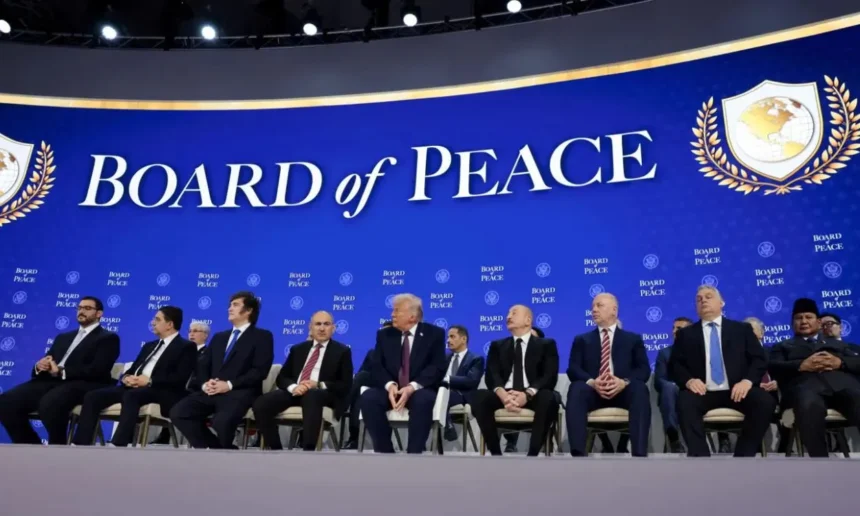
United States President Donald Trump’s so‑called “Board of Peace” is preparing for its first leaders’ meeting on Gaza in Washington, DC, later this month, with the gathering expected to focus on reconstruction and the next phase of the ceasefire framework. According to Axios, the White House is planning to convene the body on February 19, with the session described as both an inaugural meeting and a fundraising conference for rebuilding the Gaza Strip. As reported by Al Jazeera, the board has been tasked as part of a US‑led initiative to oversee aspects of governance and postwar stabilization in Gaza.
According to Al Jazeera’s reporting, the timing of the Washington meeting is linked to Israeli Prime Minister Benjamin Netanyahu’s expected visit to the White House on February 18. Axios has reported that if Netanyahu attends the Board of Peace gathering, it would mark one of his first multilateral encounters with Arab and Muslim leaders since Israel’s military operations in Gaza intensified in late 2023. Neither the White House nor the US State Department has publicly confirmed the agenda, guest list, or final format of the event, and officials have stressed that plans remain provisional.
As reported by the Jerusalem Post, the meeting is expected to take place at the US Institute of Peace in Washington, a venue often used for diplomatic conferences and conflict‑resolution events. Anadolu Agency has similarly reported that the administration has begun reaching out to dozens of countries to invite leaders and assess who can attend, underscoring the intention to frame the event as a broad international summit on Gaza’s reconstruction. Several outlets, citing US officials and diplomats from four countries involved in the initiative, have emphasized that logistical preparations are still at an early stage and subject to change.
Who Is Involved and How Are They Reacting?
According to reporting cited by Al Jazeera and other outlets, Trump has invited a number of high‑profile political figures to participate in the Board of Peace, including Israeli Prime Minister Benjamin Netanyahu and former British Prime Minister Tony Blair. Al Jazeera notes that Netanyahu has been named as a member of the board despite facing an International Criminal Court arrest warrant over alleged war crimes in Gaza, while Blair has drawn scrutiny for his role in backing the 2003 US‑led invasion of Iraq. Axios reports that the board also includes senior US officials and envoys close to Trump, with the president himself expected to play a central role in the proceedings.
Critics quoted by Al Jazeera have likened the initiative to a modern “colonial” governing structure, expressing concern that the board could sideline existing international mechanisms, particularly the United Nations. According to the Globe and Mail, some diplomats and analysts worry that the body’s mandate, as outlined in Trump’s 20‑point Gaza ceasefire plan, may extend beyond monitoring a truce to shaping Gaza’s political future and regional diplomacy more broadly. The White House has not publicly responded to these criticisms, and there has been no detailed official description of how the board will interact with Palestinian representatives or existing international agencies on the ground.
Several media outlets report that the Board of Peace grew out of Trump’s broader Gaza ceasefire proposal, which was endorsed in principle by the UN Security Council. The Globe and Mail has reported that 59 countries have signed on to the concept of the board, which is formally tasked with “peace‑building functions in accordance with international law.” Regional reactions remain mixed, with some governments viewing the meeting as an opportunity to channel reconstruction funds and others wary of appearing to endorse an arrangement they view as US‑dominated.
Supporting Details and Background
According to Axios and follow‑up coverage in Dawn and Anadolu Agency, the February 19 meeting is expected to serve several overlapping purposes: advancing the second phase of the Gaza ceasefire agreement, coordinating pledges for reconstruction funding, and outlining the board’s operational roadmap. The Jerusalem Post reports that the summit will focus on implementing the next steps of Trump’s Gaza peace plan, including mechanisms to monitor the ceasefire and support the rebuilding of infrastructure heavily damaged by months of conflict. While specific funding targets have not been publicly announced, the “fundraising conference” label indicates that donor commitments will be a core metric of success.
Al Jazeera’s report notes that Trump and key advisers, including son‑in‑law Jared Kushner, have repeatedly framed Gaza as a prospective hub for technology, real estate development, and foreign investment once sustained ceasefire conditions are in place. Critics quoted in the same coverage argue that such economic visions have, so far, not been matched by clear guarantees regarding Palestinian political rights, accountability for alleged war crimes, or the long‑term status of Gaza’s governance. The Globe and Mail describes the board as an entity that could, in practice, compete with or overshadow existing multilateral forums, given Trump’s longstanding criticism of the UN and other international institutions.
Previous reporting, including from CBS Austin and other outlets, indicates that Trump formally inaugurated the Board of Peace with global leaders at the World Economic Forum in Davos earlier this year. At that launch, Trump said dozens of countries had joined the initiative and outlined a structure in which he would serve as the inaugural chair, with a founding executive board made up of senior US officials and selected international figures. Those earlier announcements set the stage for the Washington meeting as the first major test of the board’s ability to convene leaders and marshal concrete commitments for Gaza.
What Are the Implications and What Comes Next?
According to Axios and multiple international outlets, the Washington meeting is being closely watched as a potential turning point in how Gaza’s post‑war governance and reconstruction will be organized. If the event proceeds as planned, it could clarify whether the Board of Peace will function mainly as a donor coordination platform or evolve into a more far‑reaching political body with influence over Gaza’s internal affairs. Observers quoted in Al Jazeera and the Globe and Mail suggest that the summit’s outcomes—such as the level of participation from Arab and Muslim states and the size of pledged reconstruction funds—will help determine how much international legitimacy the board can claim.
The timing of the meeting, immediately following Netanyahu’s scheduled visit to the White House, adds diplomatic weight and may shape expectations about Israel’s role in the board’s work. According to reports in Israeli and regional media, Netanyahu is expected to use his Washington trip to discuss security arrangements, border controls, and the conditions under which Israel might support large‑scale reconstruction in Gaza. Whether Palestinian representatives will have a formal place in or alongside the Board of Peace remains unclear in current public reporting, and several outlets note that this question could significantly affect perceptions of the board’s credibility among Palestinians and across the region.
Looking ahead, Axios and other outlets report that US officials envision the Board of Peace as a potentially reusable framework for addressing other conflicts, though no additional theaters have been officially designated. For now, the focus remains on finalizing the February 19 meeting, confirming attendance from key regional and international actors, and securing tangible commitments for Gaza’s recovery. The success or failure of that inaugural gathering is likely to shape both the future of Trump’s Gaza peace initiative and broader debates over how post‑war governance and reconstruction in the territory should be managed.
In summary, the planned Board of Peace meeting in Washington represents the first major test of President Donald Trump’s new framework for coordinating ceasefire implementation and reconstruction in Gaza. With plans still fluid and key questions unanswered—particularly regarding participation, Palestinian representation, and the balance of power between the board and existing international institutions—the February 19 summit is poised to serve as an early indicator of how this controversial new body will operate in practice.

