

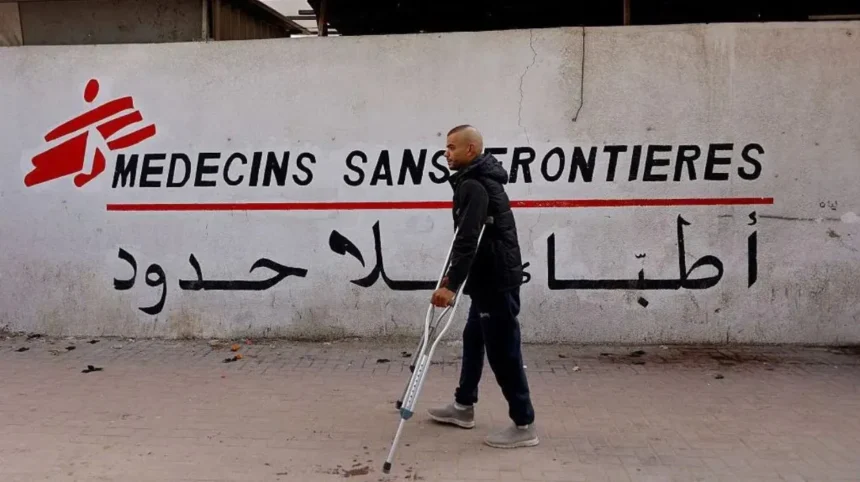
Israel has announced that it intends to bar Médecins Sans Frontières (MSF), also known as Doctors Without Borders, from operating in the Gaza Strip after the medical charity refused to provide a list of its Palestinian and international staff working there. According to BBC News, the move follows a demand from Israeli authorities that MSF and dozens of other aid organizations submit detailed information on local and foreign employees as part of a registration process. As reported by BBC News, Israeli officials have alleged that two MSF employees had links to Palestinian armed groups Hamas and Islamic Jihad, allegations that MSF strongly denies. According to the BBC, Israel’s foreign ministry has framed the requested staff lists as a transparency and security measure tied to the continued authorization of humanitarian work in Gaza.
In its reporting, BBC News says MSF initially indicated it was prepared, as an “exceptional measure,” to share staff names with Israeli authorities, but only if there were clear, written guarantees that the information would be used solely for administrative purposes and would not endanger staff. As reported by the BBC, MSF later informed Israel that those assurances had not been secured and that it would therefore not provide the full list of names. According to BBC News, Israeli authorities have responded by stating their intention to terminate MSF’s ability to work in Gaza, setting out a timeline under which the organization would be compelled to halt its operations in the territory. The BBC notes that this step comes amid broader Israeli moves to restrict or deregister multiple international and local aid groups in Gaza.
How are MSF and others reacting?
According to BBC News, MSF has publicly rejected Israel’s allegations that any of its staff are linked to Hamas or Islamic Jihad and has emphasized its internal vetting procedures and humanitarian mandate. As reported by the BBC, MSF said it could not hand over staff lists without safeguards because doing so, in its view, would expose employees and their families to potential risk in a highly volatile and militarized environment. BBC News reports that MSF has described Israel’s information demands as going beyond what is necessary for coordination and has argued that humanitarian organizations must be able to protect the confidentiality and safety of their personnel.
The BBC’s coverage notes that MSF has also warned that forcing it to suspend work in Gaza would further reduce access to medical care for civilians already facing a severe crisis after months of conflict. According to BBC News, other humanitarian organizations and rights advocates have raised concerns that Israel’s approach could set a precedent for expansive security vetting that undermines the neutrality and independence of aid operations. BBC reporting also indicates that Israeli officials, for their part, have criticized MSF for what they describe as a refusal to cooperate with reasonable oversight, insisting that security screening is essential given the presence of armed groups in Gaza.
Supporting details and background
As reported by BBC News, Israel has required a total of 37 humanitarian organizations to submit detailed staff information as part of a new or renewed registration framework for operating in Gaza. According to the BBC, this policy shift is tied to longstanding Israeli claims that Palestinian armed factions sometimes seek to infiltrate civil society or aid organizations. BBC reporting notes that MSF’s work in Gaza has included running clinics, supporting hospitals, and providing trauma and surgical care, making it one of the most visible international medical actors in the enclave.
BBC News adds that MSF has operated in the Palestinian territories for years and has frequently criticized the humanitarian impact of both Israeli military operations and restrictions on movement and supplies. According to the BBC, the current dispute over staff lists unfolded after weeks of exchanges in which MSF sought written commitments from Israeli authorities on data protection, use of information, and non-harm guarantees. As reported by BBC News, MSF said those conditions were never met, while Israel maintains that the organization failed to honor earlier undertakings to provide the requested information.
What are the implications and what happens next?
According to BBC News, the Israeli decision, if fully implemented, would mean MSF could no longer legally operate in Gaza, raising fears of an additional gap in emergency and routine medical services for civilians. As reported by the BBC, aid agencies and analysts say any reduction in international medical capacity could have serious consequences in a territory where hospitals and clinics have already been damaged, understaffed, or overwhelmed by casualties. BBC News notes that the move could also strain Israel’s relations with Western governments and donors that fund both MSF and other humanitarian work in Gaza, especially if they view the security demands as disproportionate.
As reported by BBC News, MSF has not ruled out further dialogue but has made clear that it will not share staff names without firm assurances on the protection and limited use of that data. According to the BBC, Israel’s authorities are expected to move ahead with broader changes to the registration and oversight of aid organizations in Gaza in the coming weeks, which could affect additional groups that decline to comply with the new requirements. BBC reporting indicates that the situation remains fluid, with the possibility of diplomatic pressure, legal challenges, or negotiations influencing whether the announced ban on MSF in Gaza is implemented as planned or modified in scope.
In sum, BBC News reports that Israel’s intention to bar Médecins Sans Frontières from working in Gaza stems from the organization’s refusal to provide a full list of staff without security guarantees, amid Israeli allegations that some employees have links to armed groups and MSF’s firm denial of those claims. According to the BBC, the dispute highlights a widening rift over how to balance Israeli security demands with the operational independence and safety standards of humanitarian organizations working in the Gaza Strip.

