


Key Points
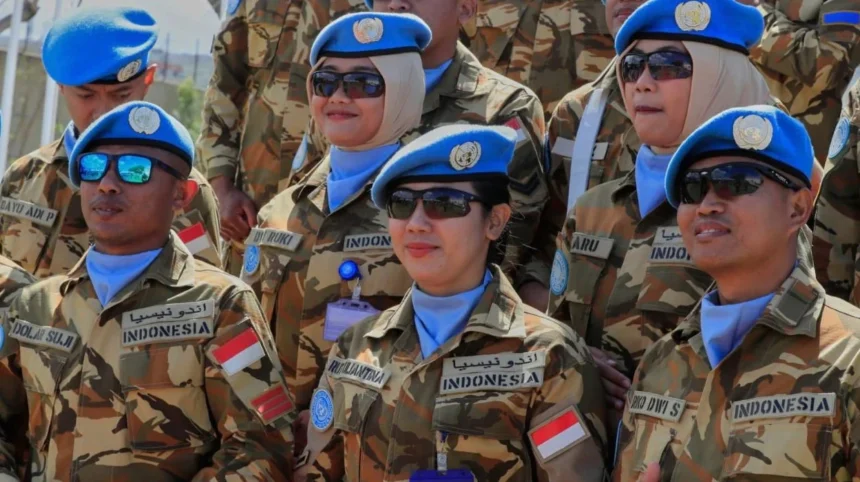
- Indonesia’s government says it is preparing to deploy between 5,000 and 8,000 troops to Gaza as part of a planned international stabilisation and peacekeeping force linked to the US-backed “Board of Peace” initiative.
- President Prabowo Subianto has pledged “8,000 or more” personnel for the mission, positioning Indonesia as the first country to make a concrete troop commitment under the emerging postwar framework for Gaza.
- Army leaders say training has begun in February 2026, with engineering and medical units prioritised and around 1,000 troops expected to be ready for deployment by early April, pending presidential approval and final operational terms.
- The deployment is tied to Indonesia’s recent decision to join the US-led Board of Peace, which has UN Security Council backing to assemble an International Stabilization Force for Gaza and oversee border security, demilitarisation and reconstruction. This information could not be independently verified.
- Human rights groups, segments of Indonesian civil society and some Islamic organisations have criticised the plan, warning that without a clear UN peacekeeping mandate and guarantees on Palestinian rights, the mission risks legitimising Israeli control over Gaza.
- The government insists Indonesian troops will have a non‑combat, peacekeeping and humanitarian role, citing the country’s track record in UN missions such as Lebanon, and says it will avoid any actions that imply recognition of Israel.
- Analysts warn that the move could test Indonesia’s domestic political cohesion, its longstanding pro‑Palestinian stance and its efforts to expand its global profile, particularly if the mission operates without robust UN oversight or if violence resumes in Gaza.
Indonesia is preparing to send thousands of troops to Gaza as part of a proposed international stabilisation force linked to a US-backed postwar plan, drawing both international attention and domestic criticism in the world’s largest Muslim‑majority nation. Senior officials say between 5,000 and 8,000 Indonesian soldiers are being readied for possible deployment in the coming months, even as civil society groups, Islamic leaders and analysts question the mission’s mandate, political framing and potential implications for Palestinians.
- Key Points
- Scope of the planned deployment
- Link to Trump-backed Board of Peace
- Government’s justification and assurances
- Domestic criticism and concerns
- Shifting positions among religious leaders
- Strategic ambitions and foreign policy context
- Legal and operational questions
- Public opinion and political risks
- What happens next
Scope of the planned deployment
Army chiefs and government representatives have outlined an ambitious contribution, positioning Indonesia as a central pillar of the proposed Gaza force. General Maruli Simanjuntak, the army chief of staff, has said training has begun for up to 8,000 troops, with a focus on engineering and medical units typically used in peacekeeping and humanitarian operations.
Brigadier General Donny Pramono, an army spokesperson, said around 1,000 personnel could be ready to deploy by early April, subject to final political authorisation from President Prabowo Subianto and the completion of international arrangements. He indicated that the total contingent could rise to as many as 8,000 troops over time, though he stressed that key decisions on rules of engagement and deployment zones had yet to be finalised. This information could not be independently verified.
President Prabowo has told international partners that Indonesia stands ready to send “8,000 or more” troops to Gaza as part of the International Stabilization Force envisaged under the Board of Peace framework. Officials frame this as a natural extension of Indonesia’s history as one of the top contributors to UN peacekeeping missions, including previous deployments to Lebanon under the UN Interim Force in Lebanon (UNIFIL).
Link to Trump-backed Board of Peace
The Gaza deployment plan is closely tied to Indonesia’s decision to join the so‑called Board of Peace, an initiative strongly associated with US President Donald Trump and presented as a vehicle for postwar governance and reconstruction in Gaza. According to government statements, the Board has secured a mandate from the UN Security Council to assemble an International Stabilization Force to secure Gaza’s borders, support demilitarisation – including the disarmament of Hamas – and oversee reconstruction and reforms in local governance. This information could not be independently verified.
The Board of Peace is expected to hold its first formal meeting in Washington, with President Prabowo and other leaders due to attend to discuss timelines, force composition and political arrangements for Gaza, including the formation of a technocratic Palestinian administration. Indonesian officials present their participation as a way to influence postwar arrangements from within and to ensure that Palestinian interests are represented in future governance and security discussions.
However, critics note that Palestinian representation in the Board’s structure has been limited so far, while Israel has reportedly joined the initiative, raising questions about balance and legitimacy. Some Indonesian commentators and legal experts have expressed concern that the framework, as currently described, could be seen as entrenching rather than ending Israeli control over Gaza.
Government’s justification and assurances
Officials in Jakarta have stressed that Indonesian troops will be deployed strictly in a non‑combat capacity, focusing on peacekeeping, humanitarian support, engineering and medical services. The government has highlighted Indonesia’s long‑standing policy of support for the Palestinian cause and insisted that any participation in Gaza will be designed to protect civilians and improve conditions on the ground.
According to The Jakarta Post, the government has sought to reassure domestic audiences by emphasising that Indonesian forces will not be used to suppress Palestinian factions and will avoid operational areas that require coordination with Israeli forces. Shofwan Al Banna, an associate professor at the University of Indonesia, told Al Jazeera that officials are under pressure to make clear that Indonesia will not operate in ways that imply de facto recognition of Israel, with which Jakarta has no diplomatic relations.
Indonesian leaders also point to their country’s humanitarian footprint in Gaza, including support for medical facilities and relief efforts, as evidence that the mission is aligned with a broader policy of solidarity with Palestinians. They argue that by helping to stabilise the territory and facilitate reconstruction, Indonesia can play a tangible role in improving daily life for civilians while continuing to advocate for Palestinian self‑determination.
Domestic criticism and concerns
Despite official assurances, the troop plan has triggered debate and criticism across parts of Indonesian society. Early reactions from some Islamic organisations and human rights groups were strongly sceptical, with opponents warning that joining a US-led framework risked aligning Indonesia too closely with Washington’s and Israel’s security agenda in Gaza.
Deutsche Welle quoted Indonesian legal scholar Hikmahanto Juwana as saying that at grass‑roots level there is a perception that the Board of Peace could serve as an extension of Israeli interests channelled through the United States. Demonstrators outside the US embassy in Jakarta have voiced fears that Indonesian troops might be used as a “buffer” to manage Palestinians rather than to secure their rights.
Al Jazeera reported that some academics and activists worry Indonesian forces could become “pawns” or “shock absorbers”, lending international legitimacy to an arrangement that leaves core political issues unresolved and potentially strengthens Israel’s hold over Gaza. They argue that, without a clear and robust UN peacekeeping mandate and explicit guarantees on Palestinian sovereignty, any stabilisation mission will face intense scrutiny at home.
Human rights organisations, including Amnesty International Indonesia, have raised questions about transparency, oversight and accountability mechanisms for the mission. According to The Jakarta Post, these groups warn that participation in a non‑UN operation could blur the line between peacekeeping and coercive security roles, making it harder to ensure compliance with international humanitarian law.
Shifting positions among religious leaders
Reactions among major Islamic organisations in Indonesia, which have significant influence over public opinion, have evolved as the government has intensified its outreach. The New Arab reported that some Islamic leaders initially strongly opposed joining the Trump-led peace council and sending troops to Gaza, but later adopted a more nuanced stance after meetings with President Prabowo.
Hajj Yahya Cholil Staquf, chairman of Nahdlatul Ulama, was quoted as saying that the initiative might present an opportunity for Indonesia to achieve more concrete results for Palestinians than would be possible from the sidelines. At the same time, other figures, such as Muhammad Ansarullah of the Al‑Aqsa Action Group, have criticised what they see as a sudden shift, arguing that reliance on a framework shaped by Washington risks sidelining Palestinian rights.
Former lawmaker Wanda Hamidah has publicly questioned the plan, citing the fragility of the ceasefire, the absence of a clear UN mandate and the continuation of Israeli military operations. She warned that these factors combine to make any deployment highly risky and potentially counterproductive, both for Palestinians and for Indonesia’s image as a supporter of their cause.
Strategic ambitions and foreign policy context
The Gaza troop plan is widely seen by analysts as part of President Prabowo’s drive to elevate Indonesia’s international profile and secure a more prominent role in global security discussions. Commentators in regional outlets such as The Diplomat argue that Jakarta is trying to balance its traditional non‑aligned posture and strong domestic solidarity with Palestinians against the desire to be seen as a constructive partner in efforts to manage postwar transitions.
Indonesia’s participation in a high‑profile Gaza mission could reinforce its reputation as a leading contributor to peacekeeping operations, particularly in the Muslim world. However, such a move also exposes the government to domestic criticism if the mission is perceived as ineffective, biased, or inconsistent with long‑held principles of support for Palestinian statehood.
Analysts note that in previous deployments, including in southern Lebanon, Indonesian troops have had to operate in complex environments where political constraints limited their ability to respond to incidents, including reported attacks by Israeli forces. Critics warn that similar constraints in Gaza could undermine public confidence if Indonesian forces appear unable to protect civilians or influence events on the ground.
Legal and operational questions
Several legal and operational uncertainties remain over how the Gaza deployment would function in practice. Key issues include the chain of command, the precise mandate of the International Stabilization Force, its relationship with existing or future UN authorisations, and the terms under which it might interact with Israeli security forces or Palestinian groups.
International law specialists in Indonesia have highlighted the need for robust safeguards to ensure that any mission complies with international humanitarian and human rights law. They stress that clear rules of engagement, independent monitoring and transparent reporting mechanisms will be essential to prevent abuses and to retain domestic support.
Indonesia’s foreign minister has reportedly told Islamic organisations that the government is prepared to withdraw from the peace council if it concludes that participation cannot be reconciled with Indonesia’s commitment to promoting peace in Gaza and supporting Palestinian independence. This pledge appears aimed at addressing fears that Jakarta could become locked into an arrangement that drifts away from its stated principles.
Public opinion and political risks
Public opinion in Indonesia on the Gaza deployment appears mixed, with strong expressions of support for Palestinians intersecting with concern about how the mission will be perceived in the broader regional and global context. Pro‑Palestinian solidarity has long been a prominent feature of Indonesian political discourse, and many citizens view developments in Gaza as a test of their country’s foreign policy values.
Small but visible protests, particularly outside the US embassy in Jakarta, suggest that a segment of the population remains wary of any security framework seen as being driven by Washington. At the same time, the government’s efforts to engage major religious organisations and frame the deployment as a humanitarian and peacekeeping endeavour indicate an awareness of the domestic political stakes.
Observers say that if the mission can demonstrably improve conditions for civilians in Gaza without becoming entangled in contentious security operations, it may bolster support for Indonesia’s role. Conversely, any perception that Indonesian troops are constrained, symbolic, or aligned with one side in the conflict could generate political pressure at home and complicate Jakarta’s broader diplomatic agenda.
What happens next
The timing and scale of Indonesia’s deployment to Gaza will depend on several moving parts, including the consolidation of a ceasefire, the operationalisation of the Board of Peace framework and final political approvals in Jakarta and among international partners. Army officials say initial contingents could be ready by early April, but there is no public timetable yet for when troops will actually enter Gaza. This information could not be independently verified.
In the coming weeks, attention is likely to focus on the inaugural meeting of the Board of Peace in Washington, where Indonesia and other participating states are expected to negotiate mandate language, command structures and coordination with existing international mechanisms. Domestic debate in Indonesia is also set to continue, with civil society, religious organisations and political figures pressing for clarity on how the mission will protect Palestinian rights and uphold Indonesia’s long‑standing foreign policy positions.
If the deployment proceeds, Jakarta will face the dual challenge of managing a sensitive operation in one of the world’s most contested territories while maintaining public trust at home and preserving its reputation as a consistent supporter of Palestinian aspirations. Outcomes on the ground in Gaza – including security conditions, humanitarian access and political developments – will shape how Indonesia’s role is judged both domestically and internationally.

