


India is weighing a formal invitation from the United States to join a proposed “Board of Peace” for Gaza that Washington has framed as a central pillar of the second phase of its plan to end the conflict in the territory. According to India Today, US Ambassador to India Sergio Gor confirmed that President Donald Trump invited Prime Minister Narendra Modi to participate in the new body, which is intended to oversee implementation of a ceasefire and post-war governance arrangements in Gaza. India’s decision comes as the US-backed Gaza peace plan moves into what officials describe as its second phase, focused on stabilisation, reconstruction and political transition after major combat.
As reported by India Today, Trump announced the formation of the Gaza Board of Peace as part of a broader “Comprehensive Plan” that lays out 20 points for ending the Gaza conflict and restructuring governance in the enclave. The plan’s second phase centres on the Board of Peace and a related technocratic structure that would manage Gaza’s day-to-day administration once active hostilities cease. The United Nations Security Council endorsed key elements of the plan through Resolution 2803, giving it an international legal and diplomatic framework that countries such as India must now consider as they respond to Washington’s outreach.
According to Bloomberg reporting cited in the Times of India, membership in the Board of Peace would require countries to commit significant financial resources, reportedly up to 1 billion dollars each for long-term participation. The US president would retain final authority over membership and decision-making, underscoring Washington’s central role in shaping the post-war order in Gaza. For New Delhi, the invitation therefore raises not only diplomatic questions but also strategic and financial considerations about the scale of its potential role in a sensitive conflict zone.
India has long advocated a two-state solution to the Israeli-Palestinian conflict and has tried to balance deepening ties with Israel with its historic support for Palestinian statehood. Speaking at a recent UN Security Council debate on the Middle East, India’s Permanent Representative P. Harish reiterated New Delhi’s backing for “a sovereign, independent and viable State of Palestine, living within secure and recognised borders, side by side at peace with Israel.” As carried by Prasar Bharati’s News On Air, Harish linked India’s stance on Gaza to broader principles of counterterrorism and international law, condemning terrorism “in all its forms and manifestations” while supporting reconstruction and humanitarian relief efforts in the territory.
At the same time, India has framed its response to the US initiative in careful, procedural terms. The Palestinian foreign minister told the Times of India that New Delhi had received the invitation and would decide “in line with international law” and its long-standing position on the conflict, signalling that India intends to weigh the offer against its established diplomatic approach. That statement highlighted the expectation among regional actors that India’s choice will send a signal about its self-described role as a responsible global power and bridge between different blocs.
India’s official stance and diplomatic balancing
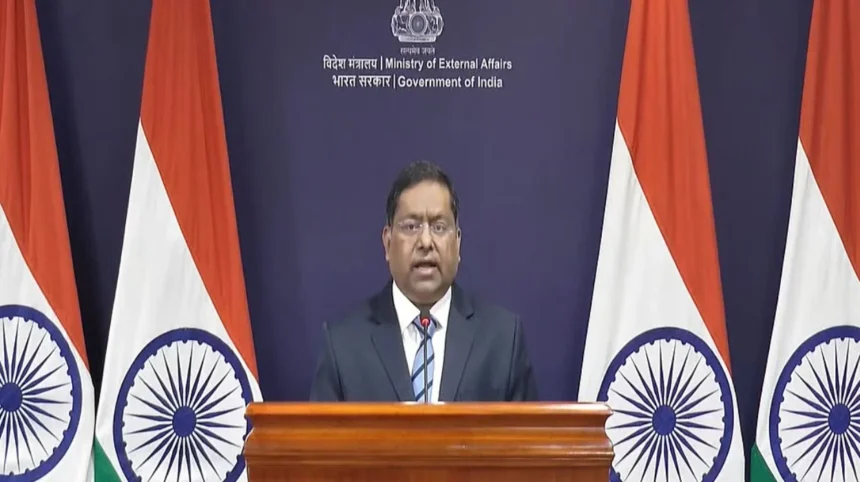
India’s Ministry of External Affairs has confirmed that the invitation from Washington is under active review but has not announced a final decision. According to a report by ANI, the ministry said New Delhi is “reviewing” the US proposal to join the Board of Peace, indicating that internal consultations are underway across relevant ministries and with key international partners. The ministry also referenced Prime Minister Modi’s public support for initiatives that “pave the way for long-term and lasting peace” in Gaza and the wider region, suggesting that India is open to constructive engagement but remains cautious about committing to a specific mechanism.
As reported by the Economic Times, Indian officials have signalled that New Delhi may not attend the Board of Peace’s inaugural meeting, scheduled for February 19, even as it continues to study the broader framework. The newspaper, citing government sources, said India is “still examining the proposal” and noted that the issue was discussed during a recent India–Arab League foreign ministers’ meeting in New Delhi. Officials reportedly heard the views of Arab League members that have agreed to join the board but refrained from disclosing India’s final position, reinforcing the perception that New Delhi is calibrating its response carefully.
According to Deutsche Welle, the Trump administration’s Gaza initiative has placed India in a diplomatic dilemma between its deepening strategic partnership with Israel and its historic alignment with the Palestinian cause and Arab states. The outlet noted that the Board of Peace proposal comes at a time when India’s defence and technology ties with Israel are robust, while domestic public opinion remains sensitive to Palestinian civilian suffering in Gaza. This duality complicates New Delhi’s calculations about joining a US-designed mechanism that will directly shape Gaza’s future.
India’s balancing act has been evident in its public messaging at the UN. As reported by News On Air, Ambassador Harish “commended” US efforts to address the Gaza crisis and welcomed progress in implementing the Security Council’s resolution, even as he avoided directly naming Hamas while denouncing terrorism. He emphasised the scale of destruction in Gaza, including what he described as tens of millions of tons of rubble containing harmful materials, and called for “innovative” approaches to reconstruction that leverage technological expertise. Those remarks allowed India to support the thrust of the US-led plan without explicitly endorsing every element of Washington’s blueprint.
At the same time, New Delhi has taken note of regional sensitivities and reservations about parts of the US initiative. India Today reported that Israeli Prime Minister Benjamin Netanyahu’s office publicly objected to aspects of the new structures announced by Washington, including the executive committee linked to the Board of Peace, saying they had “not been coordinated with Israel” and were “contrary” to its policy. That rare public rebuke from Israel, a close partner of India, adds another layer of complexity as New Delhi weighs whether to formally join a mechanism that one of its key allies has criticised.
Context and reactions: How are regional and global actors responding?
Regional reactions to the US plan and the Board of Peace invitation have been mixed, reflecting differing priorities and strategic calculations. According to Anadolu Agency, Trump invited both the Pakistani and Indian premiers to join the Board, extending the initiative beyond traditional Western and Arab players to key Asian powers. Pakistan’s foreign office confirmed receiving the invitation and said Islamabad would “continue supporting international efforts for peace and security in Gaza,” but did not provide detailed commitments about participation.
As reported by the Economic Times, India’s officials have privately cited the likely presence of Pakistan and Turkey on the Board of Peace as a significant challenge in deciding whether to join. The outlet said New Delhi is concerned about operating alongside Islamabad in a high-stakes post-conflict governance body, given the two countries’ longstanding rivalry and divergent positions on many regional issues. The participation of Turkey, which has often been sharply critical of India’s policies in other contexts, further complicates the potential dynamics on the board.
Arab states appear to be divided but engaged with the US-led framework. The Economic Times reported that several Arab League members have already agreed to participate in the Board of Peace, viewing it as a vehicle to influence Gaza’s reconstruction and political trajectory. At the India–Arab League meeting in New Delhi, Indian officials listened to the perspectives of these states, highlighting the importance New Delhi attaches to Arab views in forming its own stance.
European reactions have also underscored India’s pivotal role. Deutsche Welle described the Board of Peace initiative as a “test” of India’s long-held balancing act in the Middle East, noting that European policymakers are watching whether New Delhi aligns more closely with Washington or maintains a more equidistant posture between Israel, Palestine, and regional powers. Analysts quoted in the piece suggested that India’s decision will be interpreted as a signal about its broader foreign policy trajectory as an emerging global power.
Within multilateral forums, India has used its platform to emphasise reconstruction and humanitarian assistance rather than military or coercive elements of the Gaza plan. News On Air recounted Harish’s remarks that rebuilding Gaza’s devastated infrastructure and restoring public services would require “sustained international support” and “technological rigour,” positioning India as a potential partner in engineering and development rather than security enforcement. Those themes resonate with New Delhi’s stated preference for development-led approaches in conflict-affected regions.
Supporting details and expert perspectives
Specialists in Indian foreign policy say New Delhi’s deliberations reflect both normative and pragmatic considerations. Deutsche Welle quoted analysts who argued that India’s traditional support for Palestinian self-determination and adherence to international law must now be reconciled with its strategic partnership with the US and Israel. They noted that joining the Board of Peace could enhance India’s profile as a global problem-solver but might also expose it to criticism if the plan is perceived in parts of the Arab world or at home as skewed toward one side.
The financial and institutional design of the Board of Peace further shapes India’s thinking. According to details reported by the Times of India from a Bloomberg draft charter, member states would be expected to contribute substantial financial resources to secure long-term membership, with the US president retaining decisive authority over membership and final decisions. That structure, experts suggest, could limit India’s influence relative to the scale of its investment, a factor that Indian policymakers are likely considering as they review the invitation.
The broader US plan for Gaza also includes the creation of a “National Committee for the Administration of Gaza,” described by the Times of India as a technocratic body that would manage day-to-day governance after the war. Alongside this, Washington has announced an executive committee to implement the Board’s vision, further embedding the US in Gaza’s political and administrative future. India Today reported that Israel has raised concerns about these arrangements, warning that components of the plan were not coordinated with its government, which could complicate their implementation on the ground.
From a regional standpoint, Palestinian officials have framed India’s potential involvement in the Board of Peace as consistent with New Delhi’s long-standing support for Palestinian rights. The Palestinian foreign minister told the Times of India that India would take its decision “in line with international law” and its history of backing a negotiated settlement. That comment hinted at Palestinian expectations that India, if it joins, could act as a moderating voice within the US-led framework, advocating for the two-state solution and robust reconstruction.
India’s comments at the UN also reflect a desire to link Gaza’s reconstruction to broader technological and economic cooperation. News On Air reported that Ambassador Harish highlighted the unprecedented volume and hazardous nature of the rubble in Gaza and called for innovative and technologically advanced methods to clear and rebuild the territory. Such framing aligns with India’s broader foreign policy branding as a provider of development and digital solutions, which could shape the role it would seek if it participates in the Board.
Implications and future developments: What could India’s decision mean?
In the short term, India’s ongoing review of the US invitation suggests that New Delhi will likely continue to seek input from regional partners and major powers before announcing a formal stance. The Economic Times reported that the matter will feature in high-level discussions as Prime Minister Modi prepares for upcoming visits to Israel and other key partners, where Gaza and the Board of Peace are expected to be on the agenda. Those consultations will help India gauge how its decision would be received by both Israel and Arab states.
If India ultimately joins the Board of Peace, analysts quoted by Deutsche Welle suggest it would mark a significant step in New Delhi’s evolution from a largely rhetorical supporter of Palestinian statehood to a direct participant in shaping Gaza’s future governance. Such a move could enhance India’s visibility and leverage in Middle East diplomacy, but it would also tie New Delhi more closely to the outcomes of a politically sensitive and potentially contentious process overseen by Washington.
Conversely, if India decides to decline or defer participation, it may seek alternative avenues to contribute to Gaza’s reconstruction and humanitarian relief while maintaining a more arm’s-length position on the US plan. News On Air’s account of India’s focus on reconstruction and humanitarian aid at the UN hints at this possible path, in which New Delhi emphasises development assistance, capacity-building, and multilateral engagement without taking a formal seat on the US-led board. That approach would allow India to preserve its relationships across the region while limiting exposure to the political risks associated with the Board of Peace.
India’s decision will also interact with its broader strategic partnership with the United States. The Times of India and other outlets have noted that Washington’s overtures on Gaza are part of a wider agenda in which the US has sought to enlist India as a key partner on global security and governance issues. How New Delhi responds to the Board of Peace invitation could be seen in Washington as a barometer of India’s willingness to align with US-led initiatives beyond the Indo-Pacific, even as both sides stress the autonomy of their respective foreign policies.
Over the coming weeks, attention will focus on whether India attends the Board of Peace’s inaugural meeting and how its representatives frame any participation. The Economic Times reported that New Delhi is “unlikely” to take part in the February 19 session, but that the proposal remains under examination, leaving open the possibility of future engagement. Until a final decision is announced, India appears intent on maintaining a careful balance: endorsing the broad goals of peace, reconstruction and a two-state solution in Gaza while scrutinising the specific mechanisms through which those aims are to be pursued.
India’s review of the US invitation to join the Gaza Board of Peace thus sits at the intersection of long-standing principles and evolving strategic interests. As the US-backed Gaza plan advances into its second phase, New Delhi is weighing how best to support a durable ceasefire, reconstruction and Palestinian statehood while protecting its partnerships with Israel, Arab states and Washington. The outcome of that deliberation will shape not only India’s role in Gaza but also perceptions of its wider foreign policy posture in an increasingly complex regional and global landscape.

