


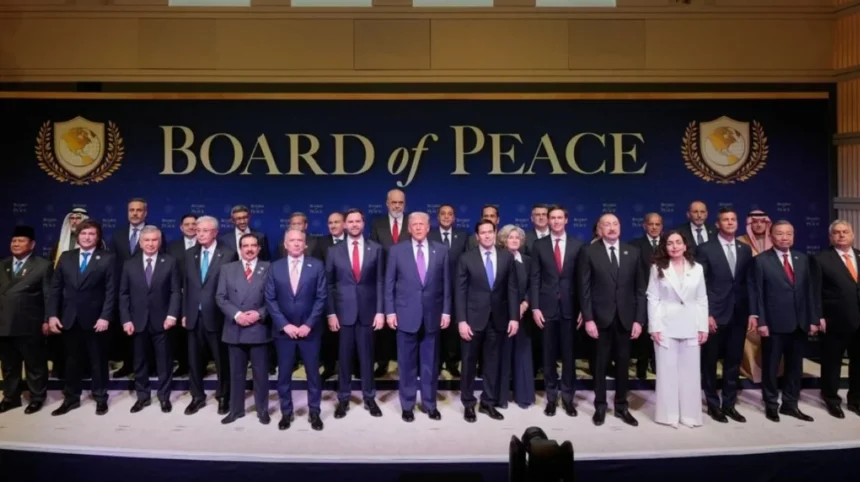
As reported by Joseph Pedrajas of Manila Bulletin, the Philippine Department of Foreign Affairs (DFA) has confirmed that the country’s invitation to join the United States-led Board of Peace (BoP) remains under review by the Marcos Jr. administration as of March 6, 2026. According to Manila Bulletin, DFA officials said there is still no final decision from Manila on whether the Philippines will participate in the new international body linked to efforts to implement a Gaza peace framework.
According to Manila Bulletin, the Board of Peace was conceived as part of a 20-point Gaza ceasefire plan announced by US President Donald Trump and later endorsed through a United Nations Security Council resolution that provides the framework for a Gaza Peace Plan. The DFA’s confirmation that the invitation remains under study comes amid broader international deliberations on the BoP’s mandate, membership, and implications for participating states’ foreign policy positions.
As reported by Manila Bulletin in earlier coverage, Trump’s plan envisions the Board of Peace as an international organization and transitional governing administration that would help oversee implementation of a permanent ceasefire in Gaza and coordinate humanitarian and reconstruction efforts. Some governments, including Pakistan, have already publicly announced decisions regarding their participation, underscoring the diplomatic pressure on other invited countries such as the Philippines to clarify their stance.
What context and reactions have emerged?
According to Manila Bulletin’s national section, international invitations to join the Board of Peace were sent to a range of world leaders following the U.N. Security Council’s endorsement of Trump’s Gaza ceasefire blueprint. In letters cited by Manila Bulletin, Trump described the BoP as “the most impressive and consequential board ever assembled,” tasked with pursuing a “bold new approach to resolving global conflict” that may extend beyond Gaza.
As reported by Manila Bulletin, reactions from governments have varied, with some US partners and Middle Eastern states expressing reservations about the Board’s structure and scope. Manila Bulletin cited diplomats noting that several Middle Eastern governments coordinated their responses to the invitation in order to confine acceptance strictly to the Gaza mandate laid out in the Security Council resolution, reflecting concern about any broader or open-ended mandate.
According to a press release from Pakistan’s Ministry of Foreign Affairs, Pakistan has already accepted the invitation to join the Board of Peace, framing its participation as part of ongoing efforts to support the implementation of the Gaza Peace Plan. Pakistan’s statement stressed hopes that the BoP framework would help secure a permanent ceasefire, scale up humanitarian aid, and support reconstruction in Gaza, while advancing a political process toward an independent Palestinian state.
Supporting details and background
As reported by Manila Bulletin, Trump’s 20-point plan and the Board of Peace proposal were presented as a new mechanism to coordinate ceasefire enforcement, humanitarian operations, and reconstruction in Gaza under international oversight. According to Manila Bulletin, letters to leaders in countries such as Argentina and Paraguay indicated that the Board might eventually work on conflicts beyond Gaza, signaling an ambition to evolve into a broader conflict-resolution platform.
According to the Pakistani Ministry of Foreign Affairs, the BoP is explicitly tied to implementation of the Gaza Peace Plan under United Nations Security Council Resolution 2803, which Pakistan cited in its announcement accepting the invitation. In that statement, Pakistan emphasized the importance of a permanent ceasefire, expanded humanitarian corridors, and a “credible, time-bound political process” leading to a Palestinian state based on pre-1967 borders with Al-Quds Al-Sharif as its capital.
As reported by Manila Bulletin, Trump first flagged the creation of the Board of Peace in public statements and then followed up with formal letters, with US officials indicating that a fuller rollout of BoP membership and structure would be unveiled at the World Economic Forum meeting in Davos. Manila Bulletin also noted that some traditional US allies were either not participating or had yet to confirm their roles, highlighting the diplomatic sensitivity surrounding the initiative.
What are the implications and possible next steps?
According to Manila Bulletin, the DFA’s position that the Board of Peace invitation is still under review means the Philippines has not yet aligned itself either with early adopters like Pakistan or with governments that have signaled hesitation or limited engagement. The decision, once made, could have implications for Manila’s stance on the Gaza conflict, its broader Middle East policy, and its diplomatic calibration with Washington, regional partners, and the United Nations.
As reported by Manila Bulletin, US officials have indicated that the Board of Peace is expected to take on a visible role in monitoring ceasefire compliance and channeling reconstruction funds and assistance once it is fully constituted. Should the Philippines decide to join, it would participate in a high-profile multilateral forum linked to a U.N.-endorsed peace framework; if it declines or delays further, it would align more closely with states expressing reservations about the Board’s scope and structure.
According to the Pakistani Foreign Ministry and Manila Bulletin’s reporting, the evolution of the Board of Peace will be closely watched by countries in Asia and the Middle East, both for its effectiveness in Gaza and for any move to tackle other conflicts. For now, the DFA’s confirmation that the invitation remains under study underscores that Manila is still weighing the diplomatic, legal, and political consequences of joining the new body, and no timetable for a final decision has been publicly announced.
The current situation leaves the Philippine position open-ended: the invitation stands, the Board of Peace is gradually taking shape with some members already on board, and the DFA has made clear that the matter is still being carefully evaluated by the Marcos Jr. administration.

