


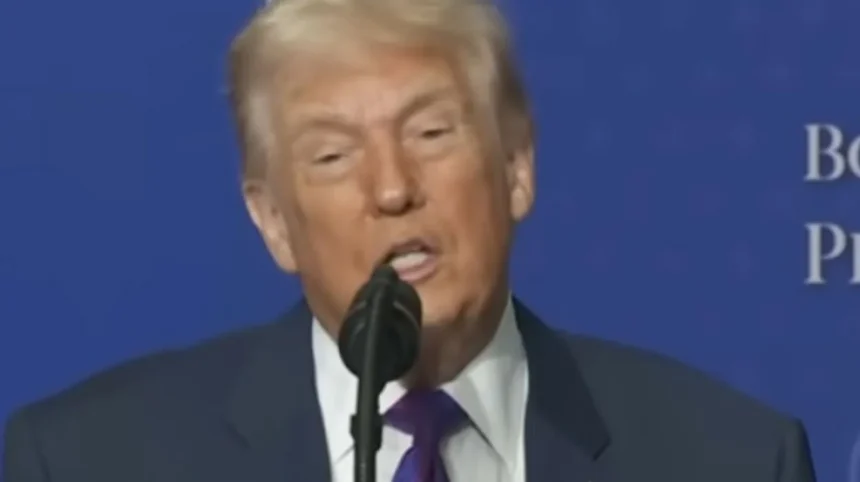
According to Geostrategy-Direct, as reported by WorldTribune, weakening Iran is viewed by some officials as a key factor in the success of United States President Donald Trump’s plans for post-war Gaza under the newly created Board of Peace (BoP). The outlet reports that Trump initiated the BoP and ratified its charter in January as an international organization tasked with rebuilding Gaza and managing regional conflicts. WorldTribune notes that Trump serves as chairman of the BoP and convened its inaugural meeting in February, with Washington pledging 10 billion dollars to the initiative. Citing a March 9 report in The Jerusalem Post, WorldTribune adds that the BoP has already begun issuing tenders for projects in Gaza, signaling a transition from diplomatic planning to early implementation.
WorldTribune reports that the BoP is already operating as an official entity and has opened a bank account, according to sources cited by The Jerusalem Post. These sources describe the initiative as moving forward despite ongoing regional tensions. The BoP’s mandate, as outlined by WorldTribune, centers on post-war reconstruction in Gaza and broader regional conflict management, with the United States positioned as the principal financial backer. The report situates the Board’s launch in the context of shifting geopolitical power balances in the Middle East, particularly in relation to Iran and non-state armed groups.
How do officials and sources frame Iran’s role in the initiative?
WorldTribune, drawing on The Jerusalem Post’s reporting, cites a senior Israeli official who links the weakening of Iran directly to the prospects for the Board of Peace. The official is quoted as saying that “the geopolitical powers in the Middle East are changing, and the Israel-U.S. alliance will enable forcing Hamas into disarming more than it would prior.” According to this account, changes in Iran’s regional position are seen as enhancing leverage over Hamas and other Iran-aligned actors. The emphasis on Iran reflects a view that its reduced influence could facilitate progress on security arrangements in Gaza as part of the BoP’s agenda.
Another source cited in the same coverage points to Hamas’s conduct since the outbreak of the current war, noting that, contrary to earlier assumptions, the group did not join the attack on Israel with missile fire. WorldTribune quotes the report as saying that the BoP believes “the war with Iran could ultimately accelerate progress on one of the initiative’s most sensitive issues – Hamas disarmament – by weakening Teheran’s regional influence and its long-standing support for the terror group.” These comments present a view from unnamed sources that developments in the Iran conflict could serve as a catalyst for achieving one of the Board’s core security objectives.
Supporting details and operational steps
According to the report summarized by WorldTribune, the Board of Peace has moved beyond conceptual discussions into early operational stages. The Jerusalem Post is cited as saying that the BoP has already issued tenders for projects in Gaza, an indication that planning for reconstruction is being translated into concrete procurement processes. The opening of a bank account and characterization of the BoP as an “official entity” further suggest that institutional and financial structures are being put in place. While the WorldTribune article does not detail the specific projects, the tenders are described as part of a broader post-war framework.
WorldTribune also underscores that the initiative is anchored in a substantial United States financial pledge, with 10 billion dollars committed to the BoP. This funding is presented as central to advancing reconstruction and related programs in Gaza under the Board’s auspices. The combination of a formal charter, leadership by Trump as chair, a dedicated budget, and initial tenders portrays the BoP as an emerging organizational vehicle for U.S.-backed regional policy, with Gaza as its first major focus area.
What are the implications and potential future developments?
Based on the reporting relayed by WorldTribune from Geostrategy-Direct and The Jerusalem Post, the Board of Peace’s future trajectory appears closely tied, in the view of cited officials and sources, to the outcome of the conflict involving Iran and to shifts in Tehran’s regional influence. If Iran’s position is significantly weakened, these sources suggest that the BoP could have greater leverage to pursue objectives such as Hamas disarmament as part of Gaza’s post-war order. The framing of the Iran war as “key” to the Board’s success reflects an assessment that regional power dynamics will either enable or constrain the initiative’s ambitions.
At the same time, the reported issuing of tenders and operationalization of the BoP indicate that the Board is moving ahead with reconstruction planning even as the wider strategic environment remains fluid. Future developments, as described in the article, may include further clarification of project scope in Gaza, additional funding commitments, and evolving security arrangements contingent on both the course of the Iran conflict and Hamas’s position on disarmament. Within this context, the Board of Peace is portrayed as an instrument through which the United States and its allies seek to shape post-war realities in Gaza, with its effectiveness likely to be judged against the dual benchmarks of reconstruction progress and changes in the regional balance of power.

