


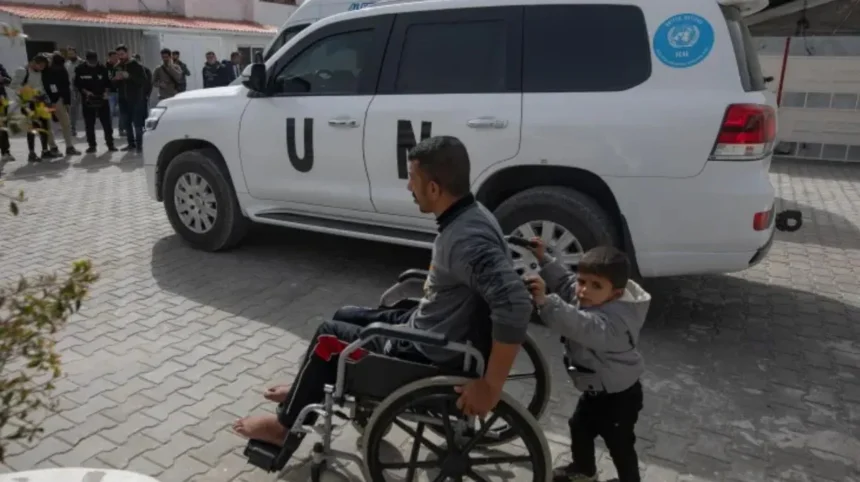
According to Al Jazeera’s live coverage, about 135 Palestinians traveled on Tuesday to the Rafah crossing between Gaza and Egypt seeking urgent medical treatment abroad as Israel maintains tight restrictions on who can leave the besieged enclave. As reported in previous Al Jazeera dispatches, Israel has reopened Rafah for severely limited evacuations after nearly two years of closure, with only a handful of patients allowed out on the first day. Gaza health officials and aid workers say thousands of wounded and chronically ill Palestinians remain on waiting lists for treatment outside Gaza, far exceeding the small numbers Israel is currently permitting to cross.
As reported by Al Jazeera journalists, the liveblog states that on the reopening’s first day, just five Palestinian patients in serious condition were authorized to leave Gaza through Rafah, each accompanied by two relatives. This amounted to only 15 people traveling, despite prior coordination between Gaza’s health authorities and the World Health Organization for the daily exit of up to 50 patients. According to Al Jazeera, the 135 Palestinians at Rafah on Tuesday do not know how many of them will ultimately be allowed to cross, highlighting the uncertainty surrounding Israel’s vetting and approval process.
How are patients and authorities reacting to the restrictions?
Al Jazeera’s live updates report that thousands of sick and injured Palestinians have registered to leave Gaza, but Israel’s “limited” opening means that only a very small fraction are being approved each day. According to Al Jazeera, medical officials describe the restrictions as leaving many people in life‑threatening conditions, since Gaza’s health system has been severely degraded by more than two years of war and shortages of medicines, equipment, and staff. In its broader reporting, Al Jazeera notes that some patients have already died while waiting for evacuation, underlining the urgency for those now gathering at Rafah.
In the same liveblog, Al Jazeera reports that Israeli forces shot and killed a Palestinian to the south of Khan Younis on Tuesday morning, in a separate incident from the Rafah crossings. The live updates describe this as part of a pattern of continuing violence, with Palestinian casualties still being recorded despite the partial easing of some restrictions at the border. Humanitarian organizations quoted by Al Jazeera have repeatedly warned that both movement limitations and ongoing military actions are worsening an already severe humanitarian and medical crisis in Gaza.
Supporting details and broader medical evacuation picture
According to earlier reports by Al Jazeera, Israel has said it will allow about 50 patients a day to leave Gaza via Rafah, each accompanied by up to two relatives, implying a potential daily total of roughly 150 people. However, Al Jazeera cites figures from Gaza’s health officials and hospital directors estimating that around 20,000 patients, including thousands of children, urgently need medical evacuation abroad because their conditions cannot be adequately treated inside Gaza. In a separate Al Jazeera feature, the director of al‑Shifa Hospital in Gaza described the backlog as so large that even at the promised pace of 50 patients a day, it could take more than a year to process all those currently awaiting approval.
As reported by Al Jazeera’s correspondents in Khan Younis, on the reopening’s first day Israel ultimately allowed only five patients to depart through Rafah, despite earlier coordination with the World Health Organization for a larger group. Gaza’s Health Ministry told Al Jazeera that each of those five patients traveled with two companions, as mandated by Israeli authorities, bringing the total number of people who crossed to 15. Raed al‑Nims, head of media for the Gaza Red Crescent, said in comments to Al Jazeera that the organization was still waiting for confirmation on when more patients could be transferred through Rafah or via the Kerem Abu Salem crossing in coordination with the WHO.
What are the implications and possible next steps?
According to Al Jazeera’s liveblog and related reports, the fact that only a few of the 135 Palestinians who reached Rafah may be allowed to cross underscores how limited the current arrangements are for medical evacuations. Humanitarian groups and health officials cited by the outlet say expanding the daily quota and speeding up Israeli approvals will be essential if Gaza is to reduce the large backlog of patients needing treatment abroad. The current pace, they warn, risks leaving many seriously ill people waiting months or longer for permission, with some dying before they can travel.
Al Jazeera’s coverage indicates that further changes to the system will depend on political and security decisions by Israel, as well as ongoing discussions with Egypt, international organizations, and Palestinian authorities over how Rafah and other crossings are managed. For now, the situation on Tuesday — with 135 Palestinians attempting to exit Gaza for medical care and very few guaranteed passage — illustrates both a modest shift in Israel’s policy and the continuing scale of Gaza’s medical emergency.

