


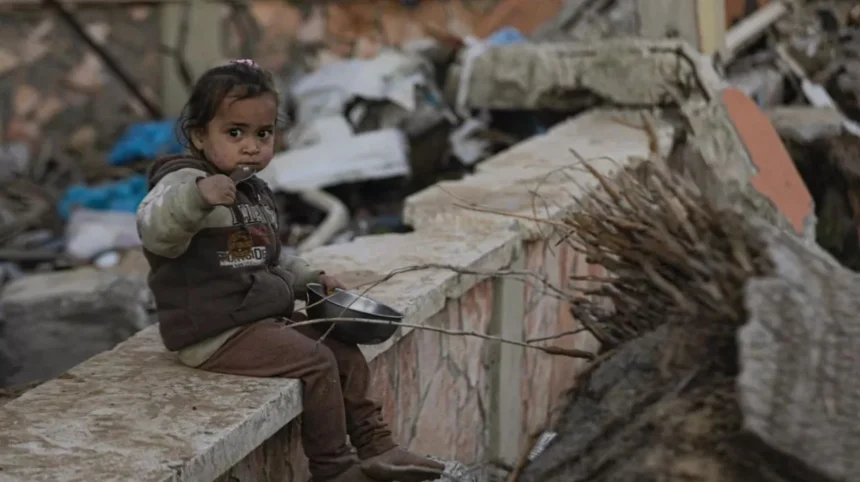
According to reporting on UNICEF’s latest statements, more than 100 children have been killed in the Gaza Strip since the start of the year, despite the presence of a declared ceasefire that has largely reduced but not halted hostilities. UNICEF officials describe a lethal environment for minors in Gaza, marked by continued airstrikes, drone and quadcopter attacks, tank shelling, live ammunition, and the lingering danger of unexploded ordnance, alongside mounting risks from exposure and hypothermia in damaged or makeshift shelters.
As summarized in coverage of UNICEF briefings, agency spokespersons have stressed that this toll translates to approximately one child killed every day since the ceasefire took effect, underlining that the cessation of large-scale bombardment has not resulted in full protection for children. UNICEF has also warned that the true number of child deaths could be higher than reported figures, as the data generally reflects only cases where sufficient information is available, while hundreds of additional children have been injured or maimed during the same period.
Reports citing UNICEF indicate that these deaths come on top of the very high cumulative toll among children since the broader Gaza conflict escalated in late 2023, when months of intensive bombardment and ground operations devastated large parts of the enclave’s civilian infrastructure. UNICEF and other UN agencies have repeatedly highlighted that Gaza’s health system is severely degraded, complicating efforts to save wounded children, and that many young patients require urgent medical evacuation that remains largely stalled even under the ceasefire arrangement.
UN situation updates note that sporadic Israeli strikes have continued in northern and southern Gaza, sometimes hitting tents and homes of displaced Palestinians, resulting in additional child casualties and injuries. In parallel, UNICEF has pointed to indirect causes of child deaths, including exposure to cold and a lack of basic items such as adequate shelter, warm clothing, fuel, and medical care, particularly during winter weather that has battered already damaged buildings and temporary encampments.
Context and Reactions: How Has UNICEF Framed the Ceasefire Toll?
In briefings from Gaza City and Geneva, UNICEF spokesperson James Elder has said that, since an early-October ceasefire between Israel and Hamas, more than 100 children have been killed, characterizing this as “roughly a girl or a boy killed here every day during a ceasefire.” Elder has described children being killed not only by renewed strikes but also by cold and other preventable causes, arguing that the current conditions in Gaza do not offer children meaningful safety even when large-scale offensives are formally paused.
As reported in UN and international media coverage, UNICEF officials have repeatedly underlined the contradiction between the notion of a ceasefire and the ongoing pattern of child fatalities, stating that “although there’s a ceasefire, people still get killed,” including minors in crowded urban areas. Ricardo Pires, speaking for UNICEF in a separate UN briefing on the ceasefire period, said at least 67 children had been killed in earlier weeks at a rate of about two per day, calling the pattern “shocking” and noting that the numbers represent individual lives and families, not just statistics.
Rights organizations and humanitarian groups cited in the same reports have echoed UNICEF’s alarm, pointing to what they describe as insufficient protection for civilians and children under the ceasefire terms. They highlight continuing allegations that Israeli military operations, combined with restrictions on aid and movement, have created conditions in which children are exposed to both direct violence and indirect threats such as hunger, disease, and exposure, particularly in overcrowded displacement sites across Gaza.
UN agencies report that families in Gaza face extreme shortages of food, clean water, medicines, and fuel, which have compounded the dangers for children beyond immediate conflict-related incidents. UNICEF and partnering organizations say many children are showing signs of severe trauma, with psychosocial impacts expected to be long-lasting given repeated cycles of displacement, loss of relatives, and destruction of homes and schools.
Supporting Details
According to humanitarian situation updates for the Gaza Strip, incidents during the ceasefire have included strikes on civilian areas that killed multiple children at once, such as reported attacks on tents and homes of displaced families in both the north and south. In one such episode detailed by the Palestinian Civil Defence and cited in UN reporting, several children, including a five‑year‑old, were killed when strikes hit locations sheltering displaced people, contributing to an overall tally of more than a dozen deaths and numerous injuries over a short period.
UNICEF and UN OCHA documents emphasize that Gaza’s education sector has been severely damaged, with a high proportion of schools either destroyed or rendered unusable, leaving children both without safe learning spaces and more vulnerable to harm. Health experts quoted in UN and media reports have warned that the collapse of primary healthcare and limited hospital capacity mean that children suffering from treatable injuries, infections, and chronic conditions are at heightened risk of death or lasting disability, especially when evacuations are blocked or delayed.
UNICEF has also stressed that, despite the ceasefire, the presence of unexploded ordnance and damaged infrastructure poses an ongoing threat to children who play or move around rubble-strewn neighborhoods. Aid agencies have urged for swift clearance operations, expanded humanitarian access, and restoration of basic services, warning that without these steps the number of child casualties is likely to continue rising even in the absence of large-scale military offensives.
Implications and Future Developments: What Comes Next for Children in Gaza?
UNICEF representatives have argued that the reported child death toll since the start of the year and during the ceasefire underscores the need for stronger safeguards for civilians, including clearer enforcement of ceasefire terms and robust monitoring of incidents that result in child casualties. They have called on all parties to the conflict to uphold international humanitarian law, prioritize the protection of children, and facilitate unhindered delivery of aid, stressing that incremental improvements in access will not be sufficient without a sustained reduction in violence and greater accountability for violations.
UN and humanitarian officials have also pressed for renewed efforts to allow medical evacuations for severely injured or ill children, warning that delays in transfer approvals leave many in life‑threatening situations. Future updates from UNICEF and UN OCHA are expected to track whether child fatalities decrease under any strengthened ceasefire mechanisms or diplomatic initiatives, and whether reconstruction of essential services—especially health and education—can begin at a scale that meaningfully improves children’s safety and well‑being.
In the broader diplomatic arena, coverage of UN briefings indicates that the child death figures have added pressure on international actors to address gaps in ceasefire implementation and protection measures for Gaza’s civilian population. Humanitarian agencies suggest that the trajectory of child casualties will be a critical indicator of whether upcoming negotiations or policy shifts succeed in transforming the ceasefire from a fragile pause into a framework that reliably shields children from lethal harm and creates conditions for long‑term recovery.
UNICEF’s disclosures about the child death toll since the start of the year and during the ceasefire highlight the severity of the risks children in Gaza continue to face, even in periods formally designated as calm. The figures, drawn from ongoing monitoring and corroborated by other UN and humanitarian reporting, reinforce calls from international agencies for stronger protection measures, sustained humanitarian access, and concrete steps toward a more durable environment in which children are no longer exposed to daily threats of violence, deprivation, and preventable death.

