


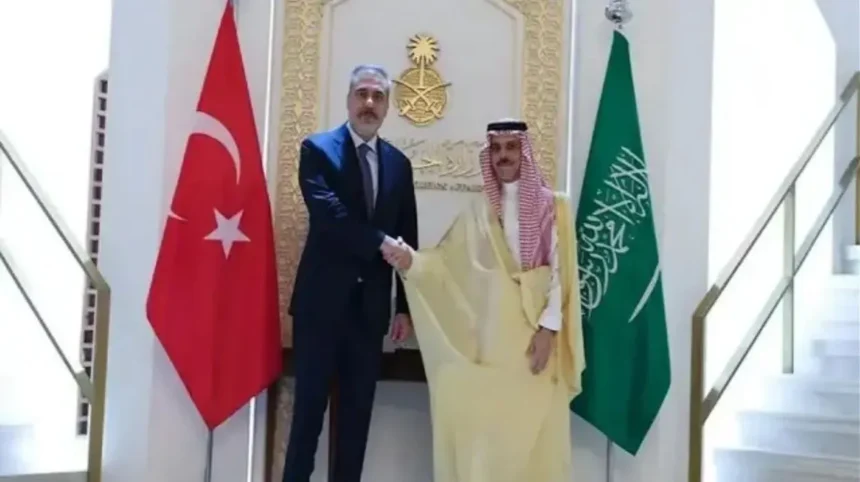
Türkiye’s Foreign Minister Hakan Fidan held a phone call with Saudi Foreign Minister Prince Faisal bin Farhan Al Saud to discuss regional developments, with a focus on Syria and the Gaza peace process, according to Yeni Şafak’s Ankara reporting. The Turkish Foreign Ministry was cited as the primary source on the contents of the call, underscoring the diplomatic coordination between the two countries on key Middle East issues. According to Anadolu Agency, the two ministers also reviewed bilateral ties as part of ongoing high-level contacts between Ankara and Riyadh.
As reported by the staff of Yeni Şafak, the ministers’ conversation centered on both the situation in Syria and the implementation of the Gaza peace plan. The report highlighted that the exchange came amid broader diplomatic activity involving regional and international actors seeking to stabilize the situation in Gaza and advance political processes in Syria. According to Anadolu Agency, this latest contact follows earlier discussions in January on the second phase of the Gaza peace plan.
According to Yeni Şafak, officials in Ankara described the call as part of Türkiye’s active regional diplomacy, noting that the country aims to play a central role in efforts to promote stability and reconstruction in neighboring conflict zones. The talks were framed as a continuation of the two states’ coordination on regional security, humanitarian needs, and reconstruction priorities. Anadolu Agency similarly reported that the ministers’ agenda included reviewing steps linked to phase two of the Gaza peace plan, expected to deepen reconstruction and political arrangements.
What Reactions And Context Have Emerged?
Yeni Şafak reported that the call between Fidan and Prince Faisal took place as international attention remains focused on consolidating a cease-fire in Gaza and addressing the humanitarian situation there. The outlet noted that the two countries have positioned themselves as advocates of regional stability and support for reconstruction efforts in the aftermath of recent hostilities. According to Anadolu Agency, both sides previously underlined the importance of coordinated efforts to implement subsequent stages of the Gaza peace framework.
As reported by Yeni Şafak, the discussions on Syria came in the context of ongoing concern over security, displacement, and the broader political process in the country. The article indicated that Ankara and Riyadh have increased consultations on Syria as part of a wider re-engagement by regional actors on the Syrian file. Anadolu Agency’s coverage of earlier calls stressed that bilateral discussions are also used to evaluate regional trends and security risks stemming from the Syrian conflict.
Regional media monitoring by outlets such as Middle East Monitor has similarly emphasized that Turkish–Saudi contacts on Gaza’s peace plan are part of a coordinated diplomatic track, particularly as the second phase of the plan is prepared. According to Middle East Monitor, this phase is widely expected to build on a cease-fire and prioritize reconstruction and governance arrangements in Gaza. These accounts provide broader context for the renewed engagement reflected in the latest ministerial call reported by Turkish sources.
Supporting Details And Diplomatic Framework
According to Yeni Şafak, the conversation on Gaza came after the establishment of a US-led “Board of Peace” initiative announced by US President Donald Trump, which the report said facilitated a cease-fire in October and set out guidelines for reconstruction. The outlet stated that the board’s broader mandate includes contributing to the resolution of other international conflicts, placing Gaza’s process within a wider diplomatic framework. Within this context, Yeni Şafak reported that the Turkish and Saudi foreign ministers explored ways to support the existing peace framework and to ensure that mechanisms agreed at the international level are effective on the ground.
As reported by Yeni Şafak, the ministers’ focus on Syria involved reviewing recent developments and their implications for regional security and refugee movements. The article suggested that Turkish diplomacy continues to stress the importance of a political solution and efforts to reduce tensions along Türkiye’s borders. While the outlet did not detail specific measures agreed in the call, it underscored that the discussion formed part of sustained contacts over Syria’s future and humanitarian needs.
Middle East Monitor, citing Turkish Foreign Ministry sources in its separate coverage of an earlier call this month, reported that phase two of the Gaza peace plan is generally expected to begin early in the year, though no specific date has been announced. Anadolu Agency likewise noted that the second phase follows an initial stage that started in October and that discussions between Fidan and Prince Faisal have focused on preparing for this shift. These reports provide a timeline within which the latest Ankara–Riyadh talks should be understood.
What Are The Implications And Next Steps?
According to Yeni Şafak’s account, the call between the Turkish and Saudi foreign ministers signals continued coordination between Ankara and Riyadh on managing the next phases of the Gaza peace process and addressing the Syrian file. The report indicated that both sides see value in maintaining regular high-level communication to navigate what it described as a “complex geopolitical landscape” in the region. Middle East Monitor added that Turkish–Saudi consultations are expected to remain a feature of regional diplomacy as phase two of the Gaza plan approaches implementation.
Anadolu Agency reported that future steps on Gaza will likely center on reconstruction, governance issues, and efforts to consolidate the cease-fire established in the first phase of the plan. Within that framework, the ongoing contacts between Fidan and Prince Faisal suggest that Türkiye and Saudi Arabia intend to play an active role in shaping and supporting arrangements on the ground. Yeni Şafak’s reporting also hinted that parallel diplomatic engagements by other international actors will continue, with Ankara portrayed as a key interlocutor among regional and global players.
On Syria, Yeni Şafak noted that the continuation of ministerial-level communication reflects a shared interest in monitoring developments and mitigating spillover risks to neighboring countries. Although the article did not specify concrete new initiatives, it framed the call as part of a broader pattern of renewed regional involvement in Syrian diplomacy. Future developments will depend on how these bilateral discussions intersect with multilateral negotiations and evolving security conditions on the ground, as described in the regional media coverage.
The latest call between Hakan Fidan and Prince Faisal bin Farhan Al Saud, as documented by Yeni Şafak and confirmed in broader regional reporting, underscores the continued diplomatic engagement of Türkiye and Saudi Arabia on both the Gaza peace process and the Syrian question. Their coordination forms part of wider international efforts to stabilize Gaza following a cease-fire linked to a US-backed initiative and to manage the long-running conflict in Syria. As regional and international actors prepare for the second phase of the Gaza peace plan and reassess approaches to Syria, Ankara–Riyadh contacts are set to remain an important element of Middle East diplomacy.

