


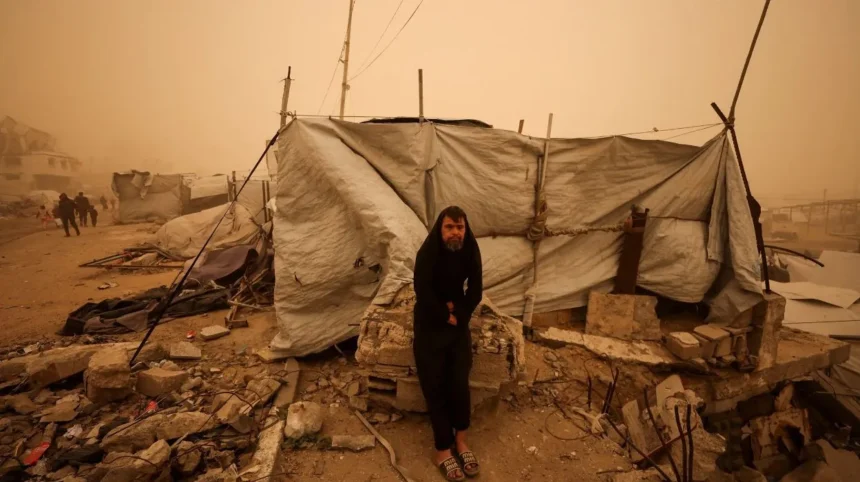
According to The New York Times, a powerful sandstorm swept across the Gaza Strip on Saturday, battering tents and other makeshift shelters where many displaced Palestinians are living after years of conflict between Israel and Hamas. The storm turned the sky an orange hue over areas including Gaza City and Khan Younis, reducing visibility and sending dust and sand swirling through densely populated displacement camps. As reported by The New York Times, local officials urged residents to seek cover as gusty winds threatened to tear apart fragile shelters that have become home for families uprooted by war.
The New York Times reports that millions of Gazans remain without proper housing, with many living in tents or damaged buildings after extensive destruction during the conflict. United Nations assessments cited by The New York Times indicate that roughly 80 percent of buildings in Gaza have been damaged or destroyed, leaving large parts of the enclave in ruins and making residents more vulnerable to extreme weather. The International Committee of the Red Cross has warned that some families have moved into structurally compromised buildings that risk sudden collapse, highlighting how the sandstorm compounds existing safety concerns.
What reactions and conditions on the ground have been reported?
As reported by The New York Times, video from Gaza showed residents rushing to reinforce tent walls, secure tarps and pull down laundry lines as winds intensified, fearing that their limited possessions could be blown away. The Times notes that the storm hit sprawling displacement sites where tents are often packed tightly together, making it difficult for residents to avoid blowing sand and dust. According to the Palestinian news agency WAFA, strong winds directly hit the tents of displaced families, with some worn-out shelters reportedly blown away by the storm.
WAFA reported that local authorities and meteorological officials warned of health risks associated with the dust storm, particularly respiratory illnesses, in an environment where basic safety and medical conditions remain strained. Al Jazeera similarly reported that the sandstorm worsened health hazards for displaced Palestinians, noting that exposure to dust and sand can aggravate existing conditions such as asthma and other respiratory problems in overcrowded camps. According to Al Jazeera, the storm also disrupted daily life in the camps, as residents struggled to keep sand out of their living spaces and to protect children and older people from the harsh conditions.
The New York Times situates the sandstorm within a broader pattern of harsh weather affecting Gaza’s displaced population, describing how bitterly cold winters, heavy rain and flooding have repeatedly hit people living in tents or partially destroyed structures. According to the Times, these weather events have made it even more difficult for families to maintain basic hygiene, store food safely, and access services in already overcrowded displacement sites. WAFA’s report notes that the meteorological department expected conditions to remain dusty and partly to mostly cloudy, suggesting that poor air quality and visibility could persist beyond the initial impact of the storm.
Supporting details: displacement, shelter crisis and humanitarian strain
According to The New York Times, United Nations figures suggest that roughly two-thirds of Gaza’s population now live in about 1,000 displacement sites scattered across the enclave, many of them informal camps built quickly as fighting and bombardments forced residents from their homes. The Times reports that these sites are often overcrowded, with limited access to clean water, sanitation and health services, making them especially vulnerable to extreme weather like the recent sandstorm. The broader Israel-Hamas war page maintained by The New York Times notes that, long after major combat operations eased under a cease-fire, millions of Gazans remain without proper shelter amid vast war damage.
The New York Times also highlights that winter storms and flooding have previously inundated tents and temporary shelters, adding to the suffering of displaced families and complicating efforts by humanitarian groups to deliver assistance. The International Committee of the Red Cross, cited by the Times, has warned that households forced into damaged buildings may face serious danger if these weakened structures collapse, especially during adverse weather. Al Jazeera reports that humanitarian agencies have repeatedly called attention to the cumulative impact of conflict damage, overcrowding and environmental stress on Gaza’s displaced population, emphasizing that weather episodes such as this sandstorm are particularly dangerous in such conditions.
WAFA’s coverage underscores that the sandstorm’s impact is not limited to physical damage, as dust-laden air can strain already fragile health systems by increasing the number of patients with respiratory issues. According to WAFA, the lack of adequate shelter, proper ventilation and protective equipment in camps means that many displaced people cannot effectively shield themselves from the dust. Combined with ongoing shortages of medical supplies and constrained access to care reported by multiple outlets throughout the conflict, the storm has added another layer of hardship to an already complex humanitarian crisis.
What are the implications and what might happen next?
According to The New York Times, the sandstorm underscores the vulnerability of Gaza’s displaced population to environmental shocks as long as the housing crisis and extensive infrastructure damage remain unresolved. With millions still living in tents, makeshift shelters and damaged buildings, further episodes of severe weather could bring repeated disruptions, injuries and additional strain on aid operations. WAFA’s forecast of continued dusty and cloudy conditions suggests that immediate health risks from the storm, including respiratory problems and reduced visibility, may persist in the short term.
Al Jazeera reports that humanitarian organizations are likely to continue prioritizing reinforcement of shelters, distribution of basic supplies and support for health facilities as they respond to the sandstorm’s effects on displaced communities. According to broader United Nations assessments cited by The New York Times, long-term recovery in Gaza will require large-scale reconstruction, clearance of war debris and substantial investment in housing to reduce the exposure of civilians to future extreme weather events. Until such efforts can be implemented, the latest sandstorm illustrates how quickly natural hazards can worsen the living conditions of people already facing protracted displacement and limited resources.
The sandstorm that swept through Gaza has exposed the fragility of makeshift shelters and the heightened risks facing displaced Palestinians living in crowded camps and damaged structures. Reporting by The New York Times, WAFA and Al Jazeera indicates that strong winds and dust have threatened tents, disrupted daily life and raised health concerns in an enclave where millions already lack adequate housing. The event adds urgency to calls from international agencies for durable shelter solutions and large-scale reconstruction to reduce the impact of future storms and other environmental shocks on Gaza’s civilian population.

