


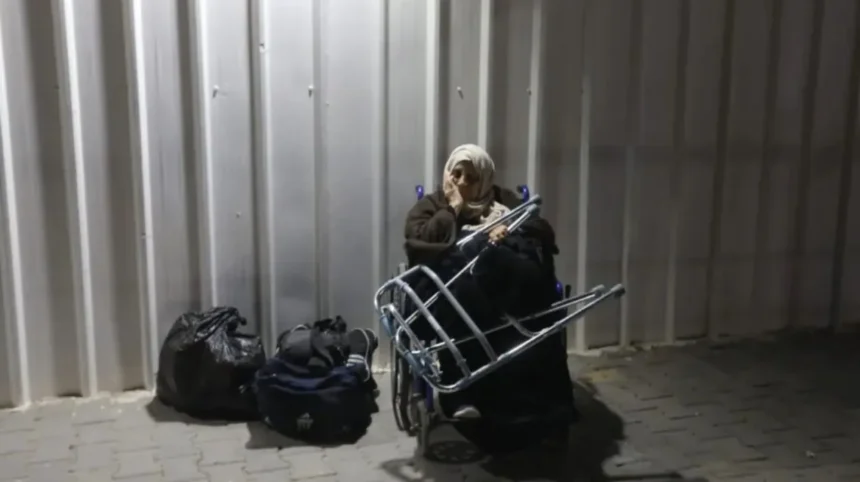
According to the UN Office of the High Commissioner for Human Rights (OHCHR), Palestinians returning to the Gaza Strip through the Rafah crossing have reported patterns of mistreatment, humiliation and coercion by Israeli forces during the screening process. As reported by Anadolu Agency, the OHCHR said returnees described being taken from the crossing to an Israeli military checkpoint where they were subjected to degrading treatment and abuse.
The UN office stated that some returnees were initially intercepted by armed Palestinians allegedly backed by the Israeli army before being transferred to Israeli military control. According to OHCHR’s public statement, these individuals recounted being bound, blindfolded, searched and intimidated, with personal belongings and money confiscated in several cases.
OHCHR said that once at the Israeli checkpoint, Palestinians reported a repeated pattern of violence, invasive body searches and threatening interrogations. As reported by Anadolu Agency, some of those searches took place while people’s hands were tied and their eyes covered, which the UN office said amounted to degrading treatment in violation of international standards.
Returnees also reported being denied access to basic services such as toilets and medical care during prolonged waits at the checkpoint. According to OHCHR, some Palestinians said they were forced to urinate in public due to being prevented from using facilities, contributing to what they described as severe humiliation.
What reactions and context have been reported?
According to OHCHR’s statement published on the UN in Palestine website, several Palestinians reported being offered money in exchange for returning to Egypt with their families and never going back to Gaza. The same statement said some returnees were also offered payments to work as informants for the Israeli army, raising concerns about coercion.
The UN human rights office said these testimonies point to a broader pattern of behavior affecting Palestinians attempting to exercise their right to return to Gaza. As reported by Anadolu Agency, OHCHR warned that such practices could have a deterrent effect on displaced people seeking to go back, potentially contributing to what it described as “the consolidation of ethnic cleansing in Gaza.”
Ajith Sunghay, director of OHCHR’s New York office, said the international community bears responsibility for ensuring that all measures related to Gaza comply with international law and fully respect Palestinians’ rights. According to Anadolu Agency, Sunghay stated that after years of devastation, enabling people to return “safely and with dignity” should be considered the bare minimum.
UN spokesman Stéphane Dujarric also addressed the issue in remarks cited by Anadolu Agency, calling on all parties to respect their obligations under international humanitarian law. Dujarric said civilians and civilian infrastructure must be protected, and he confirmed that UN teams on the ground had received additional Palestinian returnees who crossed via Rafah overnight.
Supporting details and broader background
The Rafah crossing, on Gaza’s southern border with Egypt, has been a critical gateway for Palestinians seeking to leave or re-enter the territory during and after intense phases of conflict. According to Reuters, Israel took control of the crossing in May 2024, and the route was reopened in early February 2026 on a limited basis as part of a ceasefire-related arrangement.
Reuters reports that only a small daily quota of Palestinians is currently allowed to cross in either direction, subject to security clearances from both Israeli and Egyptian authorities. The agency notes that around 100,000 Palestinians fled Gaza in the early months of the war, and many are now attempting to return to reunite with family despite widespread destruction.
In a separate report, Reuters quoted Palestinian women describing their passage back into Gaza as a “journey of horror,” including accounts of being bound, blindfolded and subjected to invasive searches at an Israeli-controlled screening site near Rafah. Israel’s military told Reuters it denied acting inappropriately or mistreating Palestinians crossing back into the enclave.
Humanitarian agencies say the partial reopening of Rafah has taken place amid a broader crisis in Gaza. According to humanitarian updates on ReliefWeb, the humanitarian situation remains precarious despite a ceasefire, with limited access for people needing medical evacuations and for those attempting to return to devastated neighborhoods.
What are the implications and possible next steps?
OHCHR has warned that the reported abuses, if continued, could amount to violations of the prohibitions against torture and cruel, inhuman or degrading treatment under international law. According to the UN rights office, the pattern of ill‑treatment and coercion described by returnees may also undermine Palestinians’ right to return safely to the areas from which they were displaced.
The UN has urged all parties, including Israeli authorities responsible for security procedures at Rafah, to ensure that any screening or questioning complies with international human rights and humanitarian law. As reported by Anadolu Agency, OHCHR stressed that the conduct of officials at the crossing should respect Palestinians’ dignity and protect them from abuse, coercion and arbitrary interference with their privacy.
Future developments are likely to depend on whether these allegations prompt independent investigations, changes in procedures at the crossing, or additional monitoring by international bodies. According to UN statements and humanitarian briefings, the way Palestinians are treated at Rafah will remain a key test of commitments to protect civilians and to enable safe, dignified returns as part of any broader political or ceasefire arrangements concerning Gaza.
Taken together, the UN’s findings and testimonies from Palestinians describe a troubling picture of mistreatment and humiliation of civilians attempting to re‑enter Gaza through Rafah. The reports underscore growing international concern over how displaced Palestinians are being treated at the border at a moment when many are trying to return home despite ongoing insecurity and devastation.

