


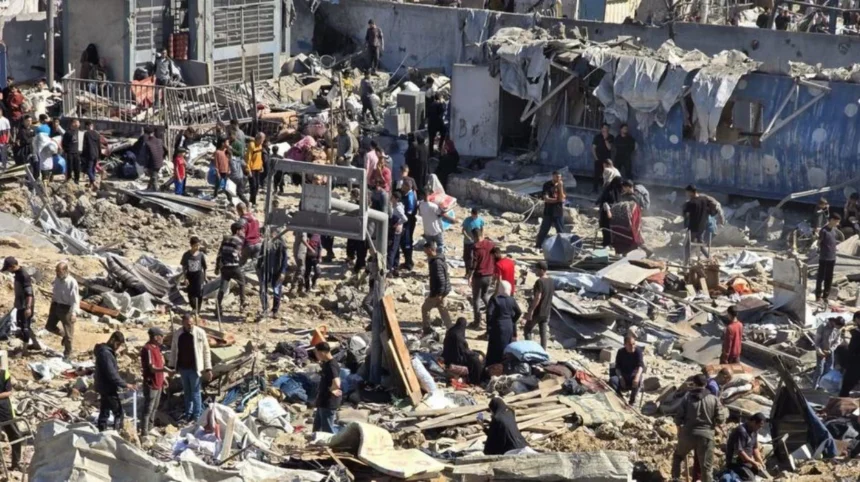
Nearly 90% of school buildings in the Gaza Strip have been damaged or destroyed during Israel’s war on the territory, the UN agency for Palestinian refugees has said, warning that the devastation is pushing the enclave’s education system to the brink of collapse.
UN officials and humanitarian agencies say the destruction has left hundreds of thousands of children without regular access to classrooms, teachers or safe learning environments.
General context
As reported by Esra Hacioglu of Anadolu Agency, the UN Relief and Works Agency for Palestine Refugees in the Near East (UNRWA) said nearly 90 percent of Gaza’s school buildings have been damaged or destroyed during the conflict, which has now stretched for more than two years.
According to Anadolu Agency, UNRWA made the assessment public in a statement on X, saying that “across Gaza, nearly 90% of all school buildings have been damaged or destroyed during the war.”
The agency said school buildings that remain standing have largely been turned into shelters for displaced families, leaving little or no space for formal classes.
Israel’s war on Gaza began in October 2023 and has caused extensive destruction to civilian infrastructure, including homes, hospitals, universities and government facilities.
Anadolu Agency reported that by early 2026, more than 72,000 Palestinians had been killed and over 171,000 wounded, while about 90 percent of Gaza’s civilian infrastructure had been destroyed or severely damaged, according to Gaza’s health authorities and local officials.
UN and humanitarian agencies say the education sector has been one of the worst affected, with multiple independent assessments indicating that more than four out of five school buildings have sustained direct hits, severe damage or are likely damaged.
A verification report on school damage in Gaza, published on ReliefWeb on behalf of UN partners in November 2025, found that 97.5 percent of educational institutions had experienced some degree of damage, and that 93.3 percent of school structures would require complete reconstruction or major repair to be usable again.
What are officials and agencies saying?
As reported by Anadolu Agency, UNRWA said its teams continue to provide learning support “despite the widespread devastation,” but acknowledged that conventional schooling has become almost impossible for most children.
According to UNRWA’s post on X, schools still standing are hosting internally displaced people, and many have themselves been damaged or hit during hostilities.
UN News reported in January 2026 that more than 90 percent of schools in Gaza had been damaged or destroyed, citing data from the UN Children’s Fund (UNICEF), and that about 60 percent of school-aged children had no access to in-person learning.
UNICEF spokesperson James Elder said that almost two and a half years of attacks on Gaza’s education system had “left an entire generation at risk,” emphasizing that the loss goes beyond buildings to include years of lost learning and development.
According to a detailed analysis disseminated via ReliefWeb, 459 school facilities—representing about 81 percent of all school buildings in Gaza—were classified as having suffered a direct hit since October 7, 2023.
The same assessment found that roughly 77 percent of school buildings that had been used as shelters for internally displaced people had themselves been directly hit, illustrating the dangers facing families seeking refuge in education facilities.
Save the Children, citing Gaza Education Cluster data in a 2024 briefing, said that as of late March 2024, 87.7 percent of all school buildings in Gaza had been damaged or destroyed. The organization reported that 212 school buildings had taken a direct hit and a further 282 had sustained moderate, minor or likely damage.
How are children, families and educators affected?
According to analysis highlighted by Education Cannot Wait and Save the Children, the destruction of schools has directly impacted hundreds of thousands of students and tens of thousands of teachers who relied on those buildings for daily classes.
Before the war, many schools in Gaza operated on double or triple shifts to accommodate high student numbers, meaning that the loss of a single building affects several cohorts of children across the day.
The Education Cluster data cited by Save the Children indicated that, prior to sustaining major or moderate damage, the school buildings that have now taken direct hits or serious damage had served around 503,500 students and 18,900 teachers.
As reported in the same briefing, all schools in Gaza had been closed for some 625,000 students for at least six months by early April 2024, with many children out of classrooms much longer as fighting continued.
UN News said in January 2026 that years of schooling had effectively been erased for many children, and that the combination of displacement, trauma and lack of safe learning spaces was undermining their development and well-being.
Humanitarian groups emphasize that schools in Gaza have long served as more than physical classrooms, also providing psychosocial support, school meals and a measure of daily stability for children living amid recurrent conflict and blockade.
UNRWA and partner organizations have tried to introduce alternative learning methods, including temporary learning spaces, digital platforms and remote instruction, but these efforts have been hampered by widespread power cuts, damage to telecommunications networks and ongoing insecurity.
Supporting details and wider impact
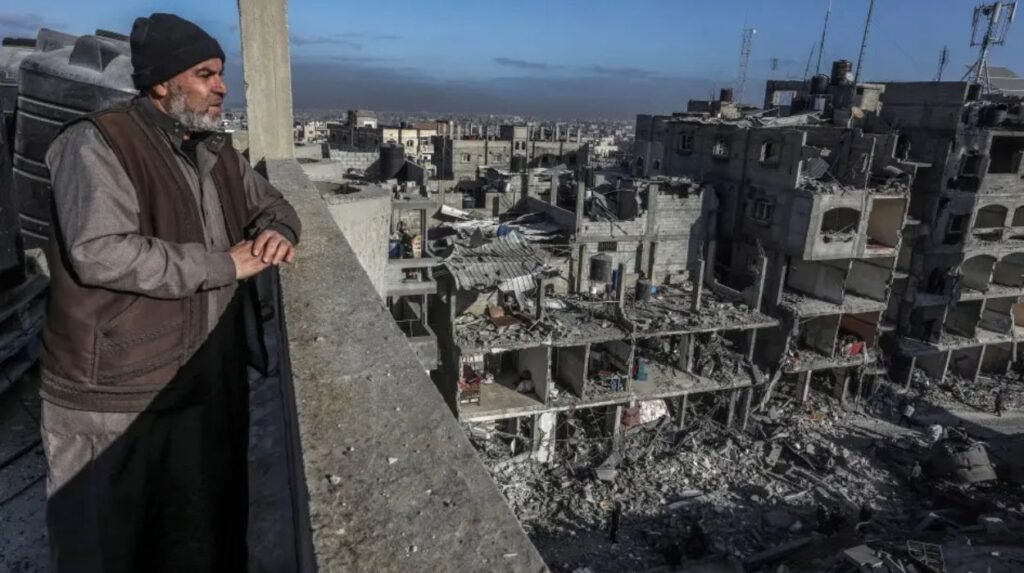
According to the UN-backed verification of damages report, nearly all educational institutions in Gaza—97.5 percent—fall into categories ranging from “direct hit” to “damaged” and “likely damaged.”
The report detailed that 459 school facilities had been classified as “direct hit,” previously accommodating around 497,000 students and close to 18,000 educators, representing approximately 80 percent of the student population and teaching staff.
An additional 67 school structures were categorized as “damaged,” serving roughly 75,251 students and 2,745 teachers, accounting for around 12 percent of the overall student body and nearly 12 percent of teachers.
UN and humanitarian agencies say that such levels of destruction mean the education network cannot simply be repaired piecemeal, but will require large-scale reconstruction that could take years even under stable conditions.
The Education Cluster findings summarized by Save the Children also indicated that higher education has suffered extensive damage, with four of Gaza’s 16 university campuses destroyed and 10 severely or moderately damaged.
UN officials and aid groups warn that the prolonged disruption of education could have lasting social and economic consequences, affecting literacy, employment prospects and social cohesion for a generation of young people in Gaza.
They also stress that the destruction of schools, combined with the use of some education facilities as shelters and the reported targeting of these buildings, raises serious concerns under international humanitarian law, which grants schools general protection from attack.
What are the implications and what happens next?
According to the UN’s education and humanitarian assessments, the scale of damage to Gaza’s schools means that restoring the system will require significant international funding, technical support and sustained access for reconstruction teams once security conditions allow.
ReliefWeb’s verification report concluded that about 93.3 percent of school structures—nearly all of Gaza’s 564 school buildings—will need either complete rebuilding or major rehabilitation to be considered operational again.
UN News reported that UN agencies have been working to expand temporary and alternative learning arrangements, including self-learning materials and community-based classes, but these measures are viewed as stopgaps rather than substitutes for functioning schools.
The same UN updates suggest that some children have begun returning to improvised or partial learning spaces in safer areas, but that large numbers still have no regular access to teachers or classrooms, particularly in severely damaged neighborhoods.
Humanitarian organizations continue to call for the protection of remaining education infrastructure, an end to attacks on schools and guarantees that schools used as shelters are not targeted. They argue that safeguarding education must be a central part of any ceasefire or longer-term political agreement.
According to UNRWA and other agencies, long-term recovery will require not only rebuilding classrooms but also supporting teachers, addressing children’s psychological trauma and providing learning materials and equipment to replace what has been lost.
The latest UNRWA assessment that nearly 90 percent of Gaza’s school buildings are damaged or destroyed underscores how deeply the war has eroded the foundations of daily life for children in the enclave.
With most schools either in ruins or functioning as overcrowded shelters, the future of education in Gaza hinges on both a durable end to hostilities and a comprehensive reconstruction effort that can restore safe, accessible learning spaces for an entire generation.
In the meantime, UN agencies and humanitarian partners say they will continue to focus on keeping learning alive in whatever form is possible, even as the physical infrastructure that once supported Gaza’s education system lies shattered across much of the territory.

