


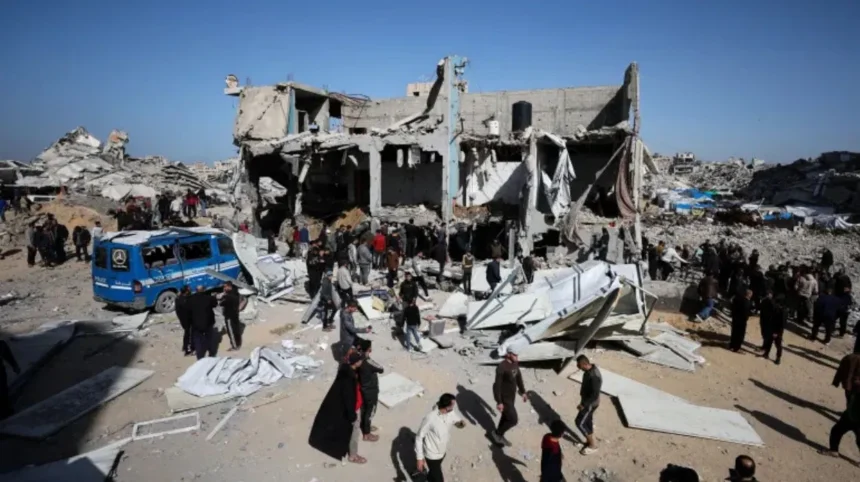
According to Al Jazeera, rights advocates say senior Western officials and prominent media outlets played a key role in casting doubt on the death toll reported from Gaza by the territory’s Ministry of Health during Israel’s military campaign. The report notes that skepticism from governments and news organizations focused on the ministry’s affiliation with the Hamas-run administration, despite longstanding use of its figures by United Nations agencies and humanitarian groups. Al Jazeera recounts that early in the war, then–United States President Joe Biden publicly questioned the accuracy of the Palestinian casualty numbers, saying he had “no confidence” in the figures being released. The article argues that such statements, echoed across parts of Western political and media discourse, helped create an environment in which Palestinian accounts of their own losses were treated as inherently unreliable.
As reported by Al Jazeera, the Gaza Ministry of Health’s casualty data had historically been regarded as broadly credible by international agencies monitoring conflicts in the occupied Palestinian territory. The outlet cites humanitarian organizations and UN officials who continued to rely on those figures even as political leaders in the US and Europe expressed doubt in public. Al Jazeera also points to a growing body of independent analysis, including academic work, which suggested that official numbers might in fact underestimate total deaths because they do not fully capture those missing under rubble or dying indirectly from the collapse of health, sanitation, and food systems. The article situates the political questioning of the toll within this broader context of established reliance on the ministry’s reporting.
How did officials and media respond to the Gaza death toll?
According to Al Jazeera, Western officials repeatedly framed Gaza’s casualty data as suspect, emphasizing that the Health Ministry operated under Hamas rule and describing its updates as “Hamas figures” or “Hamas-run” statistics. The article highlights that these remarks coincided with rising global calls for a ceasefire as reported deaths mounted into the tens of thousands, particularly among women and children. Al Jazeera reports that in the United States, members of Congress advanced legislation that would bar the State Department from citing Gaza Health Ministry numbers in official communications, reinforcing a message of institutional doubt. The piece notes that pro-Israel advocacy groups and commentators amplified claims that the figures were inflated or manipulated, often without presenting specific evidence of systemic falsification.
As reported by Al Jazeera, mainstream Western outlets including major television networks and international wire services frequently prefaced casualty updates by labeling the source as “Hamas-run” or attaching caveats that the numbers could not be independently verified. The article states that, in some cases, such caveats appeared even when the same outlets relied on the Health Ministry’s data as the only comprehensive record of deaths available. Al Jazeera further notes that certain media commentaries questioned not only the scale of the toll but also the methodology of casualty counting, despite the ministry’s routine practice of issuing detailed lists of the dead with names, ages, and identification numbers. In this environment, rights advocates quoted in the report argue that Palestinian losses were often presented as uncertain or provisional in a way not typically applied to official Israeli figures.
Supporting details and expert commentary
Al Jazeera reports that, over time, Israeli media citing military sources acknowledged that the number of Palestinians killed in Gaza was broadly consistent with the Health Ministry’s estimates, which had risen to around 70,000 and higher. The article notes that these acknowledgments came after more than two years during which Israeli and Western officials had portrayed the ministry’s statistics as propaganda. According to Al Jazeera, human rights experts and analysts say this pattern underscores that earlier doubts were political rather than evidence-based, given the absence of credible alternative tallies. The piece references assessments by public health specialists and conflict researchers who describe the Gaza ministry’s data collection systems as comparable to those used in other war zones.
As reported by Al Jazeera, humanitarian organizations and UN representatives continued to treat Gaza Health Ministry figures as the baseline for planning aid and assessing the humanitarian impact, even while some Western politicians and media highlighted their supposed unreliability. The article also cites academic estimates suggesting that actual deaths may be significantly higher when indirect causes and missing persons are included, indicating that the official toll may be conservative rather than exaggerated. Experts quoted by Al Jazeera link the sustained questioning of the numbers to a broader trend of challenging Palestinian institutional credibility, which they say has implications for documenting alleged violations of international humanitarian law.
What are the implications and future developments?
According to Al Jazeera, rights advocates argue that the effort by Western officials and segments of the media to discredit Gaza’s death toll has had the effect of dehumanizing Palestinians by treating their recorded deaths as politically negotiable. The report states that this climate of doubt may have delayed or diluted international pressure for a ceasefire and accountability, since policymakers and audiences were encouraged to see casualty figures as uncertain rather than as evidence of a large-scale humanitarian catastrophe. Al Jazeera notes that, now that Israeli sources have moved closer to accepting the scale of the toll, questions are being raised about how earlier skepticism influenced public opinion and policy responses.
As reported by Al Jazeera, legal and human rights organizations are likely to continue relying on Gaza Health Ministry data, combined with independent investigations, in efforts to document alleged war crimes and pursue accountability in international forums. The article suggests that the shift in Israeli acknowledgment could reinforce the evidentiary weight of those figures in future legal and diplomatic proceedings. According to Al Jazeera, critics of past political and media framing say there will be ongoing scrutiny of how casualty statistics are presented in conflict coverage, particularly regarding whether language or caveats systematically undermine the voices of affected populations.
Al Jazeera concludes that the trajectory from initial dismissal of Gaza’s death toll to later acceptance of similar numbers has highlighted the power of officials and media narratives in shaping public understanding of war, especially when it comes to recognizing the full human cost borne by civilians.

