


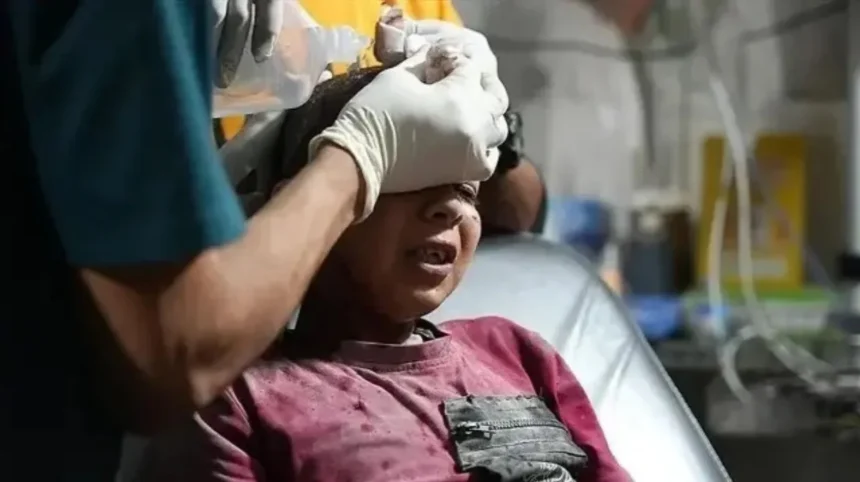
The Palestinian Ministry of Health in Gaza has warned that the enclave’s health system is on the verge of collapse due to severe shortages of vital medical supplies, medicines, and equipment. According to the ministry’s statement, hospitals are operating far below capacity and struggling to meet the needs of patients across multiple specialties, including critical and chronic care.
As reported by the Syrian Arab News Agency (SANA), the ministry said that 46 percent of essential medicines have run out, leaving many patients without access to necessary treatments. The statement also noted that 66 percent of medical consumables and 84 percent of laboratory and blood bank supplies are no longer available, severely limiting diagnostic and treatment capabilities.
According to SANA, these shortages have led to significant disruptions in services for cancer treatment, blood diseases, surgery, intensive care, and primary healthcare. Hospitals in Gaza are reportedly unable to maintain normal operations, with many departments forced to scale back or suspend services due to the lack of supplies.
The ministry emphasized that the ongoing humanitarian crisis affects approximately 2.4 million Palestinians in Gaza, including around 1.5 million displaced people. It stressed that the health sector, already under prolonged strain, is now facing what it describes as an imminent breakdown if conditions do not improve.
How Are Authorities and Organizations Reacting?
The Palestinian Ministry of Health in Gaza has called for immediate international intervention to prevent the collapse of the health system. According to SANA, the ministry urged international organizations and relevant authorities to act quickly to replenish medical stocks and ensure the continuous flow of supplies into the enclave.
The ministry’s statement linked the worsening health situation to Israel’s ongoing restrictions on the entry of humanitarian aid into Gaza. Despite a ceasefire reported to have been in effect since October 10, 2025, the ministry said that Israel continues to block the agreed entry of aid, which has further deteriorated living and health conditions.
Humanitarian agencies and medical relief organizations have previously warned that sustained disruption of medical supply chains can rapidly undermine essential health services in conflict-affected areas. In Gaza, the ministry’s latest warning underscores growing concerns that hospitals may soon be unable to provide even basic care if the shortages persist.
Supporting Details and Expert Concerns
According to the ministry’s statement carried by SANA, the shortage of essential medicines includes drugs needed for chronic diseases, emergency care, and critical conditions. This raises particular concern for patients requiring ongoing treatments, such as those with cancer or blood disorders, who rely on regular access to specific medications.
The lack of laboratory and blood bank supplies has also constrained hospitals’ ability to perform necessary tests, surgeries, and transfusions. The ministry noted that without these materials, medical teams are often unable to accurately diagnose conditions, monitor treatment, or carry out life-saving procedures.
Healthcare workers in Gaza, as reported by various humanitarian updates in recent months, have operated under prolonged pressure in an already fragile system. The latest warning from the health ministry indicates that existing coping mechanisms—such as rationing supplies, delaying non-urgent procedures, and prioritizing emergency cases—may no longer be sufficient to keep services running.
What Are the Implications and Possible Next Steps?
The Palestinian Ministry of Health in Gaza warned that without swift action to restore and sustain the flow of medical supplies, a complete breakdown of health services is possible in the near term. According to SANA’s report, such a collapse would leave millions of people with severely limited access to basic and specialized healthcare.
The ministry has appealed to international bodies, humanitarian organizations, and donor states to step up efforts to deliver medicines, consumables, and laboratory materials into Gaza. It stressed that ensuring unimpeded humanitarian access is critical to stabilizing the health sector and preventing further deterioration of the humanitarian situation.
Future developments will likely depend on whether agreed humanitarian arrangements are implemented and whether medical shipments can enter Gaza at the scale required. The ministry’s statement suggests that, unless restrictions on aid are eased and supply chains restored, hospitals may be forced to halt more services, with grave consequences for patients needing urgent and long-term care.
In summary, the Palestinian Ministry of Health in Gaza has issued a stark warning that the territory’s health system is nearing collapse because of acute shortages of essential medical supplies, disruptions to key services, and continued constraints on humanitarian aid, urging urgent international intervention to avert a complete breakdown.

