


Key points
- Displaced Palestinians in Gaza living in tents and makeshift shelters are struggling through winter storms of rain, wind and cold, which have flooded and destroyed temporary housing across the territory.
- Humanitarian agencies and local officials report that repeated storms since December have inundated camps, collapsed damaged buildings and contributed to deaths and injuries, including from extreme cold and hypothermia.
- The events have unfolded over the 2025–26 winter season, including storms in December 2025 and February 2026, affecting large areas from Gaza City to coastal zones such as al‑Mawasi near Khan Younis.
- The crisis is centred in the Gaza Strip, where around 1.9 million people remain displaced in overcrowded, under‑resourced camps after their homes were destroyed during the war.
- Local commentators and aid workers say extreme weather has effectively become another threat to civilians, exacerbating existing vulnerabilities created by conflict, damaged infrastructure and restrictions on shelter materials.
- Authorities and relief organisations are attempting to respond with rescue operations, drainage efforts and limited distribution of winter supplies, but say shortages of equipment, fuel and materials are hampering their work.
- Observers warn that, without durable housing, improved infrastructure and sustained humanitarian access, winter storms will continue to pose serious risks to life, health and dignity for Gaza’s displaced population in the coming seasons.
Winter storms worsen conditions in Gaza displacement camps
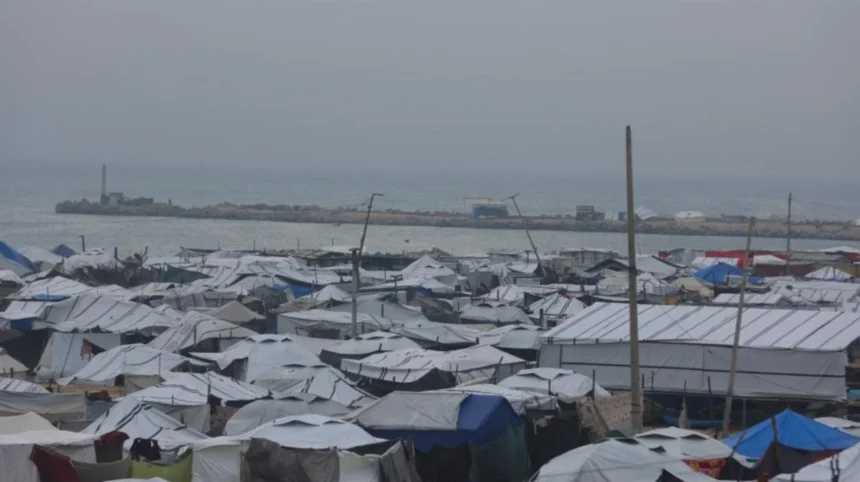
Heavy winter rains, strong winds and falling temperatures have turned tented displacement camps in Gaza into hazardous environments, flooding shelters, collapsing weakened structures and deepening an already severe humanitarian crisis for nearly two million people forced from their homes. Local officials, humanitarian agencies and residents say that successive storms over the 2025–26 winter have left families wading through water, exposed to cold and struggling to protect their few remaining possessions inside worn and leaking tents.
- Key points
- Winter storms worsen conditions in Gaza displacement camps
- Tents flooded and shelters destroyed
- Cold and exposure contribute to casualties
- Scale of displacement and shelter needs
- Rescue efforts and operational constraints
- Weather as an added layer of hardship
- Restrictions on materials and access
- Humanitarian response and donor engagement
- Longer‑term risks and planning challenges
- What happens next
According to reports by the Palestinian Civil Defence and media outlets monitoring the situation, the impact has been most acute in low‑lying and coastal areas where large camp complexes have sprung up since the start of the war, including parts of Gaza City, Khan Younis and the al‑Mawasi coastal strip. Humanitarian workers say that, in these conditions, the weather has effectively become an additional threat to civilians who were already living with conflict damage, overcrowding and limited access to basic services.
Tents flooded and shelters destroyed
Anadolu Agency reported in February 2026 that heavy rains associated with the first winter storm since the start of Ramadan inundated tents sheltering displaced Palestinians across the Gaza Strip, prompting a wave of distress calls. Gaza’s Civil Defence said its crews responded to multiple incidents overnight, rescuing families whose tents had been submerged by floodwaters in al‑Mawasi, west of Khan Younis, and other locations.
Witnesses told Anadolu that rainwater also filled tents in areas west of Gaza City, including near the al‑Rimal neighbourhood and the port, forcing people to move belongings and seek drier ground where possible. Similar scenes were documented in December 2025, when a severe winter storm flooded tents and destroyed hundreds of others in and around Gaza City, according to the official Palestinian news agency WAFA. In some cases, winds ripped through thin canvas or plastic sheeting, leaving families without cover overnight.
Al Jazeera published a photo feature in December 2025 showing extensive flooding across tent encampments during torrential rains, with muddy water rising to knee height in some areas and households using buckets and improvised tools in attempts to drain their shelters. A Civil Defence spokesperson warned at the time of an “imminent humanitarian catastrophe” linked to the extreme weather, given the scale of displacement and shortages of robust shelter materials.
Cold and exposure contribute to casualties
Beyond flooding, cold temperatures and wind chill have posed serious risks to health, particularly for children, older people and those with pre‑existing conditions. Dearborn Blog, citing wire service reporting including Reuters, noted that a powerful winter storm in early 2026 flooded hundreds of tents and contributed to at least one reported death of a one‑year‑old child from extreme cold in a tented area. This information could not be independently verified.
The same account stated that thousands of tents were damaged in a 48‑hour period, while already weakened buildings, previously hit by air strikes, collapsed under the combined effects of saturation and wind, causing further casualties. Other media and advocacy groups have highlighted cases in which hypothermia, exposure and structural failures linked to high winds and rain led to injuries and deaths among displaced families, though precise figures remain difficult to confirm in the prevailing conditions.
Aid agencies say limited access to adequate winter clothing, blankets, fuel and heating sources has intensified the impact of low temperatures. Many tents lack insulation or raised flooring, leaving occupants sleeping on damp or flooded ground, while the use of small heaters or open fires is constrained by fuel shortages and concerns over safety in crowded spaces.
Scale of displacement and shelter needs
According to figures cited by Anadolu and other outlets, around 1.9 million of Gaza’s estimated 2.4 million residents remain displaced and are living in temporary shelters such as tents and makeshift structures. Many of these shelters are described as worn, improvised or re‑used multiple times as families are forced to move repeatedly in response to shifting front lines, evacuations or camp overcrowding.
The high density of tents in some sites, combined with damaged drainage systems and limited solid ground, has contributed to rapid pooling of water during storms. ShelterBox, an international disaster relief organisation, said in a social media update in February 2026 that constant displacement in Gaza meant families were being “forced to move again and again”, with tents and temporary shelters wearing down with each relocation.
Although a ceasefire agreement came into effect on 10 October 2025, Anadolu reported that living conditions for displaced residents had not significantly improved, citing continuing restrictions on the entry of aid and shelter materials such as tents and mobile homes. Bernama, a Malaysian news agency, similarly highlighted that Israel’s ongoing limitations on construction and shelter supplies had left many civilians in inadequate housing as storms intensified.
Rescue efforts and operational constraints
Emergency responders and civil defence units have continued to operate throughout the winter storms, but officials and humanitarian workers say their capacity is constrained by shortages of equipment, fuel and secure access routes. Reports describe rescuers wading through floodwaters without sufficient pumps, vehicles or protective gear, relying on manual labour to relieve waterlogged areas and move people to safer locations.
Dearborn Blog, drawing on field accounts, stated that local authorities struggled to respond to tent collapses and flooding because many bulldozers, water pumps and other heavy equipment had been destroyed or damaged earlier in the conflict, and fuel stocks were limited. This information could not be independently verified. In some areas, roads were rendered temporarily impassable by standing water or debris, delaying humanitarian convoys and complicating the delivery of relief supplies.
Civil defence officials quoted by WAFA and Anadolu have urged international partners to provide additional resources for drainage infrastructure, temporary shelter reinforcement and winter‑appropriate equipment. Humanitarian organisations say they are prioritising the most vulnerable groups for assistance but acknowledge that coverage falls short of needs, given the scale of displacement and the frequency of storms.
Weather as an added layer of hardship
While the primary cause of displacement in Gaza remains the destruction of homes and infrastructure during the war, commentary from local writers and international observers has described extreme weather as an additional layer of hardship for civilians living in precarious conditions. Dearborn Blog characterised the storm‑related impacts as “weather as a weapon of misery”, summarising how floods and cold can compound existing vulnerabilities rather than acting as isolated natural events.
Photo essays and video footage circulated by Al Jazeera and other outlets show families attempting to shovel water out of tents, children standing in mud without adequate footwear, and residents using plastic sheeting, sandbags and scrap materials to try to divert runoff. Humanitarian agencies say such measures offer only limited protection against repeated storms and cannot substitute for durable structures or proper camp planning.
Climate and security analysts have pointed out that, in densely populated conflict zones with damaged infrastructure, common seasonal weather patterns can have outsized humanitarian consequences. They argue that longer‑term planning for Gaza will need to account not only for reconstruction and political arrangements but also for environmental resilience, including improved drainage, storm‑resistant shelter and heat and cold mitigation.
Restrictions on materials and access
Several reports emphasise that the fragility of shelters and the limited progress in upgrading housing are closely tied to continued restrictions on the entry of building materials and specialised equipment into Gaza. Anadolu cited officials who said Israel has blocked or tightly controlled the import of tents, prefabricated housing units and construction supplies, constraining efforts to replace temporary structures with more robust solutions.
Bernama reported that, despite the ceasefire, tens of thousands of tents remain the only accommodation for families whose homes were destroyed, as large‑scale reconstruction has yet to begin. WAFA’s account of the December 2025 storm similarly underlined the lack of resources and protective supplies available to camp residents as heavy rain and winds hit for a second consecutive day.
International humanitarian law allows for the restriction of certain materials on security grounds, but aid organisations have repeatedly called for wider exemptions for items deemed essential for civilian shelter and public health. They argue that, without such adjustments, displaced populations will remain in fragile, weather‑exposed conditions for multiple seasons, increasing the likelihood of recurrent emergencies with each storm.
Humanitarian response and donor engagement
Humanitarian agencies active in Gaza, including international NGOs and UN‑affiliated bodies, have launched appeals for additional funding and supplies to address winter‑related needs, such as thermal blankets, weather‑resistant tents, insulation kits and hygiene items. ShelterBox and similar organisations have drawn attention to the rate at which temporary shelters deteriorate under constant use, arguing that repeated displacement erodes the lifespan of tents and tarpaulins.
Aid workers quoted in media reports say they are also focusing on mental health and psychosocial support, noting that repeated exposure to storms, flooding and cold can heighten stress and anxiety among displaced populations already affected by conflict. However, they acknowledge that such programmes are often under‑resourced compared with immediate life‑saving interventions.
Donor governments and charitable organisations have provided winterisation funding in previous years, but analysts warn that needs in Gaza have expanded significantly due to the scale of destruction and prolonged displacement. They say sustained commitments will be required to move beyond short‑term responses and support more durable solutions that can withstand seasonal weather patterns.
Longer‑term risks and planning challenges
Experts in humanitarian shelter and climate resilience caution that, unless conditions change, winter storms will remain a recurrent threat to life and wellbeing in Gaza’s displacement camps. They point to the combination of low‑lying terrain, damaged infrastructure, high population density and limited space for well‑planned camp layouts as factors that will continue to amplify the impact of heavy rain and wind.
Some observers have drawn parallels with other protracted displacement crises where temporary shelters became semi‑permanent over many years, leaving residents exposed to environmental hazards and reliant on stop‑gap measures. In Gaza, they argue, a similar pattern could emerge if large‑scale reconstruction and resettlement remain stalled, with tents and temporary structures persisting far beyond their intended lifespan.
Humanitarian planners say that integrating weather and climate considerations into any future reconstruction or political agreements for Gaza will be essential, including investment in drainage, flood defences, shelter standards and early‑warning systems. They stress that such measures cannot fully offset the humanitarian consequences of conflict but can reduce the extent to which seasonal weather becomes a significant additional risk factor.
What happens next
In the short term, attention is likely to focus on how authorities and aid agencies manage the remainder of the winter season, including any further storms or cold spells, while attempting to stabilise conditions in the largest tented camps. Priority actions include reinforcing existing shelters where possible, improving drainage in the most flood‑prone areas and pre‑positioning supplies for rapid distribution during bad weather.
Looking ahead, humanitarian organisations and analysts say that progress on easing restrictions for shelter materials, initiating reconstruction and reducing overall displacement will be key determinants of whether future winters bring similar scenes of flooded tents and exposure‑related hardship. They note that these steps depend on broader political and security developments, as well as on sustained donor engagement with Gaza’s recovery.
If more durable housing and infrastructure can be established over time, the relative impact of seasonal storms may diminish, though relief agencies caution that extreme weather events will remain a concern in a territory facing both environmental and conflict‑related pressures. For now, displaced families and aid workers in Gaza are preparing for the possibility that the current pattern of winter disruption could persist into future years unless underlying conditions change.

