


Key points
- Palestinians in Gaza, including children and families who survived intense bombardment and siege, describe life after the October 2025 ceasefire as marked by continuing fear, displacement and loss despite the formal end of large‑scale attacks.
- A first‑person account published by Washington Report on Middle East Affairs (WRMEA) tells the story of a boy who survived a siege and the killing of his father, illustrating how the ceasefire has not brought him or his family a sense of real safety.
- The ceasefire entered into effect in October 2025, brokered by the United States, Egypt and Qatar, and was intended to halt major hostilities and increase humanitarian access to Gaza.
- The events described are located in the Gaza Strip, particularly areas heavily affected by bombing, siege and mass displacement, where many homes and neighbourhoods remain destroyed or uninhabitable.
- Humanitarian agencies and analysts say the ceasefire matters because, while it has reduced the tempo of attacks, it has not ended hunger, trauma, disability or restrictions on movement and reconstruction in Gaza.
- The situation is being managed through partial reopening of crossings, increased but still constrained aid deliveries and gradual population movements, alongside continued Israeli military presence and sporadic incidents of violence.
- The longer‑term implications include a protracted recovery marked by psychological trauma, damaged infrastructure and unresolved political and security issues, with observers warning that without structural change, the risk of renewed escalation remains.
Ceasefire changes tempo of war but not daily hardship
The ceasefire that took effect in Gaza in October 2025 has reduced the intensity of bombardment but has not ended the daily hardship, trauma and insecurity facing residents, according to humanitarian agencies and personal testimonies from the territory. While large‑scale air strikes have subsided, many Palestinians remain displaced, bereaved and fearful, living amid widespread destruction and facing continued restrictions on movement and access to services.
- Key points
- Ceasefire changes tempo of war but not daily hardship
- Story of a child after the siege
- Ceasefire terms and immediate effects
- Continued violence and insecurity
- Displacement, disability and long‑term harm
- Humanitarian access and remaining gaps
- Psychological impact and perception of “war without end”
- Governance, security and unresolved political issues
- Life between ruins and recovery
- What happens next
In a dispatch published on 2 March 2026 by Washington Report on Middle East Affairs, writer Donya Abu Sitta recounts the experience of a child who survived a siege and the killing of his father, only to discover that the ceasefire did not translate into a sense of safety. Her account aligns with broader reporting that portrays the ceasefire as altering the tempo of the conflict rather than bringing a clear end to its impact on civilian life.
Story of a child after the siege
In the WRMEA piece, Abu Sitta describes a boy from Gaza who lived through a period of siege, during which his father was killed, and who later tried to resume life under the ceasefire while still surrounded by rubble and uncertainty. She writes that he remains haunted by memories of bombardment and loss, struggling to understand how a ceasefire can exist when his environment continues to feel unsafe and unstable.
The article illustrates how, for some children, the formal end of large‑scale hostilities has not brought an end to fear. Instead, the narrative suggests that trauma and disrupted routines persist, as families attempt to rebuild their lives with limited resources and under constraints that affect schooling, healthcare and social support.
Abu Sitta’s account is a first‑person narrative and reflects the author’s observations and interactions; it is not an official investigation and does not claim to be statistically representative of Gaza’s broader population. This information could not be independently verified.
Ceasefire terms and immediate effects
According to The New Humanitarian, the ceasefire that came into force on 10 October 2025 was brokered by the United States, Egypt and Qatar, and was intended to end two years of intense warfare in Gaza. The agreement included provisions to increase humanitarian aid, facilitate the release of hostages and ease some movement restrictions, while maintaining certain Israeli security controls.
The UN Office for the Coordination of Humanitarian Affairs (OCHA) reported that, in the first month after the ceasefire, the volume of aid collected at border crossings by the UN and its partners rose by 67 per cent compared with the two months before the truce. Large‑scale population movements followed, with nearly 600,000 people travelling from southern to northern Gaza during that period as residents attempted to return to damaged or destroyed homes.
The British Red Cross noted that the ceasefire allowed many people to go back to their neighbourhoods for the first time in months, but also emphasised that humanitarian needs remained “overwhelming”, with widespread destruction, displacement and the legacy of a previously declared famine in parts of Gaza.
Continued violence and insecurity
Despite the formal ceasefire, reports indicate that violence has not stopped entirely. The New Humanitarian said that Israel had continued to “shell and shoot people in Gaza” after the truce, reporting more than 240 Palestinians killed and over 600 injured in alleged violations of the agreement in the weeks that followed. This information could not be independently verified.
Al Jazeera, citing Israeli and Palestinian sources, has reported Israeli Prime Minister Benjamin Netanyahu as saying in November 2025 that the war on Gaza “has not ended”, even after ceasefires in both Gaza and Lebanon, arguing that Israel’s adversaries were rearming. The article noted that more than 280 Palestinians had been killed in Gaza since the ceasefire and that military operations had also continued in Lebanon and the occupied West Bank.
According to a monthly forecast from Security Council Report, the UN Secretary‑General characterised humanitarian conditions in Gaza during the ceasefire as still “catastrophic”, marked by widespread destruction, forced displacement and the collapse of essential services and infrastructure.
Displacement, disability and long‑term harm
Alongside ongoing security incidents, humanitarian reporting underscores the long‑term consequences of the conflict for Gaza’s population. A situation report published on ReliefWeb in February 2026 noted that, since the October 2025 ceasefire, at least 853 people in Gaza had acquired new disabilities, including 496 amputations and 171 brain injuries, reflecting the scale of previous attacks and unexploded ordnance risks.
The British Red Cross has estimated that 90 per cent of Gaza’s population has been displaced at some point during the conflict, with many people uprooted multiple times as front lines shifted and evacuation orders changed. It reported that more than 69,000 people had been killed and at least 170,000 injured since October 2023, and that 1.5 million urgently needed emergency shelter as winter approached.
These figures highlight how the ceasefire took effect in a context of extensive physical and psychological damage, with many residents returning to areas where homes, schools and hospitals had been destroyed and basic services were severely disrupted. For individuals like the boy described by Abu Sitta, this environment shapes the experience of “post‑ceasefire” life as one of continuing struggle rather than clear recovery.
Humanitarian access and remaining gaps
Humanitarian organisations have generally welcomed the ceasefire as a necessary step to reduce immediate casualties but have stressed that it has not resolved underlying access and protection issues. In a statement issued shortly before the October 2025 agreement, Plan International said a ceasefire would stop bombs and missiles but warned that, without urgent aid and sustained access, people would “continue to die from hunger, dehydration, and lack of medical care”.
The British Red Cross has similarly argued that while January and October 2025 ceasefires allowed more people to return home, the humanitarian challenges in Gaza remain “overwhelming”, with massive needs in shelter, healthcare, water and sanitation. OCHA’s December 2025 report noted that, despite the increased volume of aid entering Gaza after the ceasefire, the scale of destruction and displacement meant that conditions remained extremely difficult for most residents.
Aid agencies have also pointed to restrictions on the entry of certain items, including construction materials and assistive devices such as prosthetics, which are sometimes classified as “dual‑use” and subject to additional controls. ReliefWeb’s report said that only 300 artificial limbs had been permitted to enter Gaza since the ceasefire, despite the high number of amputations recorded.
Psychological impact and perception of “war without end”
Commentary from Gaza has highlighted the psychological dimension of living in a conflict that is formally paused but experienced by residents as ongoing. The New Humanitarian published a first‑person piece under the headline “The war in Gaza didn’t end. It only changed tempo”, in which the author wrote that calm in Gaza is often seen as “a prelude to destruction” and that hunger, displacement and fear persisted despite the ceasefire.
A BBC analysis in January 2025 described the ceasefire as “long‑overdue” but warned that it would not end the conflict, arguing that the consequences of destruction and loss would be felt for at least a generation. The article quoted diplomats expressing concern that hostilities could resume once initial ceasefire periods expired and said that regional dynamics remained volatile.
Abu Sitta’s WRMEA dispatch adds a personal perspective to these assessments, portraying a child who perceives the ceasefire as a label that does not match his lived reality. Her narrative suggests that, for families dealing with bereavement, disability and ongoing economic hardship, the distinction between wartime and post‑ceasefire periods may feel blurred. This information could not be independently verified.
Governance, security and unresolved political issues
Analysts and UN briefings emphasise that many of the political and security questions at the heart of the Gaza conflict remain unresolved, contributing to a sense that the ceasefire is fragile. Security Council Report notes that the ceasefire agreement included provisions related to hostage releases and prisoner exchanges but did not settle longer‑term issues such as governance arrangements in Gaza, the status of Hamas or broader Israeli‑Palestinian negotiations.
Al Jazeera’s reporting on November 2025 debates in Israel’s parliament indicated that Prime Minister Netanyahu viewed the conflict as ongoing, citing what he described as efforts by adversaries to rearm. The article suggested that continued military operations in Gaza, Lebanon and the West Bank reflected a wider strategic posture that could keep the region in a state of low‑intensity conflict even under formal ceasefires.
For residents, this translates into continued uncertainty about movement permits, border crossings, security operations and the prospects for reconstruction. Humanitarian actors underline that, without political progress, it will be difficult to secure the conditions needed for large‑scale rebuilding and long‑term economic recovery, extending the period during which civilians live amid the ruins of war.
Life between ruins and recovery
On the ground, daily life in Gaza since the ceasefire has involved a mixture of limited normalisation and ongoing crisis. OCHA reported significant movement of people returning to northern Gaza and parts of Khan Younis, often to homes that were partially or completely destroyed. Residents have been shown in media footage clearing rubble, salvaging belongings and attempting to repair structures with scarce materials.
Essential services such as healthcare, water, sanitation and education continue to operate under strain, with damaged facilities, staff shortages and reliance on temporary arrangements. The British Red Cross and other agencies describe a situation in which humanitarian work remains focused on emergency needs – including shelter, medical care and psychosocial support – even as discussions about reconstruction and longer‑term development are under way.
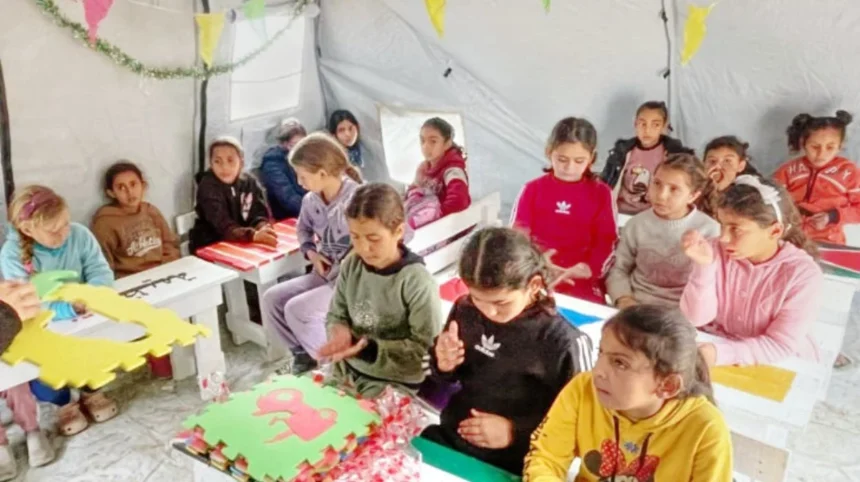
For children like the one described in Abu Sitta’s article, these conditions form the backdrop to attempts to resume schooling, play and family life. The narrative suggests that, while the absence of constant bombardment is a relief, the combination of visible destruction, personal loss and uncertain prospects continues to shape how young people experience the notion of “peace” or “ceasefire”. This information could not be independently verified.
What happens next
In the coming months, the future of Gaza’s ceasefire is expected to hinge on a combination of political negotiations, security developments and humanitarian conditions. Diplomats and analysts cited by international outlets have warned that, without progress on underlying issues, there is a risk that violence could escalate again once temporary arrangements or monitoring mechanisms lapse.
At the same time, UN agencies and humanitarian organisations are likely to continue pressing for expanded access, reconstruction support and protection measures for civilians, including those living with disabilities and trauma acquired during the conflict. They argue that addressing these needs is essential not only for immediate relief but also for reducing the long‑term social and psychological impact of the war on Gaza’s population.
For individuals and families in Gaza, including children who survived sieges and bereavement, the central question is whether the ceasefire will evolve into a more durable and tangible peace that changes their daily reality. Until that happens, many will continue to live in a landscape shaped by conflict, where the formal announcement of a ceasefire has not fully ended the war’s effects on their lives.

