


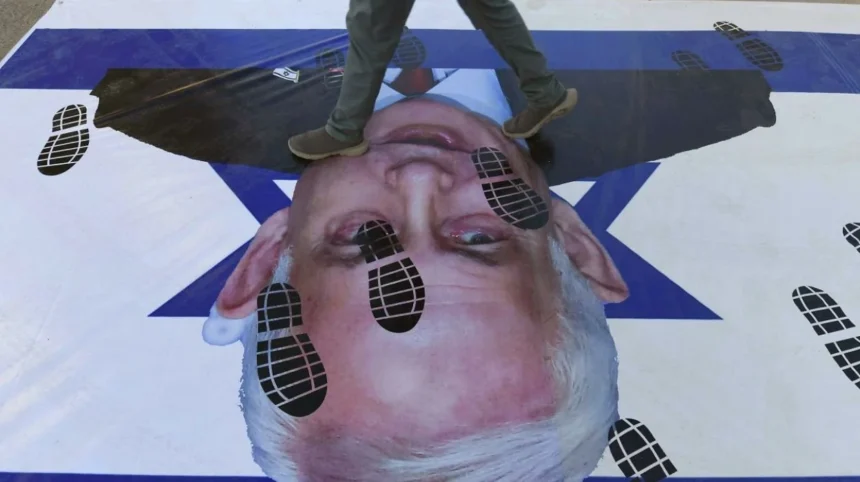
Israeli Prime Minister Benjamin Netanyahu is under intensifying international scrutiny over Israel’s military campaign in the Gaza Strip, which has prompted widespread accusations of Gaza genocide from states, rights groups and commentators. Various governments and organizations have cited large-scale civilian casualties, destruction of infrastructure and severe humanitarian deprivation in Gaza as evidence of possible atrocity crimes. Israel rejects allegations of genocide and insists its operations are directed at Hamas, not the Palestinian population. Legal and political processes in international courts and diplomatic arenas are now focusing on whether Israel’s actions and rhetoric under Netanyahu meet the threshold of genocide under international law.
General context of Gaza genocide allegations
As reported by Daily Sabah in its Feb. 24, 2026 opinion piece “Blood on their hands: Netanyahu, architect of Gaza genocide,” Benjamin Netanyahu’s long political career has been marked by a hardline security approach toward the Palestinians and especially Gaza. The piece argues that successive Israeli operations in the enclave and the broader policy architecture around Gaza have produced a pattern of mass civilian harm and destruction that critics describe as genocidal. The author places Netanyahu’s stance in the continuity of Likud Party doctrine, which emphasizes security, territorial control and rejection of meaningful Palestinian statehood.
According to the Daily Sabah op-ed, Netanyahu publicly signaled conditional acceptance of a Palestinian state in a 2009 Bar-Ilan University speech but subsequently pledged ahead of the 2015 elections that there would be no Palestinian state during his tenure. The article contends that, in practice, his governments expanded settlement activity, strengthened the blockade of Gaza and maintained a framework of military operations that repeatedly devastated the territory. It links this policy trajectory to major offensives such as Operation Cast Lead, Operation Pillar of Defense, Operation Protective Edge, and later attacks including those in 2021 and the post–Oct. 7, 2023 campaign.
The op-ed describes these actions as part of a deliberate policy of “depopulating” Palestinian territories and characterizes the post–Oct. 7 campaign as a “systematic genocide.” It claims that more than 75,000 Gazans, the vast majority civilians, were killed and over 171,000 injured in the process, although these figures are significantly higher than many public tallies from international agencies and remain a subject of dispute. The piece further notes that Netanyahu has become a central figure in domestic Israeli controversy over judicial reforms and in international debate over alleged war crimes and crimes against humanity in Gaza.
Daily Sabah reports that Netanyahu’s rhetoric has also drawn attention, particularly a letter to Israeli soldiers in which he cited a Torah passage about the Amalekites, an ancient enemy, which critics interpret as religious framing that dehumanizes Palestinians and signals extreme intent. The article argues that this framing contributes to concerns over genocidal intent in Gaza genocide debates. It also situates Netanyahu in a historical line with earlier Israeli leaders such as David Ben-Gurion and Ariel Sharon, who have been accused by some scholars and advocates of responsibility for mass atrocities against Palestinians and Lebanese civilians.
How are states and institutions reacting to Gaza genocide claims?
According to Daily Sabah and other regional commentary, the accusation that Netanyahu is the “architect” of Gaza genocide reflects a broader shift in global opinion, particularly in parts of the Global South and Muslim-majority countries. Critics highlight the prolonged blockade of Gaza, the scale of bombardment, and the reported targeting or damaging of civilian infrastructure including homes, schools, hospitals and places of worship. Some governments, such as Türkiye, have publicly accused Netanyahu’s administration of committing genocide in Gaza and condemned what they describe as strong Western backing for Israel’s campaign.
At the judicial level, the International Court of Justice (ICJ) in The Hague has been seized of a case brought by South Africa under the Genocide Convention, alleging that Israel’s conduct in Gaza constitutes genocide or at least creates a serious risk of genocide. According to UN documentation of ICJ proceedings, South Africa argues that Israel has failed to prevent genocide and has engaged in or risks further engaging in genocidal acts against Palestinians in Gaza since Oct. 7, 2023. The ICJ’s provisional measures order, issued in January 2024, found that there is a plausible risk that rights under the Genocide Convention are being violated and instructed Israel to take steps to prevent genocidal acts and improve humanitarian conditions, without determining final responsibility.
Israel has firmly rejected the Gaza genocide accusation. As reported by Al Jazeera from ICJ hearings, Israeli legal representatives described South Africa’s claims as baseless and defamatory, insisting Israel is acting in self-defense against Hamas and does not intend to destroy the Palestinian population. Israeli officials argued that measures to facilitate humanitarian aid, including coordination with international agencies, demonstrate a commitment to protecting civilians rather than exterminating them. They also contended that Hamas’s use of civilian areas and civilian infrastructure for military purposes complicates efforts to minimize civilian casualties.
The gap between Israel’s narrative and reports from humanitarian organizations has been highlighted by legal experts and analysts interviewed in international media. A senior lecturer in law quoted by Al Jazeera said the ICJ would likely contrast Israel’s description of its humanitarian efforts with UN agency reports describing widespread starvation, water shortages and strikes on hospitals and schools in Gaza. Palestinian officials and advocates argue that statements from Israeli leaders, the pattern of attacks and ongoing impediments to aid amount to evidence of genocidal intent or at least a reckless disregard for Palestinian life that meets the Gaza genocide threshold under the Genocide Convention.
Supporting details and expert commentary on Gaza genocide
Commentary from rights groups and legal organizations has reinforced calls for stronger accountability over alleged crimes in Gaza. Advocacy group Al-Haq has noted that international prosecutors have pursued charges of crimes against humanity against Israeli officials while many Palestinian and international advocates argue that genocide should be added to the charge sheet. Al-Haq points to a “public catalogue of genocidal statements of intent” concerning Palestinians in Gaza and alleges that deliberate restrictions on life-sustaining aid have accelerated death and suffering at a scale it describes as unprecedented in 21st-century conflicts.
Within this wider context, Daily Sabah’s opinion framing of Netanyahu as the architect of Gaza genocide emphasizes his role in shaping the strategic environment in which these alleged crimes have occurred. The op-ed recounts how his governments expanded and legitimized settlement activity, deepened control over East Jerusalem and the West Bank, and maintained a stringent blockade on Gaza while repeatedly conducting large-scale military operations. It further claims that his administration supported or enabled raids on the Al-Aqsa Mosque compound and provided funding to groups such as the Temple Institute that advocate rebuilding the Temple on the Haram al-Sharif/Temple Mount, moves viewed by Palestinians and many Muslims as existential threats to their religious and national identity.
The Daily Sabah column also places Netanyahu’s policies in a broader regional pattern, citing Israeli military operations in Lebanon and Syria and alleged involvement in diplomatic pressure campaigns, including reported support for embargo and coup plans against Qatar. Other commentary from the outlet suggests that Israel’s actions in Gaza, especially after 2023, have sharply divided the international system, with some Western states continuing military and political support while many others push for sanctions, arms embargoes or diplomatic isolation. These analyses argue that the Gaza genocide debate is reshaping alignments in the Middle East and beyond.
Legal scholars note that establishing genocide in court requires proving the specific intent to destroy, in whole or in part, a protected group, which is a higher bar than for other international crimes such as crimes against humanity or war crimes. Public statements by leaders, the pattern and scale of attacks, and policies affecting access to food, water, medical care and shelter all form part of the evidentiary picture in Gaza genocide assessments. The ICJ’s ongoing proceedings and parallel investigations by the International Criminal Court (ICC) into the situation in Palestine will be central in determining whether individual or state responsibility for genocide can be established under international law.
What are the implications and future developments in Gaza genocide proceedings?
The Gaza genocide allegations against Netanyahu and other Israeli leaders carry far-reaching implications for international law, diplomacy and regional security. At the legal level, the ICJ case will continue for several years, with the court ultimately expected to deliver a judgment on whether Israel has violated the Genocide Convention. Although ICJ rulings focus on state responsibility rather than individual criminal liability, a finding against Israel could intensify demands for sanctions, arms embargoes or other punitive measures, and influence parallel ICC investigations.
Simultaneously, the ICC prosecutor’s office is examining alleged crimes committed by all parties in the occupied Palestinian territory, including Gaza. While pre-trial developments and political pressures can affect the pace of ICC proceedings, any arrest warrants for senior officials, including Netanyahu, would mark a significant escalation of legal pressure. Even without convictions, such moves could restrict international travel, complicate diplomatic engagements and deepen Israel’s isolation in some international forums.
Diplomatically, the Gaza genocide debate is already affecting Israel’s relations with traditional partners and regional states. Some Western governments face domestic protests and legal challenges over arms exports and political backing for Israel amid reports of extensive civilian harm in Gaza. In parallel, a number of countries in the Middle East, Africa and Latin America are aligning around calls for stronger accountability mechanisms, immediate cease-fires and greater recognition of Palestinian statehood as part of a response to the Gaza genocide controversy.
For Palestinians in Gaza and the wider region, the outcome of these processes may shape future humanitarian conditions, reconstruction efforts and political negotiations. ICJ orders on humanitarian access and protection of civilians, if fully implemented, could improve living conditions and reduce further mass casualties, though implementation depends on states’ political will. Longer term, international debates around Gaza genocide allegations are likely to influence discussions on reforming global governance, including the use of veto power in the UN Security Council when mass atrocity risks are identified.
Netanyahu’s political future is also intertwined with these developments. Domestic criticism in Israel over the conduct and costs of the Gaza war, combined with international legal and diplomatic challenges, could affect coalition politics and debates over leadership. However, as analysts caution, changes in personnel do not automatically translate into changes in structural policies toward Gaza and the Palestinians, meaning that the overarching questions raised by the Gaza genocide accusations will likely persist beyond any single leader’s tenure.
In sum, the characterization of Benjamin Netanyahu as the architect of Gaza genocide in Daily Sabah’s opinion coverage captures a moment in which legal proceedings, diplomatic realignments and humanitarian crises converge around the question of whether Israel’s actions in Gaza amount to genocide under international law. As courts, governments and civil society continue to investigate and debate Gaza genocide claims, the consequences will extend well beyond the current conflict, potentially reshaping norms on accountability, military conduct and protection of civilian populations in future wars.

