

Key points
- Pakistan has formally agreed to join the new Board of Peace, an international body created to support a Gaza peace plan under UN Security Council Resolution 2803.
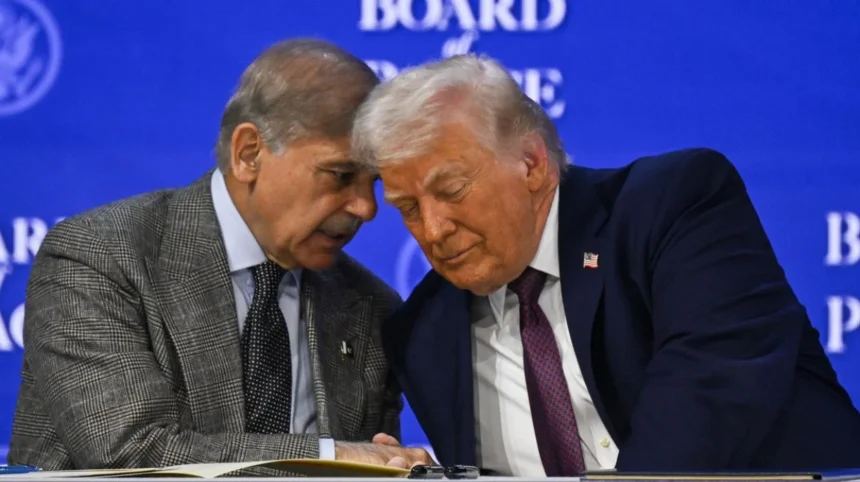
- The decision follows an invitation to Prime Minister Shehbaz Sharif from US President Donald J. Trump, who ratified the Board’s charter at a ceremony in Davos in January 2026.
- Pakistan says it will use its position to back a permanent ceasefire, increased humanitarian aid and reconstruction in Gaza.
- The announcement was issued by Pakistan’s Ministry of Foreign Affairs in Islamabad on 21 January 2026.
- Officials in Islamabad link the move to Pakistan’s long‑standing support for a two‑state solution based on pre‑1967 borders, with Al‑Quds Al‑Sharif as the Palestinian capital.
- The Board of Peace is intended to provide a formal framework to implement the Gaza Peace Plan alongside existing UN and regional mechanisms. This information could not be independently verified.
- Pakistan’s participation could amplify the role of Muslim‑majority states within the emerging diplomatic architecture around Gaza, but the Board’s practical powers and enforcement tools remain unclear. This information could not be independently verified.
Pakistan’s decision to join Gaza ‘Board of Peace’ signals bid for larger role in post‑war settlement
Pakistan has announced it will join a newly created international body, the Board of Peace, as part of efforts to support a permanent ceasefire and long‑term peace framework for Gaza, deepening its diplomatic engagement on the Palestinian issue after months of conflict.
Pakistan accepts role on Board of Peace
In a formal statement issued by the Ministry of Foreign Affairs, Pakistan confirmed it had accepted an invitation “for joining the Board of Peace (BoP) with the view to achieving lasting peace in Gaza”.
The ministry said the invitation had been extended to Prime Minister Muhammad Shehbaz Sharif by US President Donald J. Trump and framed the decision as part of Islamabad’s “ongoing efforts to support the implementation of the Gaza Peace Plan under the framework of the United Nations Security Council Resolution 2803.”
According to the statement, Pakistan “expresses the hope that with the creation of this framework, concrete steps will be taken towards the implementation of a permanent ceasefire, further scaling up of humanitarian aid for the Palestinians, as well as reconstruction of Gaza.”
Link to UN‑backed Gaza Peace Plan
The Board of Peace is described by Pakistan as operating under the framework of UN Security Council Resolution 2803, which is linked in Islamabad’s statement to a Gaza Peace Plan aimed at halting hostilities and stabilising the territory.
Publicly accessible documents summarising the full text and operational detail of Resolution 2803 and the Gaza Peace Plan are limited, and independent verification of the precise mandate and mechanisms of the resolution in relation to the Board of Peace is not currently available. This information could not be independently verified.
A White House article on the ratification of the Board’s charter in January 2026 states that President Trump formally endorsed the Board of Peace at a ceremony in Davos, Switzerland, describing it as a new international structure to support peace and reconstruction in Gaza.
Pakistan’s stated objectives in Gaza
In its acceptance note, Islamabad reiterated long‑standing positions on the Palestinian issue, stating that it “hopes that these efforts will lead to the realization of the right to self-determination of the people of Palestine, through a credible, time-bound political process, consistent with international legitimacy and relevant UN resolutions.”
The ministry again endorsed “the establishment of an independent, sovereign, and contiguous State of Palestine, based on the pre-1967 borders with Al-Quds Al-Sharif as its capital,” language that mirrors earlier Pakistani statements at the United Nations and within the Organisation of Islamic Cooperation (OIC).
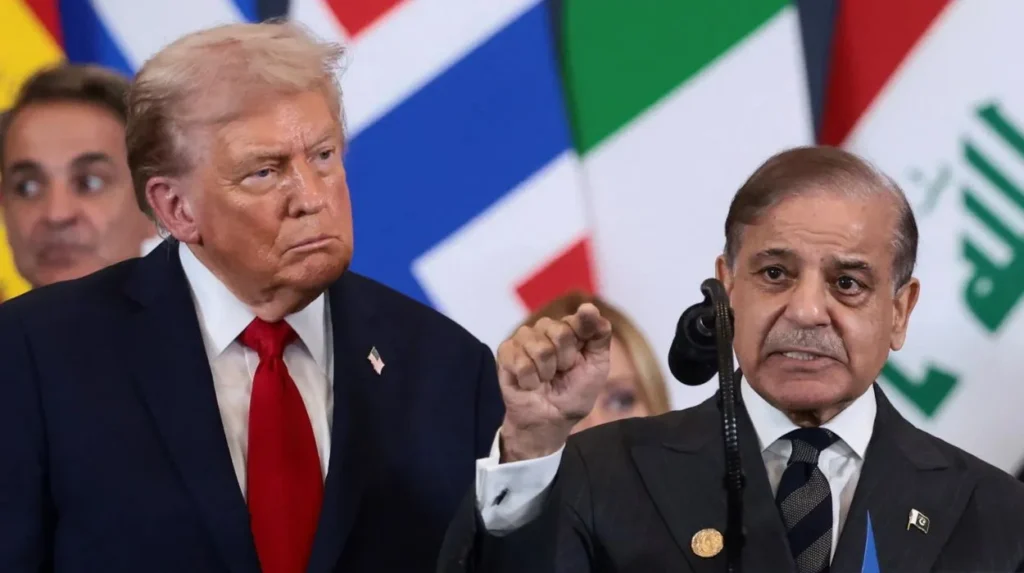
Pakistan has consistently called for an immediate and unconditional ceasefire in Gaza, expanded humanitarian access and accountability for violations of international humanitarian law, including in statements at the UN Security Council and OIC ministerial meetings.
Role within wider diplomatic architecture
The creation of the Board of Peace adds another layer to an already complex diplomatic landscape around Gaza, which includes the United Nations, regional groupings such as the OIC and Arab League, and individual mediators including Egypt and Qatar.
In March 2025, Pakistan’s Deputy Prime Minister and Foreign Minister told an extraordinary session of the OIC Council of Foreign Ministers that the bloc should consider “decisive diplomatic and economic measures” to hold Israel accountable, including trade restrictions, sustained diplomatic pressure and legal action at the International Court of Justice.
As an elected member of the UN Security Council for 2025–2026, Pakistan has pledged to “work with the OIC and Arab partners to mobilize global support for the Palestinian right to self-determination, justice and peace,” a commitment that now sits alongside its new role on the Board of Peace.
How the Board will coordinate with existing UN mechanisms, humanitarian agencies such as UNRWA, and regional diplomatic tracks has not been publicly detailed. This information could not be independently verified.
Humanitarian and reconstruction focus
Pakistan’s statement places particular emphasis on humanitarian relief and reconstruction, saying it looks forward to “further scaling up of humanitarian aid for the Palestinians, as well as reconstruction of Gaza” through the new framework.
Islamabad has previously condemned restrictions on aid flows into Gaza as exacerbating what it describes as a humanitarian catastrophe, and at the OIC in March 2025 it argued that blocking aid “is a war crime” that worsens the suffering of civilians.
In that address, Pakistan urged unrestricted humanitarian access, called for UNRWA to be allowed to operate “without obstruction” and backed UN General Assembly Resolution A/RES/79/232, which reinforces obligations to facilitate relief efforts.
Domestic and regional positioning
Pakistan’s decision to join the Board of Peace aligns with domestic political and public sentiment that has been strongly supportive of the Palestinian cause during the Gaza conflict.
Analysts note that Islamabad has sought to balance its advocacy for Palestinian rights with broader diplomatic considerations, including its relationships with Gulf partners, Western states and multilateral institutions. This information could not be independently verified.
Pakistan’s participation in the Board may also be viewed in the context of its desire to demonstrate relevance within international crisis diplomacy, using its Security Council seat and OIC role to push for a ceasefire, accountability measures and a renewed political process.
Questions over mandate and effectiveness
While the Board of Peace has been presented by supporters as a mechanism to help implement the Gaza Peace Plan and UN Security Council decisions, key details about its membership, voting procedures, funding and enforcement powers have not been fully disclosed in public sources. This information could not be independently verified.
It remains unclear whether the Board will function primarily as a political contact group, a coordinating platform for reconstruction financing, or an oversight body for ceasefire implementation and monitoring. This information could not be independently verified.
The extent to which all directly involved parties, including Israeli and Palestinian representatives, formally endorse the Board’s mandate has also not been comprehensively documented in open sources. This information could not be independently verified.
What happens next
Pakistan has signalled that it “looks forward to continue playing a constructive role as part of the Board of Peace” and is expected to take part in upcoming meetings to define the body’s operating procedures and priorities.
Over the coming months, attention is likely to focus on whether the Board of Peace can contribute to consolidating any ceasefire arrangements in Gaza, unlocking additional humanitarian assistance and advancing concrete reconstruction projects on the ground. This information could not be independently verified.
As discussions progress at the UN Security Council, within the OIC and among key regional mediators, Pakistan’s new role may shape how it seeks to influence debates on accountability, recognition of Palestinian statehood and the timetable for a revived political process based on a two‑state solution.

