


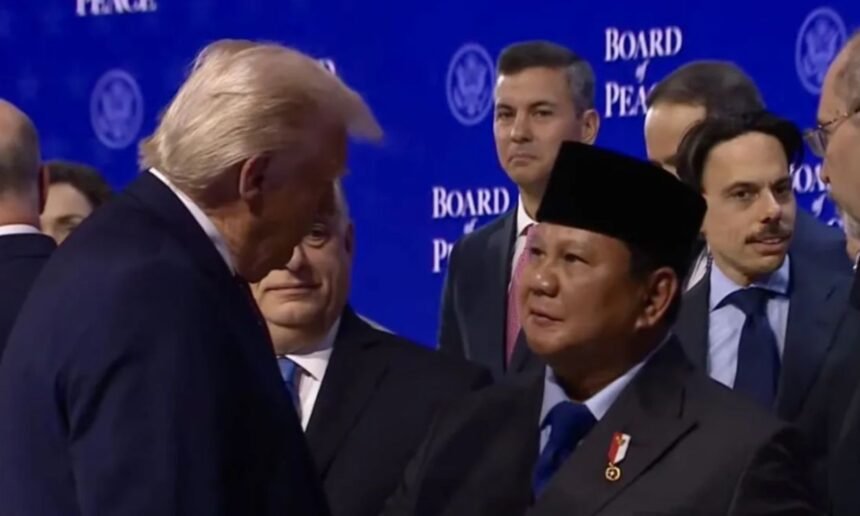
According to Antara News, Indonesia has officially joined the Board of Peace, an international body launched by United States President Donald Trump on the sidelines of the World Economic Forum in Davos on January 22, 2026. Indonesian President Prabowo Subianto signed the Board of Peace Charter while seated next to Trump, alongside Hungarian Prime Minister Viktor Orban and other leaders from member states. Antara reports that the Board was originally proposed to oversee a ceasefire in the Israel‑Hamas war in Gaza, with a charter that extends its mandate to other conflict areas around the world.
- Indonesia’s role and stated objectives
- Context and reactions: How is Indonesia’s move being viewed?
- What has the Indonesian government said about its intentions?
- What concerns or debates exist inside and outside Indonesia?
- Supporting details and expert perspectives
- Implications and future developments: What comes next for Indonesia and Palestine?
Antara explains that Jakarta views participation in the Board of Peace as a way to ensure that the transition process in Gaza remains focused on a two‑state solution and does not evolve into a permanent arrangement that sidelines Palestinian rights. The Indonesian government frames its decision as consistent with its long‑standing support for Palestinian independence and its broader commitment to international peace and humanitarian efforts. Official statements emphasize that Indonesia intends to use the platform to advocate for the protection of civilians and the effective delivery of aid in Gaza.
Indonesia’s role and stated objectives
According to Antara and official government statements cited in Indonesian media, President Prabowo has described Indonesia’s participation as a “historic opportunity” to help achieve lasting peace in Gaza and to support the Palestinian people. He stated that Indonesia is ready to contribute through the Board of Peace to efforts that reduce the suffering of Gaza’s population and facilitate large‑scale humanitarian assistance. Indonesian officials present the move as an expression of “true intention” to stand with Palestine in a concrete and operational way.
The Indonesian Cabinet Secretariat has underlined that Indonesia will use the Board of Peace to advocate for a cessation of violence, the protection of civilians, the opening of humanitarian access, and the restoration of Palestinian civil governance in Gaza. The government also stresses that Indonesia’s presence is meant to provide moral and political balance within the board, ensuring that reconstruction and governance arrangements comply with international law and relevant UN resolutions. Officials say the aim is to keep the process anchored in the principles of Palestinian sovereignty and a two‑state solution.
Context and reactions: How is Indonesia’s move being viewed?
What has the Indonesian government said about its intentions?
Indonesian officials, including President Prabowo and senior ministers, have repeatedly framed the decision to join the Board of Peace as a strategic, constructive, and concrete step to support Palestine. They argue that by joining a body directly involved in overseeing the ceasefire and reconstruction in Gaza, Indonesia can better influence outcomes in line with its long‑standing support for Palestinian independence. Statements emphasize that those participating in the Board are countries that “want to help the Palestinian people in Gaza” and are “longing for peace in the region.”
The government has also underscored that Indonesia’s participation is intended to accelerate the peace process between Palestine and Israel. Foreign policy officials describe the Board of Peace as a mechanism that, as endorsed by a UN Security Council resolution, is tasked with consolidating a permanent ceasefire, supporting reconstruction, and advancing a just peace based on Palestinian self‑determination and statehood. Within this framing, Jakarta maintains that joining the Board is compatible with its commitment to multilateralism and international law, rather than a departure from its traditional positions.
What concerns or debates exist inside and outside Indonesia?
Opinion and analysis pieces in Indonesian media have noted that the decision has generated debate at home. Some commentators highlight Indonesia’s long record of supporting Palestine primarily through the UN system and question whether joining a U.S.‑driven initiative led by President Trump is fully consistent with that approach. These critics point to concerns about the broader political agenda surrounding the Board of Peace and the risk that it might be perceived as a parallel structure to existing multilateral mechanisms.
At the same time, other regional and international commentary has focused on what Indonesia stands to gain or lose from participating in the Board. Analysts have observed that Indonesia sees itself as a voice for the Global South and the Muslim world, and that involvement in the Board could enhance its visibility in efforts to shape Gaza’s future. However, they also note that domestic unease and international skepticism about the initiative’s design and leadership may pose reputational and diplomatic challenges that Jakarta will need to manage.
Supporting details and expert perspectives
Indonesian media reports summarizing government briefings note that the Board of Peace’s creation is linked to a broader plan endorsed by a UN Security Council resolution aimed at ending the Gaza conflict. The Board is described as responsible for consolidating a permanent ceasefire, supervising post‑conflict administration, and coordinating reconstruction, with member states expected to contribute politically and, in some cases, financially. Indonesian officials stress that this UN link is a key reason they consider participation legitimate and aligned with their existing foreign‑policy principles.
Experts cited in regional coverage point out that Indonesia has consistently framed its support for Palestinian independence as a constitutional and moral obligation grounded in anti‑colonial solidarity and human rights. They note that Jakarta’s engagement in the Board of Peace will be scrutinized in light of this history, with particular attention to whether the body’s decisions and operations remain consistent with international law and Palestinian aspirations. Some analysts suggest that Indonesia’s involvement could serve as a moderating influence, helping to keep the board focused on humanitarian priorities and a two‑state political horizon.
Implications and future developments: What comes next for Indonesia and Palestine?
How might Indonesia use the Board of Peace to support Palestine?
Indonesian government statements indicate that Jakarta intends to use its seat on the Board of Peace to advocate for reopening key crossings such as Rafah, enabling sustained humanitarian access into Gaza. Officials have also mentioned goals such as the establishment of an international stabilization force and the restoration of Palestinian civil governance, which they see as essential steps toward a durable ceasefire and eventual political settlement. Within the board, Indonesia is expected to push for decisions that uphold Palestinian sovereignty and prevent any arrangements that would entrench occupation or undermine a two‑state framework.
Indonesia’s participation is also likely to be reflected in diplomatic outreach to other member states, as Jakarta seeks to build coalitions within the Board in favor of Palestinian rights. Analysts suggest that Indonesia could leverage its position as a large Muslim‑majority democracy and a key player in Southeast Asia to press for reconstruction plans that prioritize civilian needs, accountability, and long‑term political solutions. How effectively these ambitions translate into concrete outcomes will depend on the board’s internal dynamics and the cooperation of other major actors involved in the Gaza file.
What are the broader diplomatic and domestic implications?
Diplomatically, Indonesia’s move signals its desire to be directly involved in shaping the post‑war order in Gaza and to play a more prominent role on Middle East issues. Participation in the Board of Peace may increase Indonesia’s visibility in international discussions on Palestine, but it may also require careful navigation of relations with countries that are skeptical of the board’s structure or leadership. Observers note that Jakarta will need to balance its engagement in this new forum with its established commitment to the UN‑centered multilateral system.
Domestically, the government’s decision is likely to remain a subject of debate among political parties, civil‑society groups, and the broader public, for whom support for Palestine is a deeply resonant issue. Future assessments of Indonesia’s role will hinge on whether its involvement in the Board of Peace is seen to deliver tangible benefits for Palestinians, such as improved humanitarian conditions, progress toward a sustainable ceasefire, and meaningful steps toward statehood. For now, Indonesian officials maintain that joining the Board is a concrete expression of the country’s long‑standing pledge to stand with Palestine in both principle and practice.

