


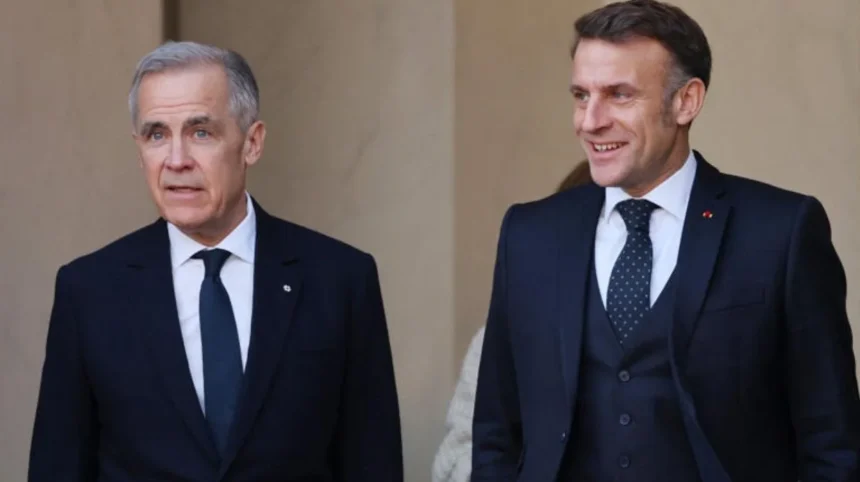
France has signalled it does not plan to take part in US President Donald Trump’s proposed Board of Peace, a body linked to post-war governance and reconstruction in the Gaza Strip but with a mandate that appears to extend beyond the territory. As reported by Agence France-Presse (AFP), a source close to French President Emmanuel Macron said France “does not intend to answer favourably” to an invitation to join the board. The same source said the board’s charter goes beyond Gaza and raises “major questions” about respect for United Nations principles and institutional structures. According to AFP, French officials are concerned that the body’s scope and governance could conflict with existing international frameworks.
The Board of Peace has been presented by Trump as part of a broader initiative to shape Gaza’s post-war future and, more broadly, conflict resolution efforts. According to AFP, the board is tied to what Trump has called the National Committee for the Administration of Gaza, envisaged as a mechanism to oversee reconstruction, political arrangements and long-term economic revival. Trump’s proposal has been framed as “Phase Two” of a comprehensive plan to end the Gaza conflict, built around a 20‑point roadmap. However, the charter described in reporting suggests the board’s authority would not be limited solely to Gaza, prompting reservations among European allies.
France’s reservations have been articulated both in public remarks and in background briefings. According to AFP, French officials argue that any mechanism dealing with Gaza’s future must align with UN‑backed parameters and a credible political horizon for both Palestinians and Israelis. French Foreign Minister Jean‑Noël Barrot told lawmakers that “at this stage, France cannot accept,” noting that the charter extends beyond the reconstruction and administration role endorsed by the United Nations. AFP reports that France nonetheless insists it remains committed to a ceasefire in Gaza and to diplomatic efforts toward a two‑state solution.
How have allies reacted to Trump’s proposal?
Canada has also responded cautiously to the Board of Peace plan, particularly on questions of cost and governance. According to AFP, a Canadian government source said Ottawa “will not pay for a seat on the board,” and that no such payment has been formally requested at this time. The same source stressed that the proposed charter remains under discussion and that many terms and conditions still need to be clarified. Canadian officials have indicated that any participation would have to align with Canada’s long-standing positions on multilateral institutions and conflict resolution.
The financial structure of the board has drawn particular scrutiny. According to AFP’s reporting, the draft charter envisages that member countries, represented by their heads of state or government, could secure longer-term participation by contributing more than 1 billion dollars in cash within the first year. This has raised concerns about the optics and mechanics of effectively paying for influence on a peace and governance structure. Canadian sources cited by AFP have made clear that Ottawa does not intend to fund a seat under such terms, even as discussions continue about the board’s design.
Other allies have also signalled unease or distance from the project. Reporting from outlets including the Times of Israel and Canadian and European media indicates that Spain and other European Union members share France’s doubts about the board’s scope and compatibility with existing international arrangements. According to these reports, questions have been raised about how the board would interact with the UN system, existing peace frameworks and the responsibilities of established international bodies. The mixed reactions underscore the diplomatic challenges facing Trump’s initiative among traditional Western partners.
Supporting details and expert commentary
Reporting by AFP and other international outlets describes the Board of Peace as emerging at a sensitive moment in diplomatic efforts over Gaza’s future. According to these accounts, the mechanism would not only oversee reconstruction but also play a role in broader governance, potentially cutting across the authority of local actors and international institutions. Analysts quoted in coverage have suggested this could create parallel structures that complicate efforts led by the United Nations and regional organizations. The concern is that overlapping mandates might weaken coordinated international engagement rather than strengthen it.
According to detailed reporting, the proposed governance model of the board includes high-level representation from participating states and significant financial thresholds for long-term membership. This has prompted debate among experts and diplomats about the perception of a “pay‑to‑participate” peace architecture. Commentators cited in international media note that such a model may be hard to reconcile with principles of inclusivity and equality in multilateral decision‑making. They also point out that large upfront payments could privilege wealthier states and marginalize actors more directly affected by the conflict but with limited financial means.
French and Canadian positions, as reported, reflect broader debates within Western capitals about how to engage with Trump’s Gaza initiative. According to AFP, France has anchored its stance in the need to respect UN principles and existing resolutions on the Israeli‑Palestinian conflict. Canadian officials, meanwhile, have emphasized transparency, financial prudence and alignment with multilateral norms. Experts cited by various outlets say these reactions highlight enduring tensions between ad hoc coalitions launched by major powers and more established, treaty‑based international institutions.
What are the implications and possible next steps?
The decisions by France to decline participation and by Canada to refuse to pay for a seat could affect the perceived legitimacy and reach of Trump’s Board of Peace. According to reporting from international outlets, early positions taken by key allies often shape how other governments evaluate new multilateral initiatives. If more countries echo France and Canada’s concerns, the board may struggle to attract broad, high‑level membership. This could limit its influence on post‑war arrangements in Gaza and beyond, or push its sponsors to revise the charter.
Trump’s administration may face pressure to adjust the terms of the board to address allied concerns. According to coverage in major news organizations, questions about the charter’s scope, its compatibility with the UN system and the financial conditions of membership are likely to be central in any further negotiations. Diplomatic observers quoted in these reports suggest that sponsors could narrow the mandate to focus more clearly on Gaza, modify financial thresholds, or establish clearer coordination with existing international institutions. Whether such changes will be pursued, and whether they would be sufficient to bring sceptical allies on board, remains uncertain.
The broader implications for Gaza’s reconstruction and political future are still unfolding. As reported by AFP and others, France has reiterated its commitment to a ceasefire and to a credible political horizon for both Palestinians and Israelis, while Canada maintains its support for multilateral, rules‑based approaches. The evolution of the Board of Peace proposal, and the degree of international participation it secures, will likely influence how much of a role Trump’s plan ultimately plays in shaping post‑war governance. For now, the clear signals from Paris and Ottawa underscore the challenges of building consensus around a new, heavily structured peace body with a global reach.
In sum, France’s decision not to accept the invitation to join Trump’s Board of Peace and Canada’s refusal to pay for a seat underscore significant reservations among key US allies about the initiative’s scope, structure and funding model. Their publicly stated positions highlight concerns over alignment with United Nations principles, the optics of financial thresholds for participation and the risk of creating parallel governance structures around Gaza and other conflicts. How the proposal evolves in response to these objections will help determine its relevance and viability in the diplomatic landscape around Gaza’s future.

