


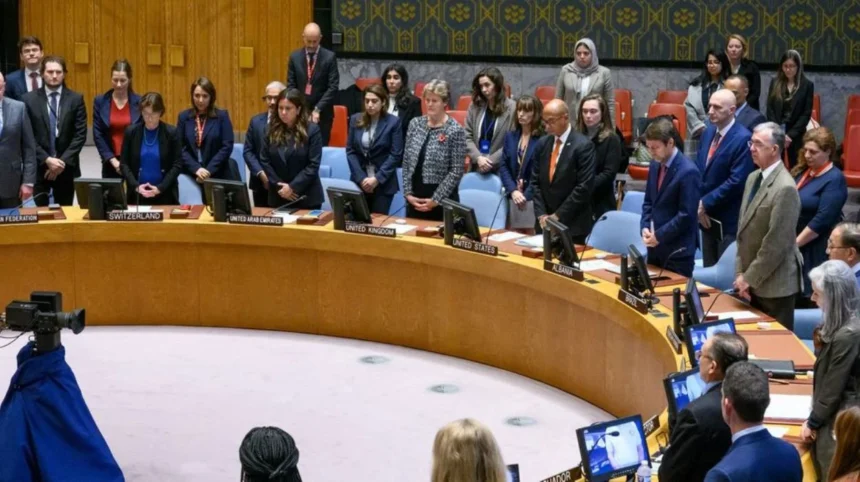
UN resolutions on Gaza form a long legal and political record of how the international community has viewed the territory, the wider Question of Palestine, and the Arab–Israeli conflict since 1947.
- Introduction: Why Gaza Features So Prominently in UN Debates
- 1947–1949: Partition, War and Refugees
- 1950s–1966: Early Resolutions and Limited Focus on Gaza
- 1967 and After: Occupation of Gaza and Landmark Texts
- 1970s–1980s: Intensifying General Assembly Engagement
- 1990s: Oslo, Autonomy and the Status of Gaza
- 2005 Disengagement and Post‑2007 Blockade
- Recent Resolutions: Ceasefires, Humanitarian Access and Accountability
- Security Council vs General Assembly: Different Roles and Effects
- Binding vs Non‑Binding: Legal Status of UN Resolutions on Gaza
- Thematic Threads: Refugees, Territory, Human Rights and Self‑Determination
- How UN Resolutions on Gaza Shape Policy and Debate
- Further Reading and Key Document Collections
- Conclusion
Introduction: Why Gaza Features So Prominently in UN Debates
From the UN Partition Plan in 1947 to recent debates on ceasefires and humanitarian access, Gaza has been at the centre of dozens of resolutions adopted by both the Security Council and the General Assembly. These texts reflect shifting global politics: decolonization, the Cold War, the rise of the Non‑Aligned Movement, the peace process era, and renewed focus on humanitarian law.
Because Gaza is part of the broader Palestinian question, most resolutions do not mention the Strip in isolation but treat it alongside the West Bank, East Jerusalem, and Palestinian refugees. Understanding this history helps explain today’s debates over occupation, blockades, self‑determination, and accountability.
1947–1949: Partition, War and Refugees
The story begins with General Assembly Resolution 181 (II), commonly known as the Partition Plan, which recommended ending the British Mandate and creating independent Arab and Jewish states with a special international regime for Jerusalem. Under this plan, Gaza was envisaged as part of the proposed Arab state, but the ensuing 1948 Arab–Israeli war produced a different map.
Subsequent resolutions responded to the humanitarian and territorial consequences of the war. General Assembly Resolution 194 (III) addressed the fate of refugees and called for either return or compensation, laying a foundation for later debates over Palestinians displaced from areas including Gaza. The Assembly also established the United Nations Relief and Works Agency for Palestine Refugees in the Near East (UNRWA) in 1949 to provide relief and works programs for refugees in Gaza and neighbouring host countries.
1950s–1966: Early Resolutions and Limited Focus on Gaza
During the 1950s and early 1960s, the Security Council and the General Assembly adopted resolutions on armistice agreements, border incidents, and cross‑border raids involving Gaza, then under Egyptian administration. Security Council texts condemned specific military actions, such as a 1955 raid on Gaza, and called on parties to respect the 1949 Armistice Agreements.
At the same time, the General Assembly passed recurring resolutions on assistance to Palestinian refugees, UNRWA’s mandate, and financial arrangements for the agency, which had major operations in the Gaza Strip. These early resolutions treated Gaza primarily as a site of refugee concentration and recurrent hostilities rather than as a distinct political entity.
1967 and After: Occupation of Gaza and Landmark Texts
The 1967 Arab–Israeli war changed the legal framing of Gaza at the UN, as Israel occupied the Gaza Strip along with the West Bank, East Jerusalem, the Golan Heights, and Sinai. In the war’s aftermath, Security Council Resolution 242 became a cornerstone text, calling for the withdrawal of Israeli armed forces “from territories occupied in the recent conflict” and affirming the right of every state in the area to live in peace within secure and recognized boundaries.
Although Resolution 242 does not name Gaza, it has been consistently interpreted as applying to all territories occupied in 1967, including the Strip, making it a central reference point in debates over the status of Gaza under international law. Later resolutions—such as Security Council Resolution 338 in 1973—reaffirmed 242 and called for negotiations aimed at a just and lasting peace, again implicitly covering Gaza.
1970s–1980s: Intensifying General Assembly Engagement
In the 1970s, the General Assembly broadened its approach from a narrow refugee focus to a fuller treatment of Palestinian national rights, including self‑determination and statehood, which encompassed Gaza. Resolutions recognized the Palestine Liberation Organization (PLO) as the representative of the Palestinian people and referred explicitly to the “occupied Palestinian territories,” a term widely understood to include the Gaza Strip.
The Assembly also adopted resolutions condemning Israeli settlement activity and other measures in the West Bank and Gaza as contrary to international law, frequently invoking the Fourth Geneva Convention on the protection of civilians in wartime. Security Council resolutions in this period, although fewer due to vetoes, addressed specific incidents and reiterated the applicability of international humanitarian law to territories occupied in 1967.
1990s: Oslo, Autonomy and the Status of Gaza
The Oslo Accords, beginning in 1993, introduced a new layer of complexity to UN debates by establishing the Palestinian Authority and providing for limited Palestinian self‑government in parts of Gaza and the West Bank. The UN system responded with resolutions welcoming or taking note of the peace process, supporting economic and institutional development in areas under Palestinian self‑rule, and continuing to stress that Gaza remained part of the occupied Palestinian territory pending a final settlement.
Security Council Resolution 1322 (2000) and other texts around the outbreak of the second intifada reaffirmed principles such as land for peace, the inadmissibility of acquiring territory by war, and the need to protect civilians in areas including Gaza. General Assembly resolutions during this era consistently backed the two‑state vision, connecting Gaza’s future to a broader settlement based on mutual recognition and negotiated borders.
2005 Disengagement and Post‑2007 Blockade
In 2005, Israel withdrew its settlers and permanent ground forces from inside the Gaza Strip, a move often called “disengagement,” without ending control over airspace, maritime access and most border crossings. UN organs, particularly the General Assembly and various human rights mechanisms, continued to describe Gaza as occupied for the purposes of international humanitarian law, given the degree of external control.
After Hamas took control of Gaza in 2007 and Israel and Egypt tightened movement and access restrictions, resolutions and reports increasingly focused on the humanitarian impact of the blockade. The Assembly urged the lifting of closures, emphasized the need for unimpeded humanitarian assistance, and called for both Palestinian armed groups and Israeli forces to respect international law, especially in times of armed escalation.
Recent Resolutions: Ceasefires, Humanitarian Access and Accountability
In the twenty‑first century, major rounds of violence in and around Gaza have triggered intensive UN diplomacy and a series of resolutions and presidential statements. Texts adopted in the Security Council and the General Assembly have called for immediate ceasefires, protection of civilians, and sustained humanitarian access, as well as support for reconstruction and adherence to existing agreements.
Recent Security Council resolutions have demanded safe and unhindered delivery of humanitarian assistance throughout the Gaza Strip and reaffirmed support for a negotiated two‑state solution, linking urgent relief needs with longer‑term political goals. General Assembly emergency special sessions have adopted resolutions with large majorities urging cessation of hostilities, respect for international humanitarian law, and renewed efforts towards a comprehensive, just and lasting peace between Israelis and Palestinians, including the future of Gaza.
Security Council vs General Assembly: Different Roles and Effects
The Security Council and the General Assembly address Gaza through distinct mandates and procedures that shape the legal and political weight of their resolutions. The Council, with its fifteen members and five permanent veto‑holders, is charged under the UN Charter with primary responsibility for international peace and security, giving its decisions a particular status under international law.
The General Assembly, where all UN member states have a vote, serves as a forum for articulating the collective political will of the international community on the Question of Palestine. Its resolutions on Gaza and related issues—such as self‑determination, human rights, and the legality of certain measures—help shape legal interpretations, diplomatic practice and public expectations even when they do not create binding obligations.
Binding vs Non‑Binding: Legal Status of UN Resolutions on Gaza
A key distinction in understanding UN resolutions on Gaza is the difference between binding decisions and non‑binding recommendations. Security Council resolutions adopted under Chapter VII of the UN Charter can create binding obligations on member states, for example regarding ceasefires, arms embargoes, or other measures deemed necessary to maintain or restore international peace and security.
Many Security Council texts on the Arab–Israeli conflict, however, have been adopted under other provisions of the Charter, and their binding force has been debated in legal scholarship, particularly in relation to withdrawal from occupied territories and the principle of the inadmissibility of acquiring territory by war. By contrast, General Assembly resolutions on Gaza—covering issues from refugee rights and self‑determination to humanitarian access—are formally recommendations but carry considerable political, moral and interpretive weight, often cited by courts, treaty bodies and regional organizations.
Thematic Threads: Refugees, Territory, Human Rights and Self‑Determination
Across decades, several themes recur in UN resolutions touching on Gaza.
- Refugees and UNRWA: The Assembly repeatedly renews support for UNRWA’s mandate and calls for just and durable solutions for Palestinian refugees, many of whom live in Gaza’s crowded camps.
- Territory and borders: Security Council texts emphasize that territory cannot be acquired by force and refer to land‑for‑peace principles, framing Gaza’s status within broader negotiations over final borders.
- Human rights and humanitarian law: Resolutions and related reports allege violations by both state and non‑state actors in Gaza, invoking the Geneva Conventions and other humanitarian norms to demand protection of civilians and accountability.
- Self‑determination and statehood: General Assembly resolutions affirm the right of the Palestinian people, including those in Gaza, to self‑determination and statehood, endorsing a two‑state outcome with an independent Palestinian state living alongside Israel.
These threads show how the UN’s approach to Gaza ties specific incidents to broader legal principles and long‑term aspirations for peace and justice.
How UN Resolutions on Gaza Shape Policy and Debate
While implementation has often lagged behind stated objectives, resolutions on Gaza influence diplomacy, domestic law and wider public debate. States and international organizations cite Security Council and General Assembly texts when framing policies on arms transfers, recognition, aid, and engagement with parties to the conflict.
UN resolutions also serve as reference points for international courts and investigative mechanisms examining questions such as occupation, proportionality in the use of force, and settlement legality, all of which affect Gaza. Civil society groups, researchers and educators rely on this accumulated record to trace how norms around self‑determination, human rights and humanitarian access have evolved in relation to Gaza and the broader Palestinian question.
Further Reading and Key Document Collections
For readers interested in exploring specific texts in more depth, several official and research‑oriented collections are available. The UN’s “Question of Palestine” portal provides compilations of General Assembly and Security Council resolutions, along with voting records and explanatory materials that cover Gaza and related issues. Specialized compilations list every Security Council and General Assembly resolution concerning Palestine and Israel, allowing chronological or thematic research.
Think‑tank and academic resources, such as backgrounders on key Middle East resolutions, offer contextual analysis of landmark texts like the 1947 Partition Plan and Resolution 242, helping explain their continuing relevance to Gaza’s status. Together, these sources make it possible to follow the full trajectory from early debates on partition and refugees to contemporary discussions of ceasefires, humanitarian access and the future of the Gaza Strip.
Conclusion
From the Partition Plan to modern debates on ceasefires and humanitarian relief, UN resolutions on Gaza trace a continuous line of concern with territory, people and international legality. Security Council decisions and General Assembly declarations, whether binding or recommendatory, have created a dense framework of principles on occupation, self‑determination, humanitarian protection and negotiated peace that will continue to shape discussions about Gaza’s future.

