


According to Baptist News Global, the article “What does Amos say about Israel and Gaza?” examines how the Old Testament prophet Amos has been invoked in Christian reflection on the current war between Israel and Hamas in Gaza. The piece focuses on Amos 1:6–8, where the prophet announces divine judgment on Gaza for “carrying away captive a whole captivity” and selling people into exile, and places this within a wider pattern of Amos condemning regional powers for violence and exploitation before turning his critique toward Israel and Judah. As summarized by Bible study resources on Amos, the prophet denounces both external enemies and Israel itself for oppression of the vulnerable, corrupt leadership, and religious hypocrisy, insisting that covenant faith is inseparable from justice and mercy.
The Baptist News Global article, as described in related coverage and similar commentaries, uses this prophetic framework to explore how contemporary Christians might interpret events in Israel and Gaza without turning Amos into a simple endorsement of any modern government’s actions. It notes that some readers apply Amos selectively to justify judgment on one side while overlooking the prophet’s insistence that all nations, including God’s own people, are accountable for violence and injustice. Parallel opinion pieces, such as an essay at The Times of Israel connecting Amos 1:6–8 with the October 7, 2023 Hamas attacks and subsequent Israeli military operations in Gaza, illustrate how Amos has been cited both to condemn atrocities committed against Israelis and to reflect on the humanitarian crisis facing Palestinians.
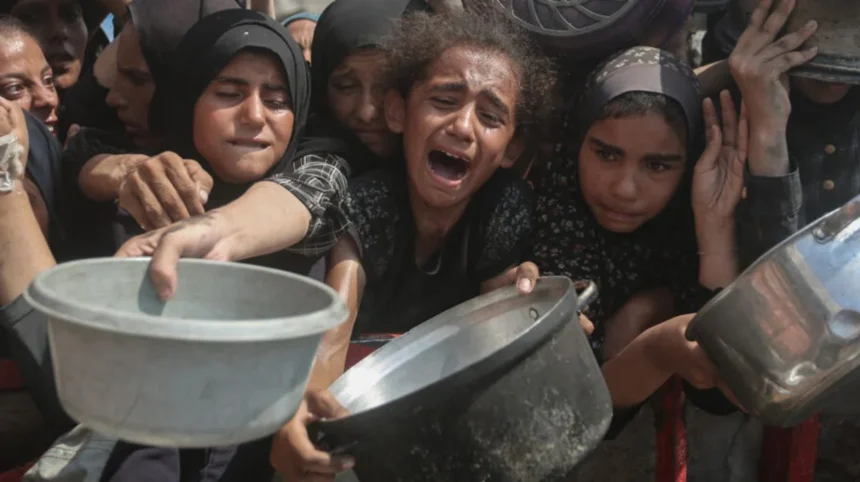
In the background of this discussion is the devastating impact of the current war on civilians. Reporting from outlets that cover Gaza’s churches and Christian communities describes extensive destruction, mass displacement, and heavy casualties, with tens of thousands of Palestinians killed and many more injured since October 2023, according to figures cited by international agencies and monitoring groups. Baptist-focused reporting on Gaza Christians has highlighted the pressures faced by small congregations sheltering in damaged church buildings, struggling with exhaustion, hunger, and repeated bombardments. These realities form the contemporary context in which the Baptist News Global article asks what a text like Amos can responsibly say about modern Israel, Hamas, and Gaza.
How is Amos being interpreted in the current crisis?
The Baptist News Global article is reported to emphasize that Amos speaks first about God’s universal concern for justice before addressing Israel’s special covenant status, challenging readers who might claim prophetic backing for their preferred side in the conflict. According to other summaries of Amos’ message, the prophet condemns the brutal treatment of enemy populations, including the enslavement and deportation referenced in the oracle against Gaza, but then turns to expose Israel’s own participation in economic exploitation, legal corruption, and religious showmanship devoid of ethical substance. This structure, commentators argue, warns against using Amos to attack only one party while ignoring abuses committed by one’s “own” side.
Opinion essays drawing parallels between Amos and Gaza today, such as the Times of Israel blog piece, apply the prophet’s words about captivity and violence to Hamas’ actions on October 7 and to broader patterns of militant activity in Gaza, portraying Amos as a witness against the taking of hostages and attacks on civilians. At the same time, humanitarian reporting on the war documents the severe toll of Israeli airstrikes and ground operations on Gaza’s people and infrastructure, leading some Christian and human rights voices to invoke Amos’ denunciations of oppression and the “trampling” of the poor as relevant to Palestinian suffering. The Baptist News Global article situates these competing appeals within a call to read Amos with care, recognizing that the prophet’s indictments are not confined to any single nation or moment in history.
Church-based coverage of Gaza, including reports on Baptist and other Christian communities, shows how local believers are interpreting Scripture amid war, displacement, and loss. These reports describe pastors and lay leaders seeking comfort and guidance from biblical texts that speak of judgment, lament, and hope, including the Minor Prophets. Within that broader pattern, the Baptist News Global piece’s focus on Amos reflects a wider effort among Christians to understand how ancient prophetic critiques of violence and injustice might inform modern responses to state and non-state actors in Israel and Gaza, without collapsing complex realities into simple prophetic “fulfillments.”
Supporting details and expert commentary
According to Bible-focused reference works, Amos is one of the earliest writing prophets, active in the eighth century BCE, who addressed the northern kingdom of Israel while also pronouncing judgment on neighboring peoples such as Damascus, Gaza, Tyre, Edom, Ammon, and Moab. These sources note that Amos 1–2 uses a repeated formula (“for three transgressions … and for four”) to introduce oracles against multiple nations, signaling that all stand under divine scrutiny for acts such as brutal warfare, slave trading, and disregard for treaty obligations. In this sequence, the indictment of Gaza centers on deporting entire communities and selling them to Edom, placing the city’s actions within a regional economy of violence and exploitation rather than treating it as an isolated case.
Scholarly summaries of Amos stress that the prophet’s central themes include social justice, the defense of the poor, and the warning that religious rituals are meaningless if they coexist with systemic oppression. Commentators highlight well-known passages where Amos rejects festivals and sacrifices offered by an unjust society and calls instead for justice to “roll” like waters, explaining that these statements confront both personal and structural wrongdoing. In modern discourse about Israel and Gaza, these themes have been applied variously to critique militant groups, state policies, and international complicity, with Christian writers urging that any appeal to Amos should remember his insistence on accountability for all actors, not only enemies.
Reporting and analysis on the Gaza conflict from international and regional outlets provide the factual backdrop for such theological reflection, documenting not only battlefield developments but also civilian casualties, damage to hospitals and religious sites, and debates over proportionality and international law. For example, coverage of airstrikes on medical facilities and church compounds has prompted renewed attention to how biblical calls to protect the vulnerable might bear on contemporary warfare. Within this environment, the Baptist News Global article’s engagement with Amos exemplifies a strand of Christian journalism that seeks to link scriptural interpretation with careful, documented attention to human suffering in both Israel and Gaza.
What might Amos mean for future discussions of Israel and Gaza?
The use of Amos in current debates suggests that the prophet’s insistence on universal accountability may continue to influence Christian and broader faith-based commentary on the conflict. Analysts of Amos point out that the book culminates not only in judgment but also in a vision of restoration, which some interpreters view as offering a framework for thinking about justice, repentance, and eventual rebuilding after violence. As media coverage tracks diplomatic efforts, cease-fire talks, and reconstruction plans, references to Amos are likely to recur in discussions about what a just peace would require from all sides involved.
Future reporting on the war and its aftermath may draw on Amos when assessing how governments, armed groups, and international actors respond to allegations of war crimes, treatment of prisoners, and the rebuilding of devastated communities. Christian journalists and commentators engaging with Baptist News Global’s perspective and similar essays are positioned to explore how prophetic texts can inform advocacy for civilian protection, accountability mechanisms, and support for traumatized populations in both Israel and Gaza. In that sense, the question “What does Amos say about Israel and Gaza?” is likely to remain part of a wider, ongoing conversation about how ancient calls for justice intersect with contemporary conflicts and the pursuit of long-term peace.
In summary, the Baptist News Global article frames Amos as a prophet who speaks both to Gaza and to Israel, condemning violence, captivity, and exploitation wherever they occur and challenging readers not to appropriate his words selectively. Set against detailed reporting on the human cost of the Israel–Gaza war, this use of Amos underscores a central theme in the prophetic book: that genuine faith demands justice for the vulnerable and accountability for all who wield power, whether in ancient times or in today’s Middle East.

