


Key points
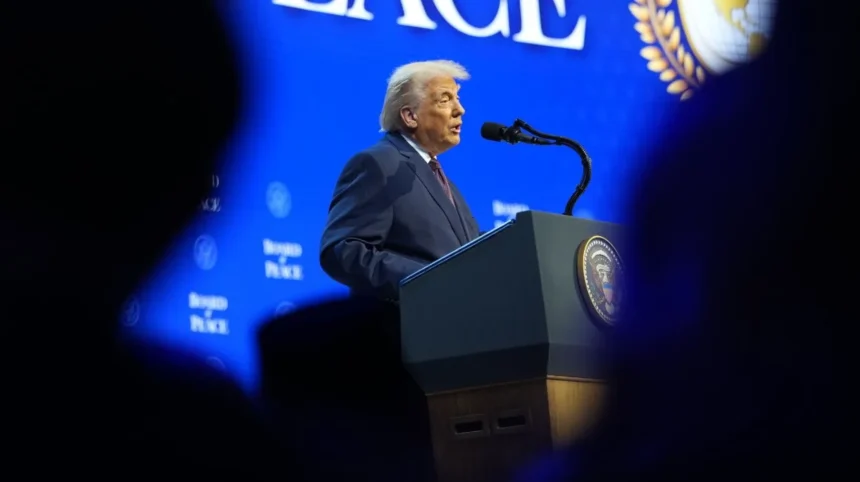
- United Nations human rights experts have sharply criticised the establishment of a “Board of Peace” for Gaza.
- The experts argue that the Board, endorsed by UN Security Council Resolution 2803, violates core principles of international law, including the right of Palestinians to self-determination.
- Their statement was issued from Geneva and coincides with new legal analysis on the destruction of housing in Gaza between October 2023 and October 2025.
- The experts say decision-making on Gaza’s reconstruction must rest with Palestinians themselves, not foreign powers or neo-colonial interests.
- A Special Rapporteur’s analysis concludes that widespread destruction of housing in Gaza, described as “domicide”, amounts to war crimes and has reached the threshold for crimes against humanity and genocide. This information could not be independently verified.
- The experts describe the Board of Peace as an “illegal and illegitimate manoeuvre” and “the antithesis” of a human‑rights based approach to reconstruction.
- They call on states to support a reparative, rights‑based reconstruction process, ensure funding, and allow unimpeded access for materials and equipment needed to rebuild civilian infrastructure.
- The experts stress that Israel, as the “aggressor and occupying power”, and states that backed its campaign in Gaza, bear primary responsibility for ensuring reconstruction and non‑repetition of violations. This characterisation reflects the experts’ view.
UN experts denounce Gaza reconstruction body as contrary to international law
United Nations human rights experts have accused powerful states of using a newly created “Board of Peace” for Gaza as an illegal mechanism that sidelines Palestinian self‑determination and breaches international law, calling instead for reconstruction to be guided by human rights norms and reparative justice.
- Key points
- UN experts denounce Gaza reconstruction body as contrary to international law
- Core criticism of the ‘Board of Peace’
- Legal basis and challenge to UN decisions
- Scale of destruction and ‘domicide’ findings
- Proposed rights-based framework for rebuilding Gaza
- Responsibility of Israel and supporting states
- Concerns over ‘real estate’ narratives and investment agendas
- Tension between Security Council mandate and human rights concerns
- Calls for international accountability and safeguards
- Reactions and broader diplomatic context
- What happens next
Core criticism of the ‘Board of Peace’
In a statement issued in Geneva, the group of independent UN experts said any initiative to rebuild Gaza must comply with international law and avoid what they described as “neo‑colonial interests that rest on impunity and avarice”.
They warned that the establishment and endorsement of the Board of Peace under UN Security Council Resolution 2803 was “fundamentally contrary” to basic principles of international law, including the inalienable right of Palestinians to self‑determination.
The experts argued that decision‑making over Gaza’s reconstruction and future should be “in the hands of Palestinians”, who must be able to remain in or return voluntarily and safely to their land and property.
They stressed that Palestinians’ right to self‑determination extends not only to political status but also to the model of reconstruction and development pursued in Gaza, cautioning that such choices “should not be imposed by foreign powers”.
Legal basis and challenge to UN decisions
The experts said the creation of the Board of Peace “also contravenes” the advisory opinion issued by the International Court of Justice (ICJ) in July 2024, which called for an immediate end to Israel’s occupation, and the subsequent position taken by the UN General Assembly in Resolution ES‑10/24.
They stated that the Board, as envisaged, represents “the antithesis of a human rights‑based approach to reconstruction and a throwback to the bygone days of colonialism”.
According to their assessment, any reconstruction framework that sidelines Palestinian participation or conditions their rights on external approval risks breaching the obligations set out in international human rights and humanitarian law.
The experts called on UN member states to ensure that they do not lend support—financial, political or operational—to measures they view as contrary to international law or that could entrench structural inequality and displacement.
Scale of destruction and ‘domicide’ findings
The experts’ intervention coincides with a new analysis by the UN Special Rapporteur on the right to adequate housing, who examined the pattern of destruction in Gaza from October 2023 to October 2025.
According to the statement, estimates indicate that at least 92 per cent of housing units in Gaza were either fully destroyed or damaged over that period, leaving vast numbers of residents displaced and without adequate shelter.
The Special Rapporteur concludes that the “means and ways” by which Israel has carried out systematic and widespread destruction of housing, widely termed “domicide”, amount to war crimes and have reached the threshold for crimes against humanity and genocide. This information could not be independently verified.
The analysis is published alongside draft Guiding Principles on Reconstruction and a detailed legal commentary, which collectively assert that people affected by conflict are entitled to a right to reconstruction and reparation that restores their economic, social, cultural, civil and political rights.
Proposed rights-based framework for rebuilding Gaza
The experts emphasised that any reconstruction plan must begin with recognition of Palestinians’ right to remain in their homes, to return to their properties, and to participate meaningfully in decisions about rebuilding their communities and institutions.
They said member states have a responsibility to ensure that residents of Gaza possess both the means and the opportunity to lead and benefit from reconstruction, including by controlling how funds are used and which projects are prioritised.
In practical terms, they called for guaranteed availability of reconstruction finance and the removal of obstacles to the entry of machinery, construction materials and equipment needed to rebuild housing, civilian infrastructure, schools, health facilities, places of worship and cultural sites.
They also highlighted the need for reparation—beyond physical rebuilding—so that affected individuals and communities can regain access to full economic, social, cultural, civil and political rights, in line with international human rights standards.
Responsibility of Israel and supporting states
In their statement, the experts asserted that, as what they described as the “aggressor and occupying power”, Israel bears primary responsibility for ensuring Gaza’s reconstruction and for providing remedies to victims. This formulation reflects the experts’ interpretation of international law.
They added that states which supplied Israel with military and other forms of support for its campaign in Gaza also share responsibility to contribute to reconstruction and to ensure guarantees of non‑repetition of violations.
The experts linked any sustainable rebuilding effort to broader political conditions, stating that a ceasefire must hold, the occupation must end, and credible mechanisms must be in place to prevent future violations as prerequisites for a rights‑based reconstruction process.
They warned that reconstruction without addressing root causes, including occupation and impunity, risks entrenching patterns of dispossession and undermining prospects for a just and lasting peace.
Concerns over ‘real estate’ narratives and investment agendas
The experts criticised rhetoric that frames Gaza in terms of investment potential or large‑scale development opportunities divorced from the realities facing residents.
“Leaders must stop speculating about Gaza as a real estate paradise and see it for what it is—the war‑ravaged homeland of its residents who have the right to rebuild their lives after the enormous suffering and deprivations they have endured,” they said.
They argued that narratives focusing on land value, coastal development or strategic economic corridors risk marginalising the voices of Palestinians who have experienced displacement, loss and repeated military operations.
The experts urged governments and private actors to ensure that any redevelopment proposals are assessed against human rights benchmarks and do not lead to further dispossession or demographic engineering.
Tension between Security Council mandate and human rights concerns
The experts’ statement places them at odds with the approach endorsed by the UN Security Council, which backed the Board of Peace through Resolution 2803.
They contend that the Board’s mandate and structure, as currently envisaged, do not embed a genuine human rights‑based framework and instead centralise authority in the hands of powerful external actors.
The experts suggest that member states should reassess their support for the Board of Peace in light of the ICJ’s advisory opinion and the General Assembly’s call for an end to occupation, arguing that legal obligations must take precedence over political convenience.
They also signal that any deployment of international mechanisms in Gaza should be time‑bound, clearly linked to self‑determination, and designed to progressively transfer control to Palestinian institutions.
Calls for international accountability and safeguards
In addition to reconstruction, the experts underlined the need for accountability for alleged violations committed during the conflict, including attacks on civilian housing and infrastructure.
They indicated that reconstruction efforts should be accompanied by investigations capable of establishing responsibility and providing effective remedies, in line with international standards on justice and reparations.
The experts cautioned that donors and implementing agencies must conduct due diligence to ensure that projects do not indirectly legitimise displacement, settlement expansion or other practices inconsistent with international law.
They encouraged member states to align their bilateral and multilateral engagement on Gaza with the draft Guiding Principles on Reconstruction and the associated legal commentary now being launched.
Reactions and broader diplomatic context
While the statement focuses on legal and human rights concerns, it also reflects tensions within the international community over how Gaza’s reconstruction should be governed and who should lead decision‑making.
Supporters of the Board of Peace have argued, in other forums, that new mechanisms are needed to stabilise Gaza and coordinate funds, but UN experts counter that such bodies must not override Palestinian agency or existing international legal obligations.
The experts’ intervention adds to mounting scrutiny of governance arrangements around Gaza’s future and may influence debates within the Security Council, the General Assembly and donor conferences.
At the same time, the scale of destruction and humanitarian needs in Gaza continues to generate urgent calls for immediate relief, even as longer‑term political and legal questions remain unsettled.
What happens next
The experts’ statement is likely to feed into ongoing discussions within UN bodies on how to align reconstruction initiatives with international law and the ICJ’s advisory opinion.
Member states now face pressure to clarify their positions on the Board of Peace, including whether they will continue to back Resolution 2803 in its current form or seek revisions to embed stronger human rights and self‑determination guarantees.
The launch of draft Guiding Principles on Reconstruction and their legal commentary provides a framework that could shape future resolutions, donor commitments and operational plans for rebuilding Gaza.
Further debate is expected as states, UN agencies and civil society actors assess how to ensure Palestinian participation, secure sustainable funding, and establish credible safeguards against future violations while reconstruction moves forward.

