


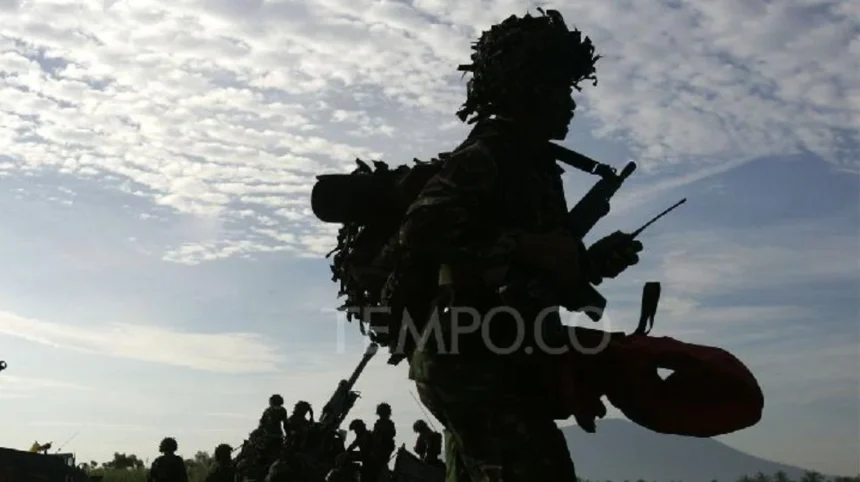
According to Tempo, Indonesia’s Minister of State Secretary Prasetyo Hadi announced that the government has decided to postpone the deployment of troops to Gaza under the International Stabilization Force (ISF) mission. He stated after a coordination meeting at the Defense Ministry that “everything is on hold,” citing the escalating regional security situation as the main reason for the delay. Anadolu Agency also reported that Indonesia had previously pledged up to 8,000 peacekeepers for Gaza, with the mission approved by the UN Security Council following a US‑led resolution.
As reported by Tempo, the government’s decision follows President Prabowo Subianto’s earlier statement that Jakarta’s plan to send peacekeeping troops to Gaza is now on hold. The deployment was intended to support stabilization efforts in the Palestinian enclave as part of the ISF, which aims to help secure the territory and facilitate humanitarian and reconstruction work. Tempo notes that this pause comes amid heightened tensions in the Middle East linked to the ongoing war involving the United States, Israel, and Iran.
Why does PKS support the delay?
How is PKS responding to the postponement?
According to Tempo’s report on “PKS Supports Delay in Sending Indonesian Troops to Gaza,” the Prosperous Justice Party (PKS) publicly welcomed the government’s decision to delay the deployment. PKS lawmaker and defense commission member Sukamta said in a written statement that the postponement was a “wise step” in light of the deteriorating security situation in the region. Tempo reports that Sukamta stressed the need to carefully consider the safety of Indonesian troops before any peacekeeping mission proceeds.
Tempo further notes that PKS has been among the political voices urging caution over Indonesia’s participation in the ISF while the Middle East remains volatile. The party’s support for the delay reflects concerns that sending troops amid active conflict between the US‑Israel side and Iran could expose Indonesian personnel to heightened risk. Sukamta emphasized that Indonesia’s solidarity with Palestine must be accompanied by prudent assessments of timing and conditions on the ground, according to Tempo’s coverage.
Supporting details on troop plans and regional tensions
According to Anadolu Agency, Indonesia had initially prepared a contingent of up to 20,000 soldiers for Gaza, later capping its pledge at 8,000 peacekeepers for the ISF mission. The mission, endorsed by a UN Security Council resolution, is designed to help stabilize Gaza after months of intense conflict and to support humanitarian access. Anadolu reports that Indonesia’s decision to suspend deployment is directly linked to the escalation of a US‑Israel war with Iran, which has seen Tehran retaliate against targets in Israel and US bases in the wider Gulf region.
Anadolu Agency also notes that regional clashes since late February have left more than 1,200 people dead, including senior Iranian officials, intensifying fears of broader conflict. Against this backdrop, Indonesian officials have argued that sending troops now could draw Jakarta into a volatile confrontation zone and undermine the peacekeeping mandate. According to Tempo, the government’s delay is therefore framed as a temporary pause rather than a cancellation of its broader commitment to support Gaza through international mechanisms.
What are the implications and next steps for Indonesia’s Gaza role?
According to Tempo, PKS has urged the government to use the delay period to reassess operational plans, security guarantees, and diplomatic coordination before any deployment goes ahead. The party’s stance suggests that parliamentary oversight and consultation will remain important as Jakarta refines its approach to the ISF and its role in Gaza stabilization. Any future decision to restart preparations is expected to take into account developments in the US‑Israel–Iran conflict and the broader regional security landscape, Tempo reports.
Anadolu Agency’s reporting indicates that Indonesia’s suspension of troops does not negate its political support for Palestine, but highlights the challenge of balancing solidarity with security considerations in a rapidly changing conflict environment. Future steps will likely depend on whether regional tensions ease sufficiently for peacekeepers to operate safely, as well as on continued consultations with the United Nations and ISF partners. For now, Indonesia’s Gaza troop deployment remains formally on hold, with PKS backing the government’s cautious approach while calling for sustained humanitarian and diplomatic support for the Palestinian people.

