


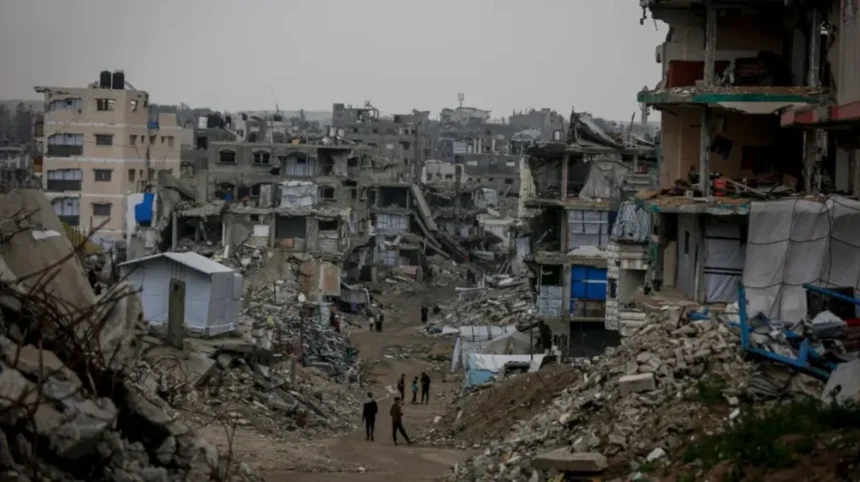
As reported by Al Jazeera, Board of Peace Director General Nikolay Mladenov has proposed an eight‑month, multi‑phase plan to disarm Hamas and other Palestinian factions in the Gaza Strip as part of an October ceasefire framework intended to end Israel’s military campaign that began in 2023. According to Al Jazeera, the proposal links staged Palestinian disarmament to parallel Israeli steps, including facilitating reconstruction materials, allowing more humanitarian aid into Gaza, and eventually withdrawing forces to the territory’s borders. The Times of Israel reports that the plan is framed around the principle of “one authority, one law, one weapon,” with a US‑backed technocratic National Committee for the Administration of Gaza (NCAG) gradually assuming security control. Reuters and other outlets describe the initiative as a central element in efforts to implement former President Donald Trump’s broader “Board of Peace” scheme for Gaza and to solidify a ceasefire after years of war.
According to The Times of Israel, the full text of the plan outlines five stages in which Hamas and other armed groups would hand over heavy and then light weapons, dismantle tunnels and military infrastructure, and submit to weapons collection and verification supervised by bodies created under the Board of Peace framework. Al Jazeera reports that in his briefing to the United Nations, Mladenov said the proposal had been conveyed to “relevant armed groups” and urged them to accept the framework “without delay,” emphasizing that decommissioning weapons would proceed in parallel with Israeli withdrawals. Reuters notes that the Board of Peace mechanism itself was anchored in a UN Security Council resolution and backed by the United States, giving it significant diplomatic weight despite Palestinian concerns. Middle East Monitor reports that Mladenov’s Gaza disarmament initiative has drawn sharp criticism from commentators who argue that it effectively pressures Palestinians to disarm while less stringently binding Israel to halt military operations and lift restrictions on Gaza.
How are key actors reacting to the disarmament plan?
As reported by Reuters, Palestinian factions including Hamas and Islamic Jihad are deeply skeptical of the proposal, fearing that disarmament could leave Gaza exposed if Israel fails to fully comply with its obligations. Reuters cites Palestinian sources who say that several armed groups in the enclave have already rejected the core principle of the plan, which would require them to relinquish their weapons under international supervision. According to Al Jazeera, critics within Palestinian political circles argue that the plan effectively asks the occupied population to give up what they regard as tools of resistance before concrete guarantees are in place to end Israel’s blockade and military operations. Middle East Monitor reports that opinion pieces and activists have characterized the scheme as “blackmailing the victim and relieving the aggressor,” contending that it places primary responsibility on Palestinian groups while offering Israel phased benefits and continued security prerogatives.
The Times of Israel notes that Israeli officials view Hamas’s disarmament as a key condition for any lasting arrangement in Gaza and for broader implementation of Trump’s Gaza plan. According to The Times of Israel, the plan allows Israel to retain a “security perimeter” presence around Gaza even after the final verification of disarmament, a clause that critics say could entrench long‑term Israeli control despite a nominal withdrawal. Ynet, citing Palestinian and Israeli sources, reports that the proposal has stirred unrest and anger in Gaza, where many residents and factions see it as externally imposed and insufficiently attentive to the humanitarian and political consequences of past Israeli military actions. Middle East Monitor and other regional commentators argue that by sequencing Palestinian disarmament as a precondition for full reconstruction and normalisation, the plan risks institutionalizing a dynamic in which the stronger military power retains leverage while the besieged population shoulders the main concessions.
Supporting details and expert commentary
According to Al Jazeera’s reporting on the draft, the Mladenov plan’s first phase covers the initial two weeks, during which both Israel and Hamas are required to halt all military actions and Israel must begin implementing agreed humanitarian measures, including facilitating aid and allowing Palestinian technocrats into Gaza to assume administrative duties. The second and third stages, covering roughly days 16 to 90, see the start of disarmament: The Times of Israel reports that Hamas and other factions would surrender heavy weapons, permit the destruction of tunnels, and allow an international security presence, while Israel removes heavy weapons from areas under its control. In the fourth stage, NCAG‑linked police forces would collect and register remaining small arms as Israeli forces begin a phased withdrawal; the fifth stage involves final verification that Gaza is “free of weaponry,” after which Israeli troops are to withdraw fully except for a defined security perimeter. Reuters states that a “Weapons Collection Verification Committee” established by Mladenov would oversee these processes, giving the Board of Peace significant operational authority inside Gaza.
Middle East Monitor and other analysts note that Hamas’s long‑standing position has been to reject unconditional disarmament on the grounds that its arsenal and tunnel network are central to its strategy in confronting Israel’s military superiority. Reuters reports that the plan’s emphasis on staged disarmament has become a core sticking point in negotiations, with Hamas wary of repeating past experiences where political understandings did not translate into lasting relief from blockade or military escalation. According to commentary cited by Middle East Monitor, critics also question whether the Board of Peace, as structured, can act as a neutral mediator, given that its establishment was closely tied to US and Israeli strategic preferences, including a strong focus on security benchmarks and verification regimes. These commentaries argue that the balance of incentives appears asymmetrical, with Palestinian compliance strictly monitored while Israeli steps related to lifting restrictions and enabling reconstruction are less clearly enforceable.
What could the plan mean for Gaza’s future?
According to Reuters, supporters of the Mladenov plan within diplomatic circles argue that successful implementation could eventually lead to large‑scale reconstruction, a degree of economic recovery, and a restructured governance model in Gaza under the NCAG, potentially reducing the likelihood of renewed large‑scale hostilities. The Times of Israel notes that the plan is explicitly linked to completing “Trump’s Comprehensive Peace Plan for Gaza,” suggesting that disarmament is conceived as a gateway to broader political arrangements involving regional and international stakeholders. Al Jazeera reports that Mladenov has told the UN that “reconstruction requires the decommissioning of weapons,” indicating his view that the sequence of disarmament in exchange for rebuilding is the only viable path out of the current stalemate.
However, Middle East Monitor highlights arguments from critics who warn that if Palestinian factions are pressured into disarmament without robust guarantees on Israeli withdrawal, lifting the blockade, and accountability for past military actions, the plan could deepen perceptions of injustice and instability. Commentaries cited by Middle East Monitor assert that by centering Palestinian disarmament as the main measurable deliverable while allowing Israel continued control over borders and security perimeters, the initiative risks “relieving the aggressor” of substantive political obligations. Ynet and Reuters both indicate that, as of late March, Hamas had not formally accepted the proposal, and that internal Palestinian debates and regional diplomacy are likely to determine whether the plan moves forward, is amended, or stalls. According to these outlets, the coming months will be critical in testing whether the Board of Peace framework can produce a sustainable shift in Gaza’s security and humanitarian conditions or whether it will remain another disputed blueprint in the long‑running conflict.
In sum, verified reporting from regional and international media shows that Mladenov’s Gaza disarmament plan is a central, controversial component of the Board of Peace architecture, combining phased Palestinian disarmament with conditional Israeli withdrawals and reconstruction commitments. While diplomats and backers present it as a route to stabilizing Gaza and enabling rebuilding, Palestinian factions, analysts, and commentators cited by outlets such as Al Jazeera, Reuters, The Times of Israel, Ynet, and Middle East Monitor warn that the current balance of obligations appears to exert pressure primarily on an already devastated and occupied population, with no clear enforcement mechanism to prevent renewed Israeli military action or prolonged restrictions.

