


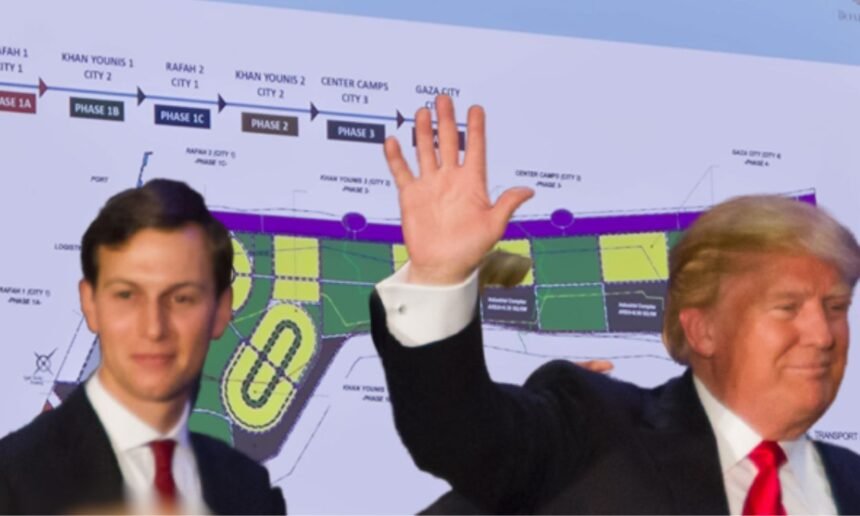
According to the Palestine Chronicle, writer and editor Ramzy Baroud argues that a proposal associated with Jared Kushner for the post‑war reconstruction and development of the Gaza Strip is detached from the political and humanitarian realities on the ground. As reported by Baroud, the commentary responds to public presentations of a large‑scale “master plan” that envisions massive investment, luxury development and rapid reconstruction in Gaza following the current war. The article uses the analogy that “building Disneyland on the moon is more likely” than fully realizing Kushner’s vision, underscoring skepticism about its feasibility under current conditions.
As described by the Palestine Chronicle, Baroud situates the Gaza plan in the context of ongoing devastation, displacement and blockade in the territory, as well as the long‑running political conflict between Israel and Palestinian factions. The piece highlights that any reconstruction blueprint must contend with unresolved core issues, including occupation, security control, and Palestinian self‑determination. According to the article, the criticism is not limited to technical or financial obstacles but extends to the underlying political assumptions of the proposal.
Context and reactions: How has Kushner’s Gaza plan been received?
According to the Palestine Chronicle, Baroud notes that Kushner’s reconstruction concept has generated strong reactions from Palestinians and supporters of Palestinian rights, many of whom view it as an attempt to “repackage” Gaza’s future without addressing fundamental questions of sovereignty and justice. The article reports that critics argue the plan treats Gaza primarily as a real‑estate and investment project rather than a war‑torn territory whose population has endured repeated military assaults and a prolonged blockade. Baroud cites the sharp contrast between glossy development imagery and the current destruction in Gaza as a key reason for widespread skepticism.
The Palestine Chronicle further reports that parts of the Palestinian public and commentators see the plan as aligned with broader regional and international efforts to reshape Gaza’s political landscape without meaningful Palestinian participation. According to Baroud, this perception fuels concerns that large‑scale reconstruction promises could be used to normalize or entrench existing power structures rather than dismantle them. The article notes that such reactions are grounded in past experiences in which political deals and economic projects were announced but did not translate into durable improvements or rights protections for Palestinians.
Supporting details and expert commentary
As reported by Ramzy Baroud in the Palestine Chronicle, the critique of Kushner’s plan draws on historical experience with previous economic and reconstruction initiatives that failed to resolve core political disputes or prevent renewed violence. The article points to earlier attempts to present economic growth or “peace dividends” as substitutes for addressing occupation, settlement expansion and Palestinian political representation. According to Baroud, these precedents are cited by critics as evidence that ambitious economic schemes alone cannot secure a just and sustainable peace in Gaza or the wider Palestinian territories.
The Palestine Chronicle also highlights expert and activist commentary emphasizing the scale of destruction in Gaza’s infrastructure, housing and public services. Baroud reports that, in this context, projections of rapid, high‑end development and large‑scale private investment appear to many observers as unrealistic without a profound shift in the political environment. The piece underscores that for Palestinian analysts and civil society voices, any credible reconstruction plan must be grounded in international law, human rights, and an end to policies that have historically restricted movement, trade and access to basic services.
Implications and future developments: What could this debate mean for Gaza?
According to the Palestine Chronicle, the debate around Kushner’s Gaza plan raises broader questions about who will shape the territory’s post‑war future and on what terms. Baroud reports that many Palestinians fear that externally driven, top‑down development schemes could marginalize local needs and priorities if they are not accompanied by inclusive political processes. The article suggests that discussions over reconstruction are likely to become a key arena in which competing visions for Gaza’s governance, economy and international role will play out.
As reported by Baroud, the comparison between building Disneyland on the moon and fully implementing Kushner’s plan reflects concern that unrealistic expectations could distract from more immediate and attainable goals, such as securing a durable ceasefire, lifting restrictions and rebuilding essential services. The Palestine Chronicle notes that how the international community responds—whether by backing ambitious projects without political change, or by linking reconstruction to concrete steps on rights and sovereignty—will significantly influence Gaza’s trajectory. According to the article, the outcome of this debate will help determine whether reconstruction efforts lead to meaningful change for Palestinians in Gaza or primarily serve external strategic and economic interests.
In summary, the Palestine Chronicle presents Ramzy Baroud’s assessment that Jared Kushner’s Gaza development proposal is viewed by many Palestinian commentators as politically and practically implausible in its current form, highlighting deep skepticism that large‑scale investment plans alone can address the long‑standing structural and political causes of Gaza’s crisis.

