


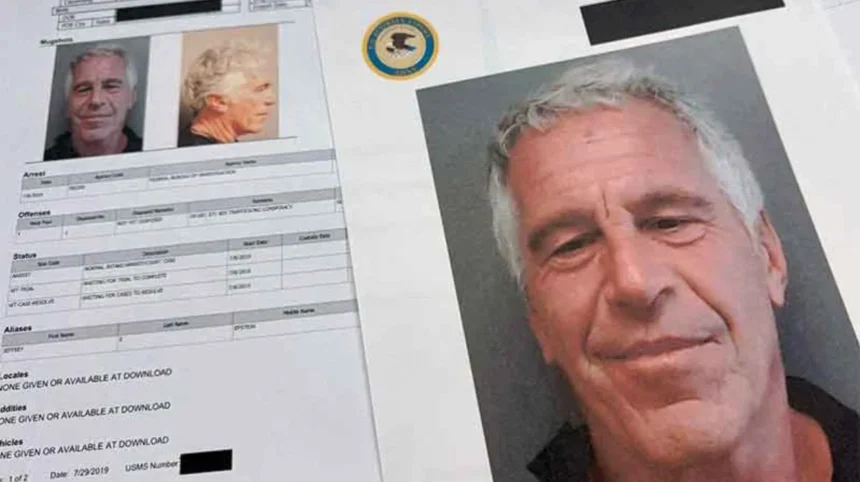
The topic links two major storylines: the crimes and networks surrounding Jeffrey Epstein and the ongoing war in the Gaza Strip, using both to raise questions about power, accountability, and impunity in global politics and finance. As reported in multiple investigations, Epstein, a convicted sex offender, moved for years in circles that included prominent political leaders, business figures, and intelligence-linked personalities, giving rise to allegations that his activities intersected with wider geopolitical interests and financial schemes.
According to major US and international outlets that have reviewed recently released “Epstein files,” the late financier’s communications and documents reveal attempts by associates to capitalize on political upheavals in conflict-affected states, including plans to access frozen state assets and to use high-level contacts for influence. In parallel, coverage of the Gaza war has documented extensive civilian casualties, large-scale destruction, and repeated warnings by humanitarian agencies about potential violations of international humanitarian law. The article’s framing suggests that, taken together, these two domains illustrate how powerful networks can operate with limited legal or political consequences.
What Context and Reactions Are Highlighted?
As reported by journalists covering the newly disclosed Epstein materials, the documents depict a world in which financial and political actors seek profit and leverage amid crises, from Middle Eastern conflicts to broader regional instability. Some reporting has detailed emails in which an Epstein associate outlines opportunities in states undergoing turmoil, including references to cooperation with former intelligence operatives and efforts to position themselves as preferred partners in post-conflict reconstruction.
According to international media coverage of Gaza, regional and global reactions to the war have included mass protests, diplomatic disputes, and calls by UN officials and human rights organizations for investigations into alleged war crimes and violations of international law. Governments, advocacy groups, and legal experts quoted in these reports frequently frame Gaza as a test of whether existing international mechanisms can effectively hold states and leaders accountable for conduct in war. In the article’s conceptual framing, this is described as “final proof” of whether a system that allowed Epstein to operate for years will ever meaningfully constrain state and elite impunity in a conflict zone like Gaza.
Supporting Details and Expert Commentary
Coverage of the Epstein case in major newspapers and broadcasters has emphasized his earlier conviction in Florida and the controversial plea deal that critics describe as unusually lenient for serious offenses involving minors. Legal analysts quoted in those reports have argued that the handling of his case illustrates how influential defendants can secure outcomes not typically available to ordinary defendants. Subsequent lawsuits by victims, along with civil settlements involving financial institutions, have further highlighted questions about institutional responsibility in enabling or ignoring abusive conduct.
Reporting on Gaza has included extensive documentation by humanitarian organizations, medical personnel, and independent investigators, who describe repeated strikes on civilian infrastructure, forced displacement on a mass scale, and severe restrictions on basic supplies. Experts in international law interviewed by global media have debated whether current legal frameworks, including the Geneva Conventions and mechanisms at the International Court of Justice and International Criminal Court, are sufficient when powerful states or their close allies are involved. The article uses this body of reporting to suggest a continuity between the failure to fully address systemic abuse in the Epstein case and the perceived shortcomings of accountability mechanisms in Gaza.
What Are the Implications and Future Developments?
According to analysts cited in ongoing coverage of the Epstein disclosures, further document releases and potential court actions may deepen public understanding of how private financial networks, intelligence-linked figures, and political elites interact in moments of crisis. They note that these files could inform future regulatory or legal reforms aimed at preventing similar patterns of abuse and institutional failure. In this sense, the Epstein case is seen not only as a criminal story but as a window into the broader architecture of impunity in transnational finance and politics.
In Gaza, future developments are expected to hinge on diplomatic negotiations, decisions by international courts, and the outcome of internal political debates in Israel, Palestine, and key international capitals. According to international law experts and human rights advocates quoted in global coverage, ongoing investigations and legal proceedings may set precedents for how alleged violations in densely populated conflict zones are judged and enforced. The article’s core argument is that the trajectory of these processes—in both the Epstein legacy and the Gaza war—will help determine whether existing systems can meaningfully restrain powerful actors or whether a pattern of systemic impunity will persist.
In sum, the article connects documented aspects of Jeffrey Epstein’s networks and the documented humanitarian and legal crisis in Gaza to pose a wider question about the endurance of impunity in a world shaped by unequal power, opaque financial arrangements, and contested mechanisms of accountability.

